

Leave Your Message
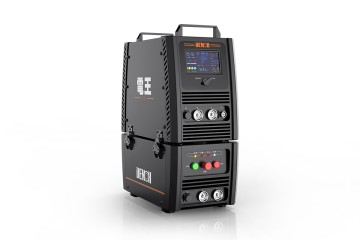 HW500E Multi-Function Engine Driven Welding Machine | Multi-Function Diesel Welder Generator for Pipeline
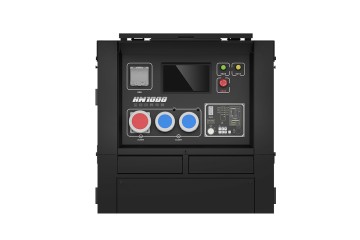 HW1000 Constant Speed Engine Driven Welding Machine | Multi-Function Diesel Welder Generator for Pipeline
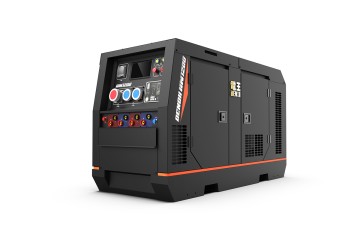 HW1200 Four-Arc Engine Driven Welding Machine | Multi-Function Diesel Welder Generator for Pipeline
HW500E Dual Operator High-Efficiency Diesel Welder Generator for Pipeline Construction
In the realm of global energy transportation, the construction of cross-country pipelines represents some of the most challenging engineering feats of the 21st century. As demand for natural gas, crude oil, and hydrogen increases, the need for high-efficiency welding solutions has never been more critical. The Welder Mig Stick (Metal Inert Gas and Shielded Metal Arc Welding) hybrid capability has emerged as the industry standard for high-stakes pipeline projects. These systems provide the versatility required to handle root passes with Stick electrodes and fill/cap passes with high-speed MIG/FCAW processes.
Simultaneous operation of multiple welding arcs from a single engine-driven unit, doubling productivity without increasing the job site footprint.
Engineered for the harshest environments, from the sub-zero temperatures of Siberian tundras to the scorching heat of Middle Eastern deserts.
Seamlessly switch between Stick, MIG, TIG, and Flux-Cored processes to adapt to various pipe wall thicknesses and metallurgical requirements.
The industrial landscape for pipeline welding is shifting from traditional manual labor to semi-automated and fully automated multi-arc systems. Large-scale projects like the Power of Siberia or the East-West Gas Pipeline require thousands of high-quality welds per week. In this competitive environment, contractors are prioritizing equipment that minimizes downtime and maximizes "arc-on" time. Multi-arc engine-driven welding machines, such as the HW1200 series, allow four welders to work independently from one diesel generator, significantly reducing fuel consumption and maintenance costs per arc.
DENOH Seimitsu Electric Appliance (Beijing) Co., Ltd. is a professional high-tech enterprise integrating independent R&D, sophisticated manufacturing, global sales and full-process professional services of high-end pipeline welding equipment.
The evolution of cross-country pipeline welding has been marked by a transition from basic DC rectifiers to sophisticated, inverter-based digital power sources. Today's Welder Mig Stick units are not merely power supplies; they are intelligent command centers. Digital control allows for precise arc characteristic adjustments, ensuring deep penetration and minimal spatter even with varying gas mixtures or electrode types.
1. Digitalization and IoT: Modern units now feature remote monitoring. Project managers can track fuel levels, engine health, and even welding parameters in real-time via satellite links in remote locations.
2. Environmental Compliance: With global regulations tightening, engine-driven welders are moving toward Tier 4 Final and Stage V emission standards. DENOH’s constant speed technology ensures optimal fuel efficiency, reducing the carbon footprint of massive infrastructure projects.
3. Ergonomics and Portability: Despite their power, modern units are becoming more compact. The ability to mount a four-arc welder like the HW1200 onto a single crawler or truck simplifies logistics across rugged terrain.
Imagine a pipeline project traversing the Andes or the Himalayas. Space is at a premium, and the incline makes transporting multiple welding machines impossible. A Multi-arc diesel welder generator becomes the only viable solution. By placing one HW1000 unit on a stabilized platform, multiple operators can weld different sections of the pipe joint simultaneously. This "multi-arc" approach not only speeds up the process but ensures thermal consistency across the weld bead, reducing the risk of hydrogen-induced cracking.
With more than 20 years of deep cultivation and continuous innovation in the pipeline welding industry, we have forged a solid industry foundation and built an unshakable market position through decades of practical experience and technological breakthroughs.
Over the past 20-plus years, we have kept pace with the development of the global pipeline engineering industry, constantly optimizing technical solutions and upgrading product systems, witnessing and promoting the iterative upgrading of pipeline welding equipment technology.
In high-efficiency cross-country pipeline multi-arc welding, the term "efficiency" is measured by the cost per centimeter of a defect-free weld. The Welder Mig Stick combination allows for a "Best of Both Worlds" approach. The Stick process (SMAW) is used for the root pass due to its tolerance for imperfect fit-ups and wind conditions common in the field. Subsequently, the MIG/FCAW process takes over for the fill and cap passes, offering deposition rates that are 3-4 times higher than manual Stick welding.
On a 48-inch diameter pipeline, the volume of weld metal required is immense. Using traditional single-operator machines, a single joint might take several hours. By deploying the HW1200 Four-Arc Engine Driven Welding Machine, four operators can work on the same joint (two on each side) using semi-automatic MIG wire feeders. This synchronized effort reduces the total welding time by over 60%, allowing the "spread" (the pipeline construction crew) to move faster and reducing the overall project timeline by months.
The heart of these systems is the diesel engine. Unlike standard generators, these units are designed with high-reactance alternators specifically tuned for welding loads. When one welder strikes an arc, the voltage drop is compensated instantly so that the other three welders don't experience a flicker or arc-out. This "constant speed" technology is what separates DENOH’s professional pipeline equipment from general-purpose industrial welders.
The core strength of the company lies in its professional and elite team composed of senior industry experts, professional R&D engineers, skilled technical workers and efficient service personnel. Our R&D team gathers backbones with decades of experience in pipeline welding equipment research and development, many of whom have participated in the research and development of key national engineering supporting welding equipment and possess profound theoretical knowledge and rich practical experience.
Relying on the team's professional strength, we have been committed to tackling key technical problems in the pipeline welding field, breaking through foreign technical monopolies in many core technologies, and realizing the independent innovation and localization of high-end pipeline welding equipment. Meanwhile, our production, sales and service teams have been carefully trained and selected, with rich industry experience and strong professional capabilities, forming a collaborative and efficient working system from R&D and production to market sales and after-sales service.
As the world pivots toward green energy, the existing pipeline infrastructure is being evaluated for hydrogen transport. Hydrogen embrittlement is a major concern, requiring even more precise welding controls. The next generation of Welder Mig Stick equipment will incorporate advanced pulse-MIG waveforms to control heat input precisely, ensuring the micro-structure of the weld is resistant to hydrogen cracking. DENOH is already at the forefront of this research, developing power sources that can handle the unique demands of high-strength steels used in hydrogen-ready pipelines.
For contractors, the choice of equipment is a balance of capital expenditure and long-term operational efficiency. Investing in a Multi-Function Diesel Welder Generator like the HW500E or HW1200 is not just buying a machine; it’s securing the project’s success. With the capability to handle MIG, Stick, and TIG, and the power to support multiple operators, these machines are the backbone of modern cross-country pipeline construction.
HW500E Multi-Function Engine Driven Welding Machine
HW1000 Constant Speed Diesel Welder Generator
HW1200 Four-Arc High-Efficiency Welding System
HW500E Versatile Diesel Welder for Cross-Country Use
HW1000 Robust Constant Speed Engine Driven Welder
HW1200 Multi-Arc Solution for Large Diameter Pipes
HW500E Dual-Purpose Welder & Auxiliary Power Generator
HW1000 Industrial Grade Engine Driven Pipeline Welder