

Leave Your Message
Discover our high-performance, multi-function engine-driven welders engineered to withstand the demanding marine and high-humidity environments of Singapore's major industrial zones.
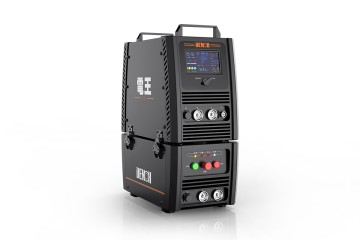
Singapore stands as a global beacon of industrial sophistication, maritime dominance, and advanced infrastructure. From the massive drydocks of the Tuas and Keppel Shipyards to the chemical processing complexes of Jurong Island, the demand for high-integrity welding is absolute. In these high-stakes environments, welding is not merely a manufacturing process—it is a critical engineering discipline that ensures structural safety, corrosion resistance, and operational longevity.
The local industrial sector relies heavily on both MIG (Metal Inert Gas / GMAW) and Stick (Shielded Metal Arc / SMAW) welding processes. While MIG welding is highly favored in controlled fabrication shops for its speed, deposition rate, and clean finishes, Stick welding remains the undisputed king of outdoor construction, marine repairs, and cross-island pipeline installations. As a leading hub for maritime trade, Singapore's shipyards require robust welding equipment that can switch rapidly between these processes to handle everything from thick hull plates to delicate pipe joints.
Singapore is a world leader in ship repair, FPSO (Floating Production Storage and Offloading) conversions, and offshore jack-up rig construction. Offshore structures are subjected to relentless wave action, mechanical stress, and corrosive saltwater. Consequently, welding specifications are exceptionally strict. Multi-arc, diesel-driven welder generators are essential here, allowing multiple operators to perform heavy-duty Stick or MIG welding on offshore structures without overloading localized shipyard power grids.
Jurong Island is home to over 100 global chemical companies, requiring a vast network of high-pressure pipelines to transport hazardous gases and liquids. Welding these pipelines requires absolute precision. Constant-speed engine-driven welding machines provide the stable arc necessary for defect-free root passes and hot passes, preventing potential gas leaks or structural failures under extreme pressure.
Operating welding equipment in Singapore requires an understanding of the local tropical climate. With year-round high temperatures and relative humidity levels frequently exceeding 80%, several technical challenges arise that factories and suppliers must address:
High humidity causes standard Stick welding electrodes (especially low-hydrogen types like E7018) to absorb moisture. This can lead to hydrogen-induced cracking and porosity in the weld bead. Heavy-duty diesel welders must offer precise voltage control to stabilize the arc and ensure deep penetration even when conditions are less than ideal.
The salt-laden air along Singapore’s coastline can rapidly corrode the internal printed circuit boards (PCBs) of welding power sources. Leading suppliers must ensure their machines feature fully encapsulated electronics, high-grade insulation, and robust enclosures to protect sensitive components from coastal corrosion.
With ambient temperatures in Singapore often reaching 34°C, welding machines run hotter. A machine rated for a 60% duty cycle in cooler climates might overheat quickly in Singapore. Heavy-duty diesel welder generators from professional factories are designed with optimized cooling ducts and heavy-duty radiators to maintain a 100% duty cycle under tropical heat.
DENOH Seimitsu Electric Appliance (Beijing) Co., Ltd. is a professional high-tech enterprise integrating independent R&D, sophisticated manufacturing, global sales and full-process professional services of high-end pipeline welding equipment.
With more than 20 years of deep cultivation and continuous innovation in the pipeline welding industry, we have forged a solid industry foundation and built an unshakable market position through decades of practical experience and technological breakthroughs.
Over the past 20-plus years, we have kept pace with the development of the global pipeline engineering industry, constantly optimizing technical solutions and upgrading product systems, witnessing and promoting the iterative upgrading of pipeline welding equipment technology.
As Singapore actively pursues its Green Plan 2030 and pushes for digitalization across all industrial sectors, the welding industry is undergoing a significant transformation. Factories and suppliers serving Singapore must align with these evolving trends to remain competitive:
Singapore's National Environment Agency (NEA) enforces strict emission standards for off-road diesel engines. Modern engine-driven welders must utilize highly efficient, low-emission diesel engines that comply with international standards (such as Tier 4 Final or Stage V). These engines not only reduce carbon emissions but also significantly lower fuel consumption, helping contractors manage project costs on large-scale infrastructure developments.
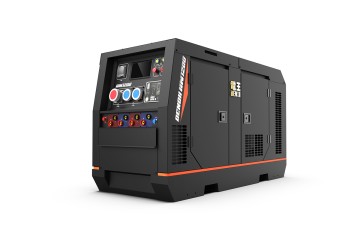
Space is at a premium in Singapore’s shipyards and urban construction sites. Instead of deploying four separate diesel welders, contractors prefer multi-operator systems like the HW1200 Four-Arc Engine Driven Welder. This setup allows four welders to work simultaneously from a single engine-driven unit, saving valuable deck space on offshore barges and reducing overall maintenance overheads.
Modern welding demands high precision. Advanced microprocessors in modern welder generators continuously monitor the arc parameters, adjusting current and voltage dynamically. This digital feedback loop ensures a highly stable arc, minimizing spatter and reducing post-weld grinding time—a crucial factor in improving productivity amidst Singapore's labor constraints.
Singapore has strict safety regulations governed by the Ministry of Manpower (MOM). Welding equipment must feature Hazard Reduction Devices (HRD) or Voltage Reduction Devices (VRD) to lower the open-circuit voltage (OCV) when the machine is idle. This minimizes the risk of electric shock to operators working in wet or confined spaces, which are common in shipyard and tunneling projects.
Understanding how MIG and Stick welders are deployed locally helps engineers select the right configuration for their specific projects. Here are three common scenarios in Singapore:
During FPSO conversions, massive structural modifications are made to the ship’s hull and deck modules. The work involves welding thick carbon steel and stainless steel plates in awkward, out-of-position locations. Here, the HW1200 Four-Arc Welder is deployed on the deck. Two operators can perform heavy-duty Stick welding for structural stiffeners, while the other two can run MIG or Flux-Cored Arc Welding (FCAW) wires for pipe joints, all powered by a single diesel engine.
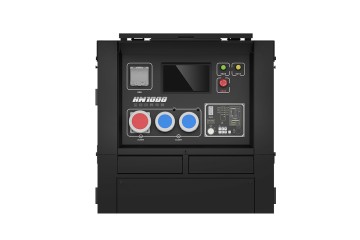
For pipeline expansions transporting natural gas, the welds must pass 100% radiographic testing. The HW1000 Constant Speed Engine Driven Welder is critical in this scenario. Its constant engine speed ensures that even when the load fluctuates, the welding current remains perfectly stable, preventing defects such as undercut or lack of fusion at the root pass.
In projects like the Changi East reclamation, heavy machinery, sheet piles, and dredging pipes require constant on-site maintenance. The HW500E Multi-Function Diesel Welder is highly portable and can be easily moved on trailers. It provides auxiliary AC power to run grinders and lights while simultaneously offering high-amperage Stick welding capability to repair thick steel sheet piles directly on the shoreline.
Selecting a supplier for industrial-grade welding equipment involves evaluating several critical factors to ensure smooth project execution and minimal downtime:
Ensure the supplier's machines comply with international manufacturing standards (ISO, CE) and local Singaporean safety regulations (SS 510: Code of Practice for Safety in Welding and Cutting).
In high-pressure industries like shipbuilding or oil and gas, any machine downtime can cost thousands of dollars per hour. Choose a factory or supplier that offers comprehensive technical support and ready access to spare parts.
Every project has unique requirements. A supplier like DENOH, with robust R&D capabilities, can customize welding parameters, auxiliary power outputs, and protective enclosures to match the specific needs of Singaporean contractors.
Select from our comprehensive lineup of multi-function diesel welders and constant-speed engine-driven systems, tailored for heavy-duty applications in Singapore.
Get in touch with DENOH's engineering team today to discuss your project requirements, request a customized quote, or learn more about our tropical-grade welding equipment.
Contact Our Specialists