
Top 10 Field Welding Generators for Global Buyers
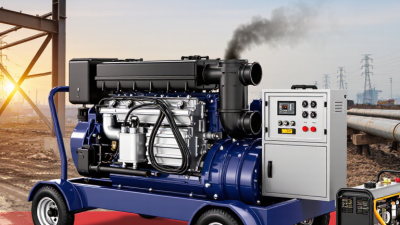
A dependable Field Welding Generator isn’t just about having a portable power source — it’s about starting reliably every time, maintaining a steady arc, and being tough enough to handle dust, vibrations, rain, and uneven ground. When folks around the world look at these units, they're usually comparing things like diesel power, welding amperage, fuel efficiency, duty cycle, how easy they are to move, and how simple it is to get parts and service. These little details really matter — whether you’re working on pipelines, bridges, farms, mining sites, or emergency repairs.
The demand for these generators keeps growing because of ongoing infrastructure projects and maintenance work. According to the U.S. Bureau of Labor Statistics, there will be roughly 42,600 new openings each year from 2023 to 2033 for welders, cutters, solderers, and brazers. Interestingly, that number isn’t just about new builds — a lot of it is about replacing older folks and keeping existing industries running smoothly. Plus, the International Energy Agency’s Electricity 2024 report predicts worldwide electricity use is going to surge up through 2026, which just adds more pressure to have reliable gear in place as infrastructure expands. But here’s the thing — those reports don’t directly measure welding generators, which is something worth keeping in mind.
In this guide, I’ll walk you through ten different field-use welder generators suitable for international buyers. We’ll look at factors like engine reputation, how well the alternator’s designed, arc stability, noise levels, emissions documentation, support for spare parts, and safety features for operators. Brands like Lincoln Electric, Miller Electric, Denyo, and Wacker Neuson are covering a wide range of work environments and budgets. For example, a small, compact unit might be perfect for roadside repairs, while something with higher output can handle structural steel work and power other tools. But remember — bigger isn’t always better. Ratings can depend on conditions like altitude, temperature, cable length, and duty cycle. So, it’s smart to double-check test conditions, don’t just go by simple specs. Ultimately, your choice should match the job site, local service options, fuel availability, and real-world workload. Experience helps, sure, but even in the field, conditions can throw curveballs that you won’t see just from reading specs on paper.
Read more »