Leave Your Message
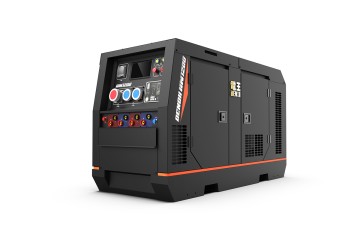
In modern heavy industrial sectors, the demand for highly efficient, independent, and versatile welding systems has reached unprecedented heights. Industries such as oil and gas pipeline construction, offshore oil platform fabrication, shipbuilding, and heavy structural engineering operate in remote locations where access to a stable municipal power grid is non-existent. In these extreme environments, the multi-station diesel welder generator power supply serves as the primary backbone of productivity.
Historically, field operations required multiple single-operator diesel welding units to be deployed across a site. This setup resulted in high capital expenditure, excessive fuel consumption, complex maintenance logistics, and a massive carbon footprint. Today, the industry is transitioning rapidly toward consolidated multi-station systems. By utilizing a single, high-capacity diesel engine to run multiple independent welding arcs, companies can reduce fuel consumption by up to 35% and drastically simplify logistics.
However, running multiple arcs simultaneously off a single generator introduces technical challenges, particularly when high-precision processes like TIG (Tungsten Inert Gas) spot welding are required. TIG spot welding demands extremely stable voltage and precise current regulation. Any power fluctuation caused by one operator striking an arc can disrupt the delicate thermal balance required by another operator performing a precision TIG weld. This is where advanced engine-driven power management becomes critical.
In multi-station setups, "cross-talk" occurs when electrical loads fluctuate across stations, leading to arc instability. Advanced digital control systems and isolated inverter topologies are required to ensure that TIG spot welding stations receive a pure, uninterrupted power supply, regardless of the load on neighboring stations.
The integration of TIG spot welding capabilities into multi-station diesel generator platforms represents a major technological leap. It enables operators to perform both high-deposition structural welding (such as stick or flux-cored welding) and ultra-precise thin-sheet tacking or root passes using a single, centralized power source.
The synergy between precision TIG spot welding and heavy-duty multi-station diesel generators is vital across several demanding industrial sectors. Below, we analyze how these technologies are applied in the field to optimize workflow efficiency and structural integrity.
In cross-country oil and gas pipeline construction, maintaining the alignment of large-diameter pipes is critical. Before the heavy-duty automatic or semi-automatic welding systems run the fill and cap passes, the pipe segments must be precisely tacked together. TIG spot welding is the preferred method for this stage because it produces clean, slag-free, high-quality tacks that can be easily welded over without risk of inclusion defects. By powering these TIG spot welders through a multi-station diesel generator, field crews can work in parallel, aligning and tacking multiple joints along the pipeline route simultaneously without needing multiple generator units towed along the right-of-way.
In shipyards and offshore jacket construction sites, spatial constraints are a constant challenge. Having multiple single-operator welding machines cluttering the deck or scaffolding creates safety hazards and complicates operations. A centralized multi-station diesel welder generator, such as the HW1200, can sit in a designated utility area, supplying stable welding power to up to four operators working hundreds of feet away. One operator can perform precision TIG spot welding on thin-walled stainless steel instrument tubing, while others perform heavy structural plate welding, all drawing power from the same engine-driven generator.
Industry Foundation & Market Position
With more than 20 years of deep cultivation and continuous innovation in the pipeline welding industry, we have forged a solid industry foundation and built an unshakable market position through decades of practical experience and technological breakthroughs.
Over the past 20-plus years, we have kept pace with the development of the global pipeline engineering industry, constantly optimizing technical solutions and upgrading product systems, witnessing and promoting the iterative upgrading of pipeline welding equipment technology.
As the global construction and energy sectors push for higher efficiency and lower emissions, the technology behind multi-station diesel welder generators is evolving rapidly. Key trends shaping the future of this industry include:
To reduce fuel consumption and engine wear, manufacturers are exploring hybrid power systems. These systems combine a smaller diesel engine with an integrated lithium-ion battery bank. The battery absorbs transient load spikes—such as when a TIG spot welder strikes an arc—allowing the diesel engine to run at its most efficient RPM or even shut down during low-load periods. This technology ensures an exceptionally clean and stable power supply, which is highly beneficial for precision TIG welding.
Modern fleet management demands real-time data. Next-generation multi-station generators are equipped with telematics that transmit operating parameters, fuel levels, and individual station welding currents to the cloud. Project managers can monitor the productivity of each welding station, predict maintenance needs before a breakdown occurs, and ensure that welding parameters comply with strict quality control standards.
By utilizing high-frequency inverter technology, modern power supplies can manipulate the electrical output waveform at microsecond intervals. For TIG spot welding applications, this allows for precise control over the arc start, pulse frequency, and crater fill stages. Even when powered by a fluctuating diesel generator, the internal inverter compensates instantly, delivering a perfectly stable arc that rivals workshop-grade grid power.
Smart Power Allocation dynamic algorithms automatically prioritize critical processes like TIG spot welding over heavy structural stick welding. If the generator approaches its maximum load limit, the system momentarily trims power to non-critical stations to prevent arc outage on precision welds.
DENOH Seimitsu Electric Appliance (Beijing) Co., Ltd. is a professional high-tech enterprise integrating independent R&D, sophisticated manufacturing, global sales and full-process professional services of high-end pipeline welding equipment.
The core strength of the company lies in its professional and elite team composed of senior industry experts, professional R&D engineers, skilled technical workers and efficient service personnel. Our R&D team gathers backbones with decades of experience in pipeline welding equipment research and development, many of whom have participated in the research and development of key national engineering supporting welding equipment and possess profound theoretical knowledge and rich practical experience.
Relying on the team's professional strength, we have been committed to tackling key technical problems in the pipeline welding field, breaking through foreign technical monopolies in many core technologies, and realizing the independent innovation and localization of high-end pipeline welding equipment.
Meanwhile, our production, sales and service teams have been carefully trained and selected, with rich industry experience and strong professional capabilities, forming a collaborative and efficient working system from R&D and production to market sales and after-sales service.