

Leave Your Message
Explore our high-performance diesel welder generators designed for heavy-duty pipeline construction and precise TIG spot welding applications.
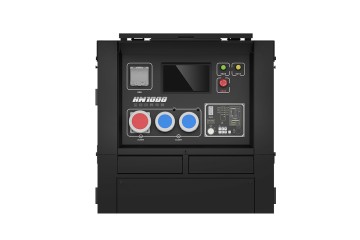
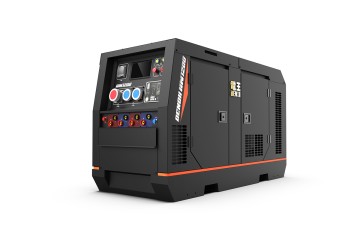
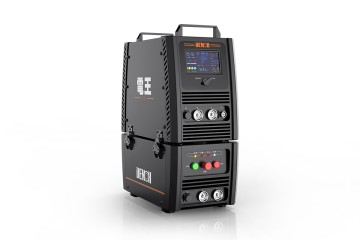
The global demand for energy transmission has driven the pipeline construction industry to adopt increasingly complex materials and larger dimensions. Modern natural gas, hydrogen, and oil transmission systems rely heavily on large-diameter pipelines constructed from high-grade steels (such as API 5L X70, X80, and even X100). These materials offer superior yield strength and toughness, allowing pipelines to operate under extremely high pressures over vast distances. However, joining these high-grade steels presents significant metallurgical and mechanical challenges.
In this demanding commercial landscape, the integrity of the root pass and tack welds is paramount. A single weld failure can lead to catastrophic environmental damage, massive financial losses, and project delays. Consequently, the industry is transitioning away from traditional manual stick welding toward highly controlled, automated, and semi-automated processes. The integration of TIG (Tungsten Inert Gas) spot welders and orbital TIG joining systems has emerged as the gold standard for achieving defect-free joints in critical pipeline sections.
Large-diameter high-grade steel pipelines demand strict adherence to API 1104 and ASME Section IX codes. TIG welding provides the precise heat input control necessary to meet these rigorous standards.
Preventing hydrogen-induced cracking (HIC) and maintaining heat-affected zone (HAZ) toughness requires advanced power sources capable of delivering clean, stable current without fluctuations.
In large-diameter pipelines (typically 30 inches and above), the root pass is the most critical weld layer. It bridges the gap between the two pipe ends and forms the foundation for subsequent hot, fill, and cap passes. Using a TIG spot welder or orbital TIG system for the root pass ensures a smooth, uniform internal bead with complete penetration and zero defects like lack of fusion or burn-through. The precise control over the arc length and weld pool chemistry offered by TIG technology is unmatched by GMAW or SMAW processes.
High-grade steel pipes are highly susceptible to thermal distortion during the welding process. To maintain perfect alignment before the continuous orbital weld runs, heavy-duty TIG spot tacking is employed. These spot welds must be strong enough to withstand the immense mechanical stresses of the pipe alignment clamps yet clean enough to be seamlessly integrated into the final weld bead without creating localized stress concentrations or micro-cracks.
Pipeline construction projects often cross remote and hostile environments, from freezing arctic tundras to scorching desert dunes. In these locations, main grid power is non-existent. Welders must rely on engine-driven welding machines. The power source must not only generate sufficient electrical current but must also deliver a highly stable, clean waveform to prevent arc instability. This is where DENOH's advanced diesel welder generators, such as the HW1000 and HW1200, become indispensable. They combine a robust mechanical engine with sophisticated electronic control systems to ensure laboratory-grade TIG welding performance in the middle of nowhere.
With more than 20 years of deep cultivation and continuous innovation in the pipeline welding industry, we have forged a solid industry foundation and built an unshakable market position through decades of practical experience and technological breakthroughs.
Over the past 20-plus years, we have kept pace with the development of the global pipeline engineering industry, constantly optimizing technical solutions and upgrading product systems, witnessing and promoting the iterative upgrading of pipeline welding equipment technology.
The core strength of the company lies in its professional and elite team composed of senior industry experts, professional R&D engineers, skilled technical workers and efficient service personnel. Our R&D team gathers backbones with decades of experience in pipeline welding equipment research and development, many of whom have participated in the research and development of key national engineering supporting welding equipment and possess profound theoretical knowledge and rich practical experience.
Relying on the team's professional strength, we have been committed to tackling key technical problems in the pipeline welding field, breaking through foreign technical monopolies in many core technologies, and realizing the independent innovation and localization of high-end pipeline welding equipment. Meanwhile, our production, sales and service teams have been carefully trained and selected, with rich industry experience and strong professional capabilities, forming a collaborative and efficient working system from R&D and production to market sales and after-sales service.
DENOH Seimitsu Electric Appliance (Beijing) Co., Ltd. is a professional high-tech enterprise integrating independent R&D, sophisticated manufacturing, global sales and full-process professional services of high-end pipeline welding equipment.
As the world moves towards a low-carbon future, the transportation of hydrogen (H2) and carbon dioxide (CO2 for CCS projects) through pipelines is scaling up. Hydrogen molecules are extremely small and easily penetrate steel, causing hydrogen embrittlement. This requires even higher grades of steel and absolutely flawless weld quality. TIG spot and orbital welding technologies are uniquely positioned to meet these demands due to their clean shielding gas environment and precise control over heat input, preventing the formation of hard, brittle microstructures in the weld zone.
The integration of Artificial Intelligence (AI) and IoT in pipeline welding is no longer a future concept—it is actively happening. Modern welding systems monitor parameters like voltage, current, wire feed speed, and gas flow rates at millisecond intervals. AI algorithms analyze this data in real-time to predict defects before they occur, alerting operators or adjusting parameters automatically. DENOH is at the forefront of this digital revolution, developing smart control interfaces for our engine-driven welders to ensure seamless compatibility with automated orbital welding heads.
To reduce construction time without compromising quality, pipeline projects are employing multi-arc welding systems. Having multiple arcs operating simultaneously on a single joint balances the heat input around the circumference of the pipe, minimizing distortion. Our HW1200 Four-Arc Engine Driven Welding Machine is specifically designed to support multiple operators or automated welding heads simultaneously from a single, high-efficiency diesel power source, significantly lowering the carbon footprint and operational costs of the job site.
Select from our comprehensive lineup of engine-driven welding machines engineered for large-diameter high-grade steel pipeline joining projects.