

Leave Your Message
Engineered to endure tropical humidity, remote terrain, and stringent radiographic testing across energy pipelines and fabrication hubs in Hai Phong, Vung Tau, and Binh Duong.
A strategic overview of Vietnam's transition into Southeast Asia's prime industrial manufacturing hub and how mechanized joining technology underpins national infrastructure development.
Over the past decade, Vietnam has established itself as one of the fastest-growing industrial economies in Southeast Asia. Driven by competitive demographic dividends, progressive foreign direct investment (FDI) policies, and strategic geographic positioning along key Indo-Pacific sea lanes, provinces from Bac Ninh, Hai Phong, and Quang Ninh in the north to Dong Nai, Binh Duong, and Ba Ria-Vung Tau in the south have transformed into sprawling manufacturing corridors. As global multinational corporations relocate precision assembly and heavy mechanical fabrications to Vietnam, local engineering contractors and global joint ventures demand unprecedented levels of weld integrity, metallurgical consistency, and productivity.
Within this expanding industrial matrix, welding technology—specifically Gas Tungsten Arc Welding (TIG/GTAW) and Gas Metal Arc Welding (MIG/MAG/GMAW)—stands as the bedrock of physical infrastructure construction. Whether assembling critical pressure vessels in petrochemical complexes, fabricating ship superstructures along the Cam River, or laying extensive natural gas lines across the Mekong Delta, manual stick electrode methods can no longer fulfill rigorous modern engineering codes like ASME Section IX, API 1104, or DNV-GL marine standards. Vietnamese engineering projects increasingly require automated and semi-automated TIG and MIG welding solutions to meet tight delivery schedules while overcoming the local deficit of master-level manual certified welders.
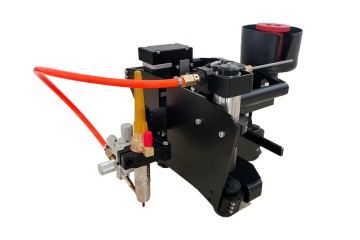
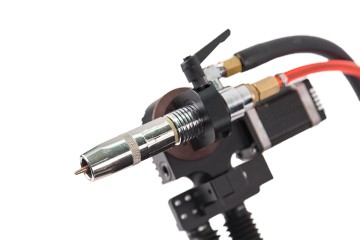
In traditional Vietnamese civil and industrial installations, Shielded Metal Arc Welding (SMAW/Stick) was the conventional standard due to low initial equipment acquisition cost. However, economic forces and strict quality benchmarks have triggered a definitive paradigm shift. EPC contractors across Vietnam are facing compressed construction timelines, high rework penalties, and rising labor expenses. TIG automatic pipeline welding (such as the DW-TW-I series) introduces computer-controlled torch oscillation, automated arc voltage control (AVC), and precise wire feeding, guaranteeing zero-defect root penetration in stainless steel, duplex, and API 5L carbon steel pipelines.
Concurrently, mechanized MIG/MAG processes utilize continuous wire spools and shielding gas mixtures (Ar/CO2) to multiply deposition rates by a factor of 3x to 5x compared to manual stick electrodes. In high-volume linear trenching across southern Vietnam's swampy fields or remote northern mountain ranges, pipeline crawlers and single-torch automatic external welding machines (such as the DW-EW-I) drastically cut overall crew size while ensuring uniform weld beads that pass ultrasonic testing (UT) and radiographic testing (RT) without exception.
DENOH Seimitsu Electric Appliance (Beijing) Co., Ltd. is a professional high-tech enterprise integrating independent R&D, sophisticated manufacturing, global sales and full-process professional services of high-end pipeline welding equipment.
Over the past 20-plus years, we have kept pace with the development of the global pipeline engineering industry, constantly optimizing technical solutions and upgrading product systems, witnessing and promoting the iterative upgrading of pipeline welding equipment technology. By partnering with leading engineering contractors in Vietnam and across the ASEAN region, DENOH brings field-proven automatic pipeline systems and self-contained power generation welders right into harsh tropical work sites.
The core strength of the company lies in its professional and elite team composed of senior industry experts, professional R&D engineers, skilled technical workers and efficient service personnel. Our R&D team gathers backbones with decades of experience in pipeline welding equipment research and development, many of whom have participated in the research and development of key national engineering supporting welding equipment and possess profound theoretical knowledge and rich practical experience.
Relying on the team's professional strength, we have been committed to tackling key technical problems in the pipeline welding field, breaking through foreign technical monopolies in many core technologies, and realizing the independent innovation and localization of high-end pipeline welding equipment. Meanwhile, our production, sales and service teams have been carefully trained and selected, with rich industry experience and strong professional capabilities, forming a collaborative and efficient working system from R&D and production to market sales and after-sales service.
A rigorous comparative guide for project engineers, procurement managers, and mechanical QA/QC supervisors across Vietnam's key industrial clusters.
Selecting between automated TIG (Argon Arc) and MIG/MAG systems depends on pipe metallurgy, wall thickness, project geography, and regulatory inspection tolerances. Below is an engineering analysis designed for Vietnamese engineering procurement teams balancing project capital expenditure (CAPEX) with daily operational efficiency (OPEX).
| Evaluation Parameter | Argon Arc TIG (GTAW) Automation | MIG / MAG (GMAW / FCAW) Mechanized | Engine-Driven Field Multi-Arc System |
|---|---|---|---|
| Primary Vietnamese Applications | LNG Cryogenic Lines, Stainless Chemical Tubing, Boiler Superheaters (Hai Phong / Ba Ria) | Cross-Country High-Pressure Trunklines, Heavy Civil Steel Piles, Ship Hull Framing | Remote Jungle & Coastal Gas Pipelines lacking local electrical grid infrastructure |
| Deposition Rate & Speed | Moderate (0.8 - 1.8 kg/hr); focus on microscopic weld purity and smooth root profile | High (3.5 - 7.5 kg/hr); maximum volume filling for medium-to-thick wall pipes | Multi-station simultaneous welding; 4 independent arcs yielding top daily throughput |
| Inspection Pass Rate (RT / UT) | >99.2% zero-defect rate; virtually spatter-free, ideal for toxic or flammable media conduits | >98.5% under mechanized band-track guidance; minimal slag inclusion risk | Consistently high under variable field temperatures; rugged internal inverter control |
| Environmental Resistance | Requires wind sheltering in coastal regions to preserve pure argon shield integrity | High tolerance with active gas shrouds or flux-cored dual-shield wire options | Heavy-duty IP-rated enclosure; runs continuously in 45°C heat and 95% tropical humidity |
| Target Pipe Diameters | OD 50mm up to 1420mm with dedicated orbital or external travel band tracks | OD 159mm to 1620mm+ (seamless external orbital band crawl) | Universal field output (SMAW, TIG, MIG, Arc Gouging, auxiliary 3-phase generator power) |
Field pipeline construction in central and southern Vietnam often faces extreme precipitation during the monsoon season, combined with corrosive saline maritime atmospheres near the coastlines of Da Nang, Dung Quat, and Vung Tau. Conventional, delicate electronic welding power sources frequently suffer circuit failure, insulation breakdown, and power instability under high humidity and fluctuating generators.
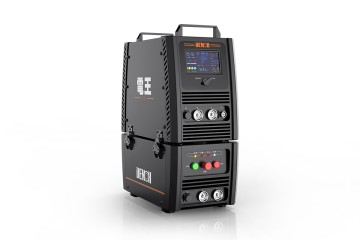
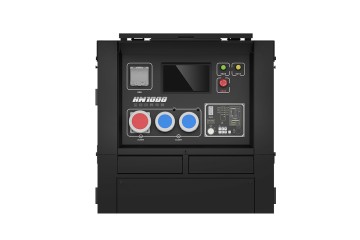
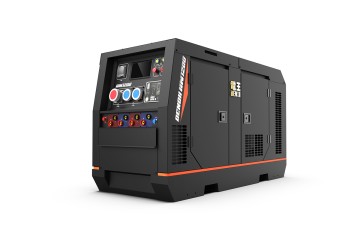
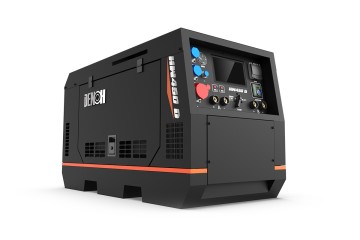
DENOH's heavy-duty diesel welder generators (such as the HW500E, HW1000, and HW1200 four-arc units) integrate constant-speed heavy-duty diesel engines, multi-layer conformal coating on all digital inverter PCBs, isolated airflow cooling tunnels, and oversized auxiliary output capacity. Even when operating deep in the rural agricultural zones of the Red River Delta or on remote coastal reclamation platforms where commercial grid power is non-existent, these units provide rock-solid current regulation, enabling four welding operators to execute downhill pipeline welding or MIG wire feeds simultaneously without arc interference.
Proven mechanical performance across national strategic assets, energy corridors, and industrial fabrications.
In offshore module yards operated by PTSC and petroleum consortia in Vung Tau, heavy wall API 5L X65 and duplex stainless piping require complete penetration welds resistant to sulfide stress cracking. The DW-TW-I Argon Arc Automatic System delivers micro-gap torch tracking and closed-loop current modulation, ensuring pristine internal root beads that meet stringent offshore deepwater acceptance criteria.
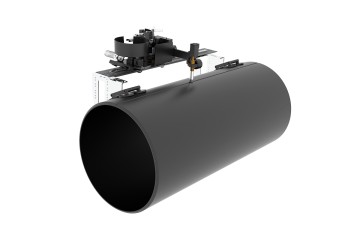
Rapid urban sprawl demands high-integrity sleeve reinforcements on operational gas arteries without service disruption. The DW-BW-I Sleeve Type Automatic Machine allows Vietnamese municipal utilities to quickly weld circumferential fillet and longitudinal seams on reinforcement sleeves, reducing trench excavation times and minimizing urban road closures.
During shutdown overhauls at large petrochemical complexes, thousands of high-pressure boiler tube joints must be completed in cramped, high-temperature boiler cavities. DENOH's orbital TIG heads deliver uniform 360-degree weld seals with 100% X-ray clearance, drastically shortening turnaround windows.
For trunkline construction traversing muddy paddy fields, our HW1200 Four-Arc Diesel Welder Generator serves as an independent mobile power station. A single unit powers four independent semiautomatic MIG or stick downhill welding stations while supplying auxiliary 380V/220V power for pipe facing machines and internal pneumatic line-up clamps.
Explore our complete catalog of automatic pipeline welders, robotic orbital torches, and heavy multi-arc engine-driven generators designed for severe industrial service.
How intelligent welding algorithms, digital data logging, and low-emission power sources will define Vietnam's industrial fabricators through 2030.
As Vietnam works towards fulfilling its COP26 net-zero commitments and expands offshore wind developments along the south-central coast (Binh Thuan and Ninh Thuan), structural steel fabrication requires welding machines with low energy draw, reduced carbon footprints, and high electrical power efficiency (PF > 0.95). Furthermore, offshore wind turbine jacket foundations and pin piles represent gigantic steel structures where deep weld penetration and zero hydrogen cracking are critical safety factors.
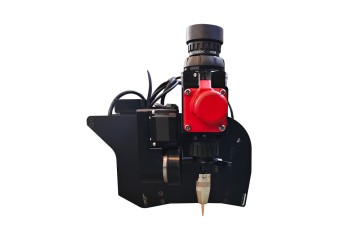
DENOH's automated systems, such as the DW-XW-I Pipeline Single Torch Automatic Welding Robot, integrate high-precision micro-step drives, laser seam vision tracking, and digital weld data telemetry. The operator sets parameters—such as oscillation width, dwell times, travel velocity, and wire feed speed—via an ergonomic touchscreen interface with multilingual support. During operation, the robotic tracker dynamically compensates for pipe out-of-roundness or bevel angle variations in real time, guaranteeing an aesthetically clean, metallurgically ductile weld bead that satisfies offshore wind, LNG, and pressure vessel engineering benchmarks.
When selecting a manufacturing partner serving the Vietnam market, local contractors prioritize robust after-sales engineering, immediate spare parts replenishment, and structured operator training programs. DENOH Seimitsu supports Vietnamese clients with end-to-end commissioning, custom pipeline track manufacturing for unconventional pipe diameters, and localized technical guidance—empowering Vietnamese enterprises to build safer, faster, and more profitable industrial assets across Southeast Asia.