Leave Your Message
Engineered for extreme onshore & offshore environments across Peninsular Malaysia, Sabah, and Sarawak pipeline grids.
Navigating the convergence of Industry 4.0, petrochemical investments, and smart manufacturing across Southeast Asia.
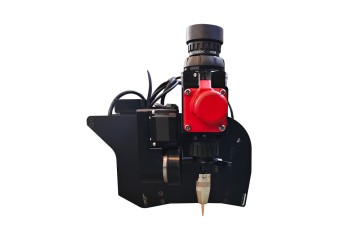
High-integrity CRA cladding, stainless steel root passes, and automated pipeline welding catering to Petronas EPCIC standards in Sabah, Sarawak, and Terengganu.
Malaysia's NIMP 2030 prioritizes intelligent robotic automation, low-carbon fabrication, and advanced welding engineering across heavy manufacturing corridors.
Accelerated transition toward robotic MIG/MAG setups for automotive body-in-white (BIW), commercial EV chassis fabrication, and high-precision electronic enclosures.
Malaysia has firmly solidified its position as one of Southeast Asia's paramount industrial and engineering epicenters. Driven by sustained capital investments in energy infrastructure, maritime shipbuilding, process engineering, and automotive assembly, the demand for sophisticated TIG (Tungsten Inert Gas / GTAW) and MIG (Metal Inert Gas / GMAW) welding equipment is experiencing exponential growth. Modern industrial fabricators across Malaysia's critical regional corridors—including the Klang Valley (Selangor and Kuala Lumpur), Johor's Pengerang Integrated Petroleum Complex (PIPC), Penang's high-tech manufacturing cluster, and East Malaysia's offshore fabrication yards in Kemaman, Labuan, Bintulu, and Miri—demand robust, automated, and energy-efficient welding technologies capable of adhering to rigorous international quality certifications such as ASME Section IX, API 1104, AWS D1.1, and ISO 3834.
The Malaysian manufacturing ecosystem is undergoing an aggressive modernization under the government's New Industrial Master Plan (NIMP) 2030 and the National Energy Transition Roadmap (NETR). Traditional manual welding setups are rapidly being supplanted by semi-automated and fully automated multi-torch welding systems, pipeline orbital robots, and engine-driven multi-function inverter units. Malaysian manufacturers and engineering procurement contractors (EPCs) are confronting challenges related to certified welder shortages, escalating labor costs, and unforgiving tropical maritime operating conditions. To preserve their competitive edge in international export markets, Malaysian workshops are actively seeking factory partnerships that deliver turn-key welding automation, localized technical support, high arc stability, and digital real-time data monitoring.
Understanding the technical distinctions between TIG and MIG processes is fundamental for Malaysian industrial engineers, pipeline fabricators, and plant maintenance directors. Each welding process commands specific operational domains within the country's diverse economic sectors:
| Parameter / Feature | TIG (GTAW) Application in Malaysia | MIG / MAG (GMAW/FCAW) Application in Malaysia |
|---|---|---|
| Primary Industrial Sectors | Offshore Subsea Spools, Petrochemical Tubes, Cleanrooms, Aerospace | Shipbuilding, Heavy Structural Steel, Automotive BIW, Cross-Country Pipelines |
| Electrode & Filler Wire | Non-consumable Tungsten Electrode + Separate Filler Rod/Wire | Continuously Fed Consumable Wire (Solid or Flux-Cored) |
| Deposition Rate & Speed | Moderate to Low (High Precision, Zero Spatter) | Very High (Ideal for Thick Structural Sections & Rapid Production) |
| Shielding Gas Types | Pure Argon (99.99%), Argon-Helium Blends for Tropical Cladding | Argon/CO2 Mixtures (80/20), Pure CO2, or Self-Shielded Flux Cored |
| Malaysia Site Suitability | Controlled Workshops, Cleanroom Facilities, Automated Orbital Tracks | All-Weather Outdoor Yards, Diesel-Driven Field Pipeline Rigs, Fabrication Sheds |
DENOH Seimitsu Electric Appliance (Beijing) Co., Ltd. is a professional high-tech enterprise integrating independent R&D, sophisticated manufacturing, global sales and full-process professional services of high-end pipeline welding equipment.
With more than 20 years of deep cultivation and continuous innovation in the pipeline welding industry, we have forged a solid industry foundation and built an unshakable market position through decades of practical experience and technological breakthroughs. Over the past 20-plus years, we have kept pace with the development of the global pipeline engineering industry, constantly optimizing technical solutions and upgrading product systems, witnessing and promoting the iterative upgrading of pipeline welding equipment technology.
The core strength of the company lies in its professional and elite team composed of senior industry experts, professional R&D engineers, skilled technical workers and efficient service personnel. Our R&D team gathers backbones with decades of experience in pipeline welding equipment research and development, many of whom have participated in the research and development of key national engineering supporting welding equipment and possess profound theoretical knowledge and rich practical experience.
Relying on the team's professional strength, we have been committed to tackling key technical problems in the pipeline welding field, breaking through foreign technical monopolies in many core technologies, and realizing the independent innovation and localization of high-end pipeline welding equipment. Meanwhile, our production, sales and service teams have been carefully trained and selected, with rich industry experience and strong professional capabilities, forming a collaborative and efficient working system from R&D and production to market sales and after-sales service.
Designing advanced welding machines engineered for high ambient humidity, corrosive offshore salt spray, and remote jungle terrain.
One of the foremost engineering challenges encountered by welding engineers in Malaysia is the perpetually humid, equatorial climate. Ambient relative humidity consistently fluctuates between 75% and 95% in coastal regions like Kemaman, Port Klang, and Pasir Gudang. When executing high-tensile pipeline welds (such as API 5L X65, X70, and X80 steels), atmospheric moisture drastically increases the risk of hydrogen-induced cold cracking (HICC) and porosity defects during manual or semi-automated shielded metal arc welding (SMAW) or flux-cored arc welding (FCAW).
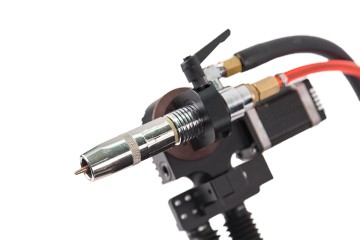
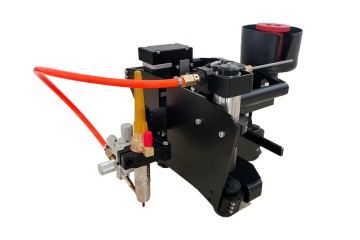
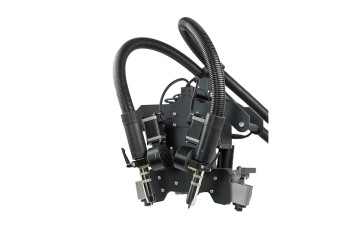
To resolve this chronic industrial vulnerability, modern Malaysian factories and field contractors rely heavily on DENOH's advanced closed-loop automated TIG and MIG welding robots. By maintaining a precision-controlled, preheated weld seam profile alongside synchronized inert shielding gas delivery, automated systems like the DW-EW-I and DW-EW-II Dual Torch External Welder effectively shield the molten puddle from ambient humid air infiltration. Furthermore, digital inverter control circuits encased within IP23/IP54 rated weather-resistant enclosures prevent condensation damage to sensitive internal semiconductor boards, guaranteeing 100% duty cycle operation under scorching tropical heat.
Malaysia remains a preeminent deepwater exploration and production center in Southeast Asia. Offshore assets operated by national oil conglomerates and global energy majors frequently operate in hostile deep-sea reservoirs characterized by high carbon dioxide (CO2) and hydrogen sulfide (H2S) sour gas concentrations. To withstand this aggressive corrosion, pipelines increasingly incorporate Corrosion Resistant Alloy (CRA) clad pipes—combining high-strength carbon steel backing with an internal metallurgically bonded Inconel 625 or 316L stainless steel clad layer.
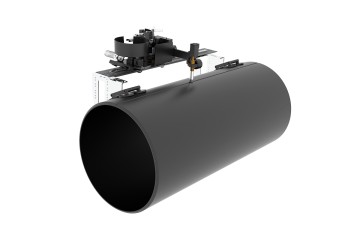
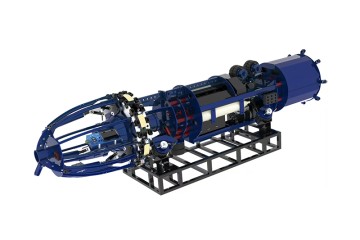
Welding CRA clad pipe requires uncompromising root-pass precision that solely advanced automated internal welding systems can achieve. The DW-EH Series Fully Automatic Battery Flexible Internal Welding Machine is engineered specifically to crawl through pipeline segments, executing laser-guided TIG or short-circuit MIG root beads directly from the pipe interior. This eliminates internal lack-of-fusion defects, maintains uncompromised corrosion barriers, and drastically accelerates construction cycle times on multi-kilometer pipeline projects linking offshore platforms to onshore processing facilities in Bintulu and Pengerang.
Shipbuilding and marine repair yards stretching from Lumut to Sabah are experiencing intense pressure to compress delivery schedules for offshore supply vessels (OSVs), fast crew boats, and maritime defense craft. Conventional manual stick and flux-cored welding suffer from inconsistent travel speeds, excessive grinding rework, and elevated spatter levels that escalate fabrication hours.
By adopting dual-torch automatic external welders and sleeve-type automatic units like the DW-BW-I, Malaysian shipbuilders and structural prefabrication factories have achieved substantial operational benefits:
For Malaysian procurement managers, chief welding inspectors, and contracting firms, investing in industrial welding machinery transcends initial equipment price tags. Critical selection criteria must center on lifecycle reliability, localized technical training, rapid spare parts interchangeability, and the manufacturer's technological heritage:
Engineered for global excellence, fully verified for heavy industrial fabrication and long-distance pipeline projects in Malaysia.