

Leave Your Message
Urban municipal utility infrastructure represents the lifeblood of modern smart cities. The extensive layout of high-pressure city gas distribution rings, pressurized potable water trunklines, district thermal energy loops, and wastewater collector mains demands unprecedented joint integrity. Unlike cross-country overland pipelines built across open terrain, urban utility networks operate in congested subsurface conduits directly adjacent to electrical grids, fiber optic cables, subways, and residential foundations.
In this demanding landscape, TIG (GTAW) and MIG (GMAW/FCAW) welding machines have emerged as irreplaceable technological cornerstones. Gas Tungsten Arc Welding provides unmatched root-pass metallurgical cleanliness, crucial for high-pressure combustible gas pipelines where even microscopic root lack of fusion can trigger devastating leaks. Concurrently, high-deposition Gas Metal Arc Welding accelerates fill and cap passes, minimizing open-trench traffic disruption in dense metropolitan zones.
Modern underground gas and water networks require 100% Non-Destructive Testing (NDT) radiographic or phased array ultrasonic pass rates. Field joint reliability directly governs municipal public safety, environmental compliance, and asset life cycles exceeding 50 to 70 years.
Natural gas, bio-methane, and hydrogen-blended distribution rings operate under intermediate-to-high pressure. Precision pulsed TIG ensures zero-porosity root passes that prevent combustible fluid migration into urban porous soils.
Urban road excavations entail staggering social and traffic delay costs. Automated single-torch and orbital MIG systems dramatically shorten cycle times per circumferential joint, slashing trench reopening risks.
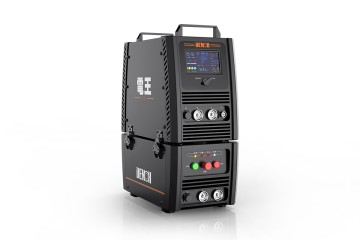
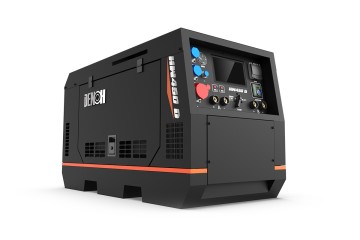
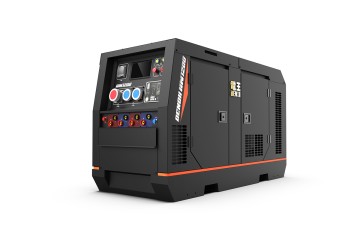
Subterranean urban corridors frequently lack industrial electrical tie-ins. Self-contained diesel generator-welder combos deliver steady, ultra-low harmonic distortion power for sensitive inverter-based arc controls.
The engineering specifications for municipal pipe jointing differ drastically between water and gas transmission networks. While water networks prioritize internal anti-corrosion lining preservation, hydraulic flow efficiency, and structural resistance to soil shifting, gas grids focus primarily on metallurgical containment, defect-free root penetrations, and dynamic pressure surge resilience.
| Technical Parameters | Urban Municipal Gas Distribution | Municipal Potable & District Water Lines |
|---|---|---|
| Primary Pipe Alloys | API 5L Gr. B, X42, X52, X65 Carbon Steel; Stainless 316L | Carbon Steel (ASTM A53/A106), Ductile Iron Hybrids, Stainless 304/316 |
| Recommended Root Pass | Automated Pulsed TIG (GTAW) or STT/RMD Short-Circuit MIG | Pulsed TIG for sanitary stainless; High-speed GMAW/MIG for large carbon mains |
| Fill & Cap Passes | Automated GMAW / Flux-Cored Arc Welding (FCAW-G) | Multi-Torch GMAW / Heavy Deposition Flux Cored Arc Welding |
| Shielding Gas Strategy | 99.999% Pure Argon (TIG); 80/20 Ar/CO2 or 98/2 Ar/O2 (MIG) | 100% Argon for internal purge / root; Ar/CO2 active gas mixes for fill |
| Testing Standard & NDT | 100% RT (Radiographic) / Phased Array UT; API 1104 / ASME B31.8 | Hydrostatic Pressure Testing + 10-20% RT/UT Sample Inspection (AWWA C200 / ASME B31.3) |
Urban municipal pipelaying rarely affords the luxury of spacious, dry bell-holes. Trench widths are strictly confined to reduce roadway excavation footprints, and water tables or existing utility conduits present severe physical obstacles. Traditional manual stick welding (SMAW) under these conditions exhibits high scrap rates due to welder fatigue, frequent electrode stop-starts, and difficult out-of-position (5G/6G) accessibility.
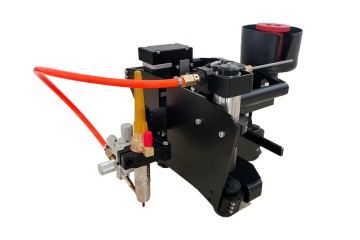
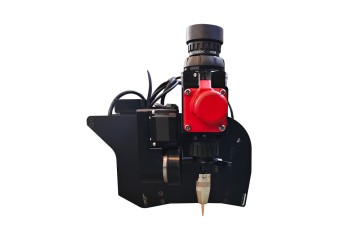
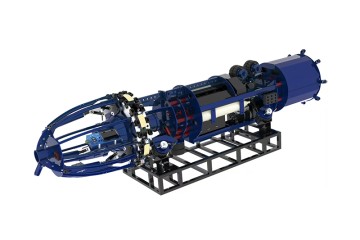
DENOH's automated orbital pipeline welding systems, such as the DW-TW-I Argon Arc Automatic Machine and the DW-XW-I Single Torch Automatic Robot, revolutionize this operation. Featuring low-profile orbital guide bands and synchronized digital arc tracking, these machines maneuver effortlessly within tight clearances down to 300 mm around the outer pipe circumference. The integration of closed-loop wire feed mechanisms ensures constant heat input, mitigating the heat-affected zone (HAZ) embrittlement that frequently plagues manual urban pipe joining.
With more than 20 years of deep cultivation and continuous innovation in the pipeline welding industry, DENOH has forged a solid industry foundation and built an unshakable market position through decades of practical experience and technological breakthroughs.
DENOH Seimitsu Electric Appliance (Beijing) Co., Ltd. is a professional high-tech enterprise integrating independent R&D, sophisticated manufacturing, global sales and full-process professional services of high-end pipeline welding equipment.
Over the past 20-plus years, we have kept pace with the development of the global pipeline engineering industry, constantly optimizing technical solutions and upgrading product systems, witnessing and promoting the iterative upgrading of pipeline welding equipment technology.
The core strength of the company lies in its professional and elite team composed of senior industry experts, professional R&D engineers, skilled technical workers and efficient service personnel. Our R&D team gathers backbones with decades of experience in pipeline welding equipment research and development, many of whom have participated in the research and development of key national engineering supporting welding equipment and possess profound theoretical knowledge and rich practical experience.
Relying on the team's professional strength, we have been committed to tackling key technical problems in the pipeline welding field, breaking through foreign technical monopolies in many core technologies, and realizing the independent innovation and localization of high-end pipeline welding equipment.
Meanwhile, our production, sales and service teams have been carefully trained and selected, with rich industry experience and strong professional capabilities, forming a collaborative and efficient working system from R&D and production to market sales and after-sales service.
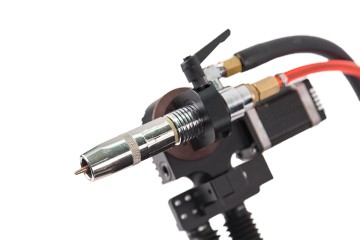
As global municipal planners transition toward hydrogen-enriched natural gas (H2 blends up to 20-30%) and smart digitized water metering networks, pipeline metallurgical standards are tightening. Hydrogen embrittlement poses severe threats to inferior root welds. Modern TIG and MIG welding machines are adopting advanced IoT-connected welding management systems that log real-time voltage, current, travel speed, and heat input for every millimeter of joint line.
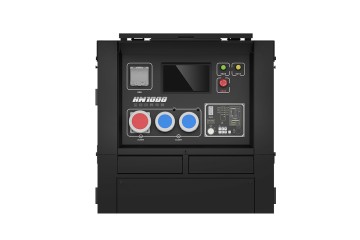
Furthermore, the shift toward sustainable urban construction emphasizes lower diesel emissions in residential zones. DENOH's latest generation of constant-speed engine-driven welders (such as the HW1000 and HW500E) utilize Tier 4/Euro V compliant diesel powerplants and eco-smart idle-reduction algorithms, meeting stringent urban acoustic and environmental air quality mandates without compromising instant arc initiation power.
A: TIG welding utilizes a non-consumable tungsten electrode shielded with inert argon gas, delivering complete control over penetration and bead geometry. This prevents root suck-back, burn-through, or spatter inside the gas pipe, ensuring smooth fluid passage and passing 100% X-ray inspection.
A: Units like the HW1200 power four welding operators simultaneously from one compact chassis. This reduces site congestion by 75% compared to four individual trailers, lowering urban street blockage, traffic detours, and noise pollution.