Leave Your Message
High-integrity welding systems deployed worldwide for critical refinery piping modules, offshore process skids, and severe service petrochemical lines.
Meeting the extreme metallurgical, mechanical, and safety requirements of downstream refining infrastructure through next-generation arc manipulation.
Petrochemical refining infrastructure operates under some of the most unforgiving thermomechanical and chemical regimes found anywhere in modern industrial manufacturing. Hydrocarbon processing units—such as fluidized catalytic cracking units (FCCU), continuous catalytic reformers (CCR), delayed cokers, hydrodesulfurization (HDS) reactors, and ethylene cracking furnaces—routinely subject process piping systems to internal pressures exceeding 25 MPa (3,600 psi) and operational temperatures ranging from cryogenic minus 196°C in liquefied gas fractions up to 1,050°C in thermal pyrolysis coils. Under these severe operating parameters, the weld seams connecting seamless and longitudinally welded pipe spools cannot simply be structural joints; they must serve as chemically resistant, fatigue-resilient, metallurgical continuums that eliminate all risks of catastrophic hydrocarbon release, hydrogen-induced cracking, or catastrophic stress-corrosion failure.
Historically, refinery process pipe spool fabrication and on-rack tie-in construction relied almost exclusively on manual Shielded Metal Arc Welding (SMAW) and manual Gas Tungsten Arc Welding (GTAW/TIG). While manual GTAW can achieve exceptional root-pass penetration profile and surface quality, it is inherently constrained by low deposition rates (typically 0.4 to 0.8 kg/hr), immense physical fatigue on certified human operators working in pipe racks, and a high susceptibility to human error during multi-pass heavy-wall fill operations. As global greenfield refinery megaprojects expand in scale and brownfield modernization shutdowns face compressed turnarounds, the industrial demand for specialized TIG MIG welding machines for refinery process piping and petrochemical plants has experienced an exponential surge. Modern computerized orbital TIG root machines paired with synergic pulsed MIG (GMAW) fill-and-cap platforms provide the perfect balance: metallurgical perfection on root and hot passes combined with 3 to 5 times the deposition efficiency on heavy structural pipe walls.
Designed specifically to satisfy strict Chapter IX High Pressure Piping and severe cyclic condition requirements, eliminating volumetric lack-of-fusion and non-metallic inclusions.
Closed-loop trailing shield interfaces and ultra-precise low-oxygen purge regulation optimized for Duplex 2205/2507, Alloy C-276, Monel, and 9Cr-1Mo-V (Grade 91) creep steels.
High-frequency digital inverters feature synchronized pulse wave dynamics to control heat input (kJ/mm), strictly preserving HAZ toughness and preventing carbide precipitation.
The selection between automated TIG and synergic MIG processes depends heavily on the base alloy system dictated by process fluid chemistry. In petrochemical plants, fluids contain wet hydrogen sulfide (H2S), polythionic acids, chlorides, ammonium bisulfide, and high-pressure supercritical hydrogen. For example, crude distillation overhead lines suffer from severe dilute hydrochloric acid condensation, mandating high-molybdenum austenitic stainless steels (such as 317L or 6-Moly alloys) or nickel-base alloys (Inconel 625). Welding these materials requires ultra-tight control over heat input to prevent the formation of deleterious intermetallic phases such as sigma (σ), chi (χ), and laves phases in the weld bead or heat-affected zone (HAZ), which destroy localized pitting resistance equivalent numbers (PREN) and drastically lower impact toughness.
When dealing with high-temperature hydrocracking loops, creep-strength enhanced ferritic (CSEF) steels—most notably ASTM A335 Grade P11 (1.25Cr-0.5Mo), P22 (2.25Cr-1Mo), and P91 (9Cr-1Mo-V)—are ubiquitous. The welding of Grade 91 requires strict preheat maintenance, precise interpass temperature limitation (typically 200°C–300°C), and a controlled cooling rate to guarantee a complete martensitic microstructure prior to post-weld heat treatment (PWHT). If an uncontrolled manual welding process introduces excessive heat input, the narrow HAZ will experience type IV creep void formation, leading to catastrophic premature joint rupture along the partially transformed intercritical zone. Dedicated automatic TIG/MIG welding machines engineered for process piping integrate digital travel speed regulation, arc length voltage control (AVC), and mechanized torch oscillation to hold heat input within an uncompromising tolerance band of ±5%, something human manual welders cannot sustain over twelve-hour turnaround shifts.
Modern petrochemical construction has pivoted aggressively toward modular pipe rack skids fabricated in controlled off-site facilities. Automatic TIG systems execute 100% full-penetration open-root joints with zero internal concavity (suck-back) under strict internal argon purging, while high-deposition pulsed MIG/FCAW systems fill thick-wall schedules (Schedule 80 to Schedule 160 and XXS) in continuous, uniform deposition sequences that pass both RT (Radiographic Testing) and automated phased-array ultrasonic testing (PAUT) with 99.8% first-pass acceptance rates.
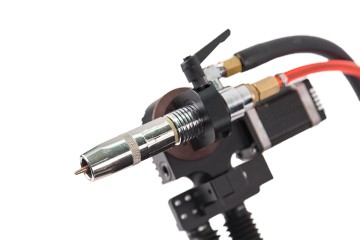
The definitive industry-standard methodology for high-criticality petrochemical piping is the hybrid combination of automated Gas Tungsten Arc Welding (TIG) for the critical root and hot pass, seamlessly transitioned to synergic Gas Metal Arc Welding (MIG / GMAW-P) or Flux-Cored Arc Welding (FCAW) for intermediate and capping runs. The orbital TIG root utilizes a precision pulsed tungsten arc with cold-wire or hot-wire feeding, achieving immaculate wetting along the root faces without creating tungsten inclusion or excessive inner reinforcement. Because the internal diameter of process pipe carries turbulent, corrosive sour fluids, any excessive weld root bead protrusion causes localized flow erosion, eddy-current corrosion, and microbiological growth pockets.
Once the internal root integrity is established and structurally locked by an automated TIG hot pass, the joint geometry is primed for rapid filling. This is where modern high-stability synergic MIG welding systems outshine traditional SMAW electrodes. Utilizing specialized shielding gases (such as 80/20 Argon-CO2 or trimix mixtures containing helium), pulsed MIG machines deliver spray-like droplet transfer without the intense spatter and heavy slag cleaning associated with manual stick welding. The lack of interpass slag chipping completely eradicates the single most common cause of radiographic weld rejection in pipe fabrication shops: entrapped slag lines along sidewall bevel bevels. Furthermore, the continuous wire-feed design allows multi-torch carriages or automated orbital buggy systems to execute complete circumferential joints without stopping for electrode change-outs, eliminating hundreds of potential stop/start cold-lap defects in every process line.
With more than 20 years of industry accumulation, we have accumulated profound technical expertise and strictly adhere to high-standard production norms.
We have built a comprehensive and rigorous whole-process quality control system to ensure the excellent performance and stable quality of every product.
Covering pre-sales consultation, on-site guidance and after-sales support, we form a well-laid, efficient and reliable global product supply network.
Equipped with independently developed core patented technologies, these products feature outstanding advantages such as high efficiency, energy saving, precise welding, stable operation, durability and strong adaptability to harsh field and complex engineering conditions. We hold multiple independent intellectual property patents and have obtained a number of national and international authoritative industry certifications, which fully affirm our technical strength and product quality.
Overcoming non-stop vibration, classified hazardous zones, restricted pipe-rack clearances, and continuous multi-shift operations.
Constructing and retrofitting process piping within an active petrochemical facility introduces site conditions that are vastly different from standard cross-country pipeline ditching. Refineries are classified hazardous locations (Zone 1 or Zone 2 under IEC/ATEX, Class I Division 1/2 under NEC) where volatile hydrocarbon vapors can occasionally be present. Operating heavy electrical equipment, high-frequency arc-starting inverters, and diesel engine-driven power plants inside these industrial perimeters mandates uncompromising build standards. Welding generators and inverters must possess high ingress protection (IP23 or higher), heavy-duty auxiliary spark-arrested exhaust systems, positive air shut-off valves (Chalwyn valves) to prevent engine overspeed in the event of flammable gas ingestion, and superior electromagnetic compatibility (EMC) to avoid disrupting sensitive plant-wide distributed control systems (DCS) and pressure transmitter loops.
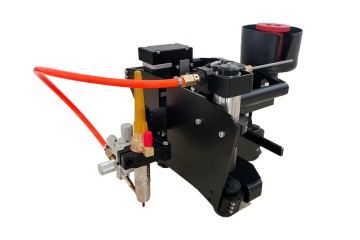
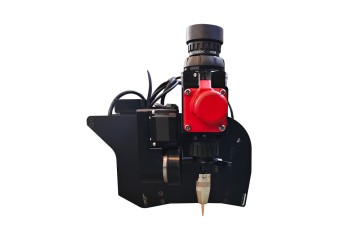
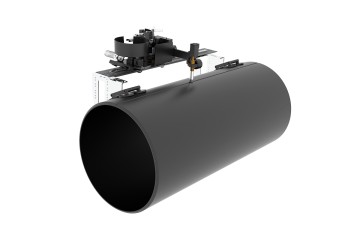
Furthermore, space constraints on elevated pipe racks are notoriously punishing. Pipe centers are often spaced mere inches apart to optimize module real estate. Conventional large-footprint welding rigs simply cannot access the circumferential joints of header pipes crowded between bypass loops, structural steel stanchions, and instrument cable trays. To solve this, specialized low-clearance radial guide tracks and low-profile orbital welding buggies (such as single-torch and sleeve-type pipeline automatic welding systems) are deployed. These compact carriages feature quick-clamping mounting mechanisms that install securely around the pipe perimeter with radial clearance envelopes as small as 120 mm to 150 mm, allowing 360-degree all-position (5G / 6G) mechanized welding in spaces where manual welders cannot maintain sightlines or manipulate a hand torch.
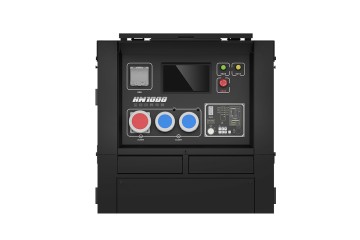
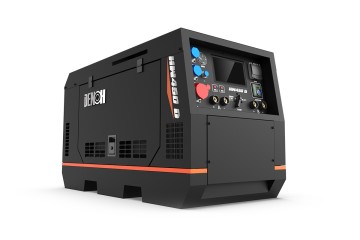
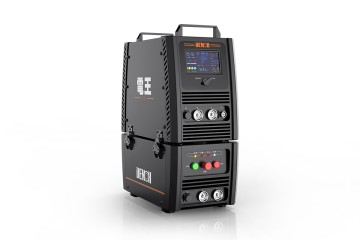
Engine-driven multi-function welder generators ensure clean, stable inverter power independent of erratic site grids, preventing high-frequency dropouts during critical passes.
Full parameter recording (current, voltage, travel speed, wire feed rate, heat input) integrated with IoT gateways to generate instant digital QA/QC weld traceability dossiers.
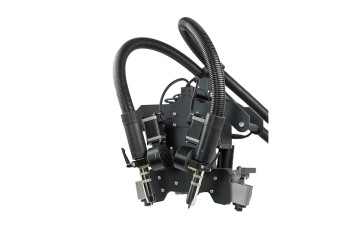
High-resolution stepper motors and motorized cross-slides compensate for pipe out-of-roundness and localized high-low fit-up mismatch in real time.
In petrochemical processing plants, a single defective weld seam can cause an unplanned shutdown costing millions of dollars per day in lost production, not to mention environmental liabilities and grave personnel safety hazards. Consequently, welding procedures (WPS) and procedure qualification records (PQR) are qualified strictly in accordance with ASME Section IX, ASME B31.3 (Process Piping), and API 570 (Piping Inspection Code). The inspection regime requires rigorous nondestructive examination, including 100% Visual Examination (VT), 100% Radiographic Testing (RT) via gamma or digital radiography, Ultrasonic Testing (UT/PAUT), and Liquid Penetrant (PT) or Magnetic Particle Testing (MT) of root and capping passes.
Automated TIG and MIG welding machines eliminate the leading human causes of NDE rejection: erratic arc strikes outside the weld groove, inconsistent torch travel angles causing cold lapping on high-angle bevels, irregular root suck-back due to arc length variation, and excessive weave width causing overheating. Modern automated pipe welders maintain computerized continuous synchronization between pulse frequency, wire feed velocity, oscillation amplitude, and dwell times at the bevel sidewalls. This guarantees thorough sidewall fusion while preventing burn-through on delicate thin-wall stainless process lines. For thick-wall chrome-moly and heavy carbon steel headers, the multi-torch automated MIG configuration achieves deep penetration profiles without excessive heat buildup, safeguarding Charpy V-notch impact toughness values at sub-zero design temperatures (-46°C for low-temperature service carbon steels such as ASTM A333 Grade 6).
The petrochemical manufacturing sector is aggressively accelerating toward Industry 4.0 paradigms, and pipe welding equipment is advancing directly at the forefront of this digital transformation. Next-generation orbital TIG and MIG welding machines now incorporate edge-computing microprocessors, high-definition laser seam-tracking sensors, and cloud telemetry. Instead of relying on pre-programmed fixed-motion paths, intelligent welding robots continuously monitor real-time laser profilometry of the joint groove ahead of the welding torch. If the bevel preparation exhibits fluctuating root gap dimensions or angular misalignment, the machine's adaptive algorithm automatically adjusts wire feed rates, oscillation widths, and carriage velocity in millisecond response times.
Simultaneously, the digital recording of every electrical parameter during the weld cycle creates an irrefutable "digital twin" of every circumferential joint in the refinery unit. Quality assurance engineers can verify that every centimeter of weld seam in an ethylene cracked gas line or high-pressure alkylation acid pipe was deposited strictly within qualified heat input boundaries. This digital pedigree streamlines regulatory sign-offs from third-party inspection authorities, eliminates tedious paper logging, and empowers plant operators with predictive maintenance models that understand exactly how each joint will withstand corrosive thermal cycling over its thirty-year operating life.
Relying on reliable product strength, professional and efficient full-process services, as well as the team's dedicated craftsmanship and 20 years of brand reputation, we have established long-term stable cooperation with leading enterprises in domestic oil and gas long-distance pipelines, municipal engineering, new energy infrastructure and other key fields.
Adhering to technological innovation as the core driving force and ingenuity quality as the foundation, we are committed to providing global customers with customized one-stop pipeline welding solutions, and continuously contributing to the high-quality and sustainable development of energy infrastructure projects at home and abroad.
Let's start your project together→Complete lineup of specialized automatic pipeline welding units, robotic crawlers, and heavy-duty field generator platforms engineered for refinery construction.