

Leave Your Message
The global oil and gas industry relies heavily on cross-country pipelines as the safest and most efficient means of transporting energy resources over thousands of miles. Construction of these energy corridors demands high-strength steel pipelines (typically API 5L X70, X80, and higher grades) to handle high operating pressures. Consequently, the field-joint welding process faces stringent requirements regarding mechanical integrity, crack resistance, and yield strength. Modern pipeline construction projects are under constant pressure to optimize cycle times while maintaining near-zero defect rates in remote and harsh environments.
Historically, manual Shielded Metal Arc Welding (SMAW), or stick welding, dominated pipeline construction. However, manual welding is highly dependent on welder skill, susceptible to weather interruptions, and suffers from lower deposition rates. Today, the industry is rapidly transitioning toward semi-automatic and fully automatic orbital welding systems employing Gas Tungsten Arc Welding (TIG/GTAW) and Gas Metal Arc Welding (MIG/GMAW or Flux-Cored Arc Welding - FCAW).
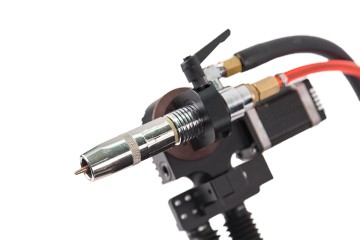
TIG welding is prized for its unmatched control and precision, making it the industry standard for root pass welding to ensure flawless penetration and bead profile inside the pipe. MIG/MAG welding, on the other hand, delivers high deposition rates and fast travel speeds, making it ideal for the hot, fill, and cap passes of thick-walled pipelines. Combining these two processes allows contractors to achieve the optimal balance of weld quality and speed.
With more than 20 years of industry accumulation, we have accumulated profound technical expertise and strictly adhere to high-standard production norms.
We have built a comprehensive and rigorous whole-process quality control system to ensure the excellent performance and stable quality of every product.
Covering pre-sales consultation, on-site guidance and after-sales support, we form a well-laid, efficient and reliable global product supply network.
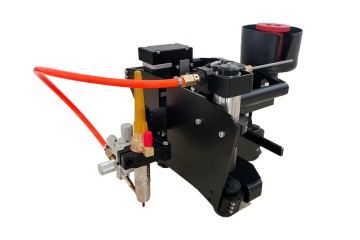
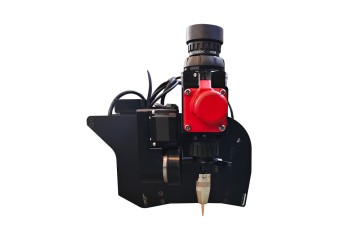
The root pass is the most critical weld in any pipeline joint. Any lack of fusion, root undercut, or burn-through can lead to catastrophic structural failure under high operating pressures. Automatic TIG welding machines, such as the DW-TW-I Argon Arc Pipeline Automatic Welding Machine, provide an exceptionally stable arc and precise shielding gas coverage. This ensures uniform penetration and a smooth internal bead, even when coping with variations in pipe alignment and joint fit-up.
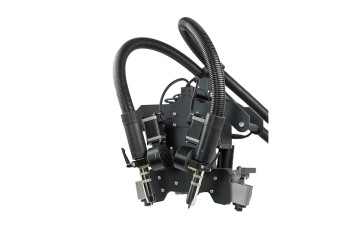
Once the root pass is secure, the remaining groove must be filled quickly to maintain project pace. Automatic external welding machines utilizing single or dual-torch MIG configurations (like the DW-EW-II Dual Torch External Welder) are deployed. Dual-torch systems double the deposition rate by operating two weld pools simultaneously on the same carriage. This significantly reduces the number of passes required for thick-walled pipes, cutting overall cycle times by up to 50% compared to traditional manual methods.
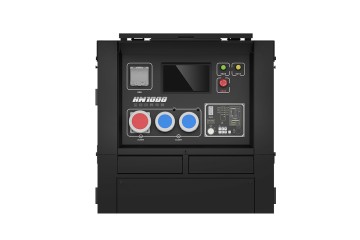
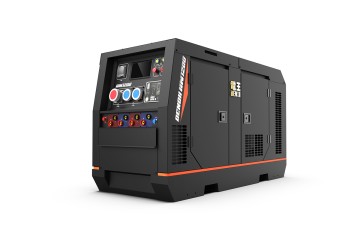
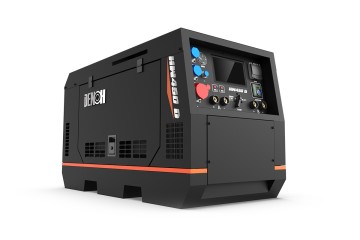
Cross-country pipelines cross rugged, isolated terrains such as deserts, mountains, and tundras where grid power is nonexistent. Engine-driven welding machines and multi-function diesel welder generators (such as the HW1000 and HW1200 series) serve as mobile powerhouses. These units supply the stable current and voltage required for automatic welding heads while simultaneously powering auxiliary equipment like grinders, pre-heaters, and hydraulic alignment clamps.
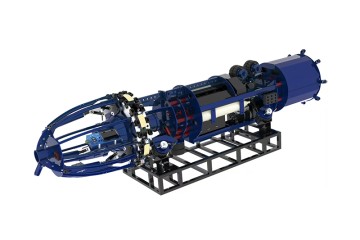
For large-diameter pipelines, internal welding systems are utilized. The DW-EH Series Fully Automatic Battery Flexible Internal Welding Machine is positioned inside the pipe to perform internal root passes. Powered by onboard batteries, these machines operate independently of trailing cables, ensuring smooth operations and rapid positioning from joint to joint.
Equipped with independently developed core patented technologies, these products feature outstanding advantages such as high efficiency, energy saving, precise welding, stable operation, durability and strong adaptability to harsh field and complex engineering conditions. We hold multiple independent intellectual property patents and have obtained a number of national and international authoritative industry certifications, which fully affirm our technical strength and product quality.
The pipeline construction sector is undergoing a digital transformation. Key technological advancements are shaping the future of cross-country pipeline welding:
Modern orbital welding robots are increasingly equipped with laser tracking and arc sensing systems. These systems detect deviations in the weld groove geometry in real-time and automatically adjust the torch position, oscillation width, and dwell time. This ensures consistent weld quality despite minor fit-up errors, significantly reducing weld repair rates.
To comply with stringent safety regulations, pipeline operators require comprehensive documentation of every weld. Modern engine-driven welders and automatic controllers feature built-in data loggers that record critical parameters (current, voltage, travel speed, and heat input) for every pass. This data can be uploaded to cloud databases for remote quality auditing, enabling instant verification of weld integrity.
As the pipeline industry strives to lower its carbon footprint, there is growing interest in hybrid and battery-powered welding solutions. Onboard battery systems reduce fuel consumption and emissions from diesel generators, enabling quieter and cleaner operations in environmentally sensitive regions.
Relying on reliable product strength, professional and efficient full-process services, as well as the team's dedicated craftsmanship and 20 years of brand reputation, we have established long-term stable cooperation with leading enterprises in domestic oil and gas long-distance pipelines, municipal engineering, new energy infrastructure and other key fields.
Adhering to technological innovation as the core driving force and ingenuity quality as the foundation, we are committed to providing global customers with customized one-stop pipeline welding solutions, and continuously contributing to the high-quality and sustainable development of energy infrastructure projects at home and abroad.