Leave Your Message
High-performance orbital crawlers, engine-driven autonomous welders, and precision arc robots optimized for steep mountainous rights-of-way (ROW) and isolated pipeline spreads.
Modern oil, gas, hydrogen, slurry, and water transportation corridors are increasingly forced into arduous geological terrains—traversing high-altitude mountain chains, rocky ravines, permafrost plateaus, and desert passes where electrical utility grids are non-existent.
When laying transmission pipelines on 30° to 65° mountainous inclines, standard molten puddle physics change dramatically. Gravity causes weld pool sagging, excessive root undercut, and asymmetric side-wall fusion. Specialized all-position TIG root pass machines and pulsed MIG orbital tractors with multi-axis oscillation and real-time puddle retention are essential to maintain API 1104 and ISO 13847 structural compliance.
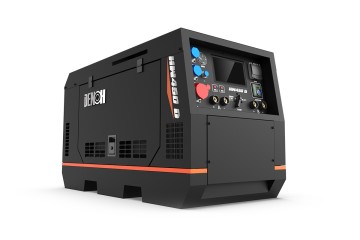
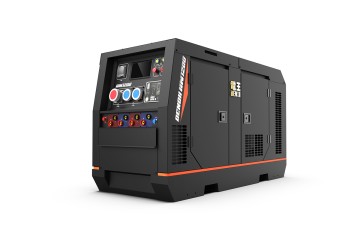
In remote off-grid locations, pipeline contractors cannot rely on municipal electricity. Welding units must either integrate heavy-duty diesel-driven multi-arc generators (such as the HW1200 or HW450D) or ultra-efficient high-density lithium battery drives. These independent power modules must maintain ±1% voltage stability despite severe engine torque variations and high-altitude air thinning above 3,500 meters.
Narrow rights-of-way (ROW) along mountain ledges restrict heavy crane access and bulky equipment transport. Modern welding systems must possess high power-to-weight ratios, modular quick-disassembly frames, track-locking mechanisms, and weather-sealed IP23/IP54 enclosures that endure extreme winds, freezing cold (-40°C), and dense alpine sandstorms.
Achieving 100% Non-Destructive Testing (NDT) radiographic passing rates on heavy-wall API 5L X65, X70, X80, and corrosion-resistant alloy (CRA) clad pipelines demands a flawless combination of root pass integrity and rapid volumetric fill deposition.
TIG (Gas Tungsten Arc Welding) remains the gold standard for pipeline root pass welding, especially on high-pressure gas conduits, subsea tie-ins, and high-nickel alloy pipelines. In mountainous terrain where pipe fit-up hi-lo mismatch and bevel gap variations are amplified by uneven ground leveling:
Once the root bead is solidly established, Gas Metal Arc Welding (GMAW) and Flux-Cored Arc Welding (FCAW) provide the high metal deposition rates necessary to complete heavy-wall joints rapidly before weather windows shut down:
Compare key operational metrics across our specialized autonomous engine-driven generators, external orbital bugs, internal line-up welders, and robotic systems.
| Equipment Model | Welding Process | Power Architecture | Suitable Terrains / ROW | Max Slope Rating | Pipe Diameter Range | Primary Joint Application |
|---|---|---|---|---|---|---|
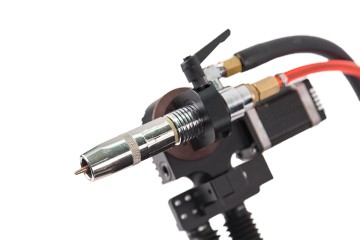
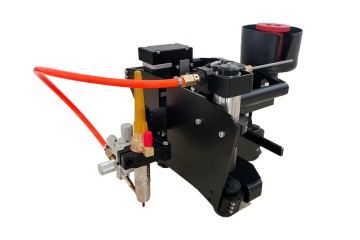
| DW-EW-I Series | GMAW / FCAW / Pulse MIG | Inverter / Off-Grid Gen Set | Mountain Slopes, Narrow Trenches | Up to 55° Incline | Φ168 mm – Φ1420 mm+ | External Root, Hot, Fill, Cap |
| HW450D System | Multi-Process MIG/TIG/MMA | Autonomous Heavy Diesel Engine | Zero-Infrastructure Isolated ROW | All Terrains (Rig-Mounted) | Universal / All Diameters | Field Fabrication, Tie-Ins & Mainline |
| DW-TW-I System | Automatic TIG / Argon Arc | Precision Digital Inverter | High-Altitude CRA / Gas Lines | Up to 45° Incline | Φ60 mm – Φ1016 mm | High-Purity Defect-Free Root Passes |
| HW1200 Multi-Arc | 4-Arc Independent Stations | Heavy-Duty Turbo Diesel Generator | Remote Pipeline Spread Camps | High Altitude (4000m+) | Large-Scale Spreads | Simultaneous 4-Operator Heavy Welding |
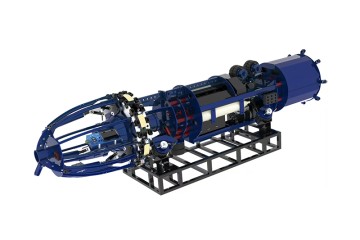
| DW-EH Series | Internal GMAW / Multi-Torch | Flexible Onboard Battery System | Steep-Grade Long Distance Lines | Up to 35° Inside Pipe | Φ610 mm – Φ1420 mm | Rapid Full-Circumference Internal Root |
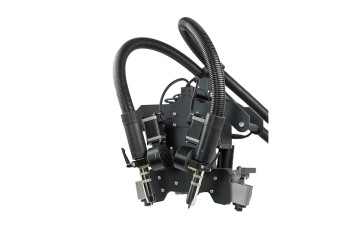
| DW-EW-II Dual Torch | Dual-Torch Synchronized MIG | Dual Inverter Power Link | Mountainous Large-Diameter Mains | Up to 50° Incline | Φ406 mm – Φ1420 mm | High-Speed Volumetric Fill & Cap Passes |
Examining how advanced TIG & MIG automated units conquer extreme physical geography across global energy infrastructure projects.
At high altitudes, atmospheric pressure drops, leading to unstable arc ionization and severe derating of standard air-cooled welding supplies and combustion engines. DENOH turbo-compensated diesel welding units and high-frequency stabilized inverters guarantee uninterrupted arc strike and consistent shielding gas coverage even under gusting alpine wind conditions.
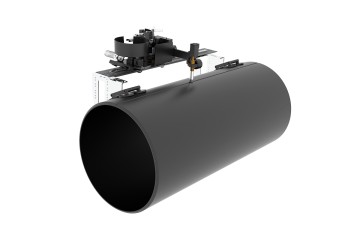
Hydroelectric penstocks installed along sheer cliff walls require high tensile strength joints under extreme gravitational stress. Lightweight track-mounted DW-EW-I orbital units securely lock onto curved guide bands, using micro-step digital oscillation to counterbalance molten puddle gravity run-off on heavy-wall steel structures.
Off-grid tie-in welding in deep dry riverbeds and desert canyons requires rugged, self-sufficient machinery. The HW450D engine welder combines auxiliary single/three-phase AC generator outputs for pipe beveling, preheating induction coils, and powering hydraulic pipe clamps alongside high-duty-cycle welding.
Integrating artificial intelligence, high-frequency DSP microcontrollers, and real-time seam tracking to eliminate operator error on high-risk mountainous pipeline links.
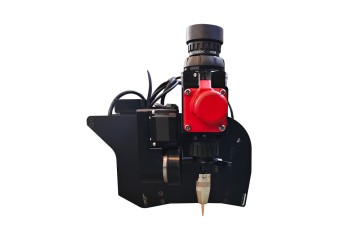
Equipped with real-time optical triangulation and arc voltage sensing (AVC), our robotic carriages automatically adapt to thermal expansion warping, bevel gap fluctuations, and pipe ovality in real-time, maintaining a strict ±0.2 mm torch centering tolerance.
Each weld parameter—current, voltage, travel speed, heat input (kJ/mm), wire feed rate, and interpass temperature—is recorded in solid-state flash memory. When a satellite or 4G/5G link is established, comprehensive quality records sync directly to cloud QA/QC databases.
Eliminating cumbersome power cables that snag on rocky slopes, our DW-EH Series flexible internal welders utilize high-capacity automotive-grade lithium battery packs, delivering full eight-hour shifts of autonomous internal root welding on a single charge.
DENOH Seimitsu Electric Appliance (Beijing) Co., Ltd. is a professional high-tech enterprise integrating independent R&D, sophisticated manufacturing, global sales and full-process professional services of high-end pipeline welding equipment.
With more than 20 years of deep cultivation and continuous innovation in the pipeline welding industry, we have forged a solid industry foundation and built an unshakable market position through decades of practical experience and technological breakthroughs.
Over the past 20-plus years, we have kept pace with the development of the global pipeline engineering industry, constantly optimizing technical solutions and upgrading product systems, witnessing and promoting the iterative upgrading of pipeline welding equipment technology.
The core strength of the company lies in its professional and elite team composed of senior industry experts, professional R&D engineers, skilled technical workers and efficient service personnel. Our R&D team gathers backbones with decades of experience in pipeline welding equipment research and development, many of whom have participated in the research and development of key national engineering supporting welding equipment and possess profound theoretical knowledge and rich practical experience.
Relying on the team's professional strength, we have been committed to tackling key technical problems in the pipeline welding field, breaking through foreign technical monopolies in many core technologies, and realizing the independent innovation and localization of high-end pipeline welding equipment. Meanwhile, our production, sales and service teams have been carefully trained and selected, with rich industry experience and strong professional capabilities, forming a collaborative and efficient working system from R&D and production to market sales and after-sales service.
Browse our complete range of specialized equipment engineered for cross-country oil, gas, chemical, penstock, and off-grid long-distance pipeline construction.
Crucial technical considerations to guarantee defect-free radiographic testing (RT) and automated ultrasonic testing (AUT) results under extreme field environments.
In sub-zero mountainous or desert canyon environments, rapid quenching leads to high-hardness martensitic microstructures and hydrogen-induced cracking (HIC) in high-strength pipeline steels (X70/X80). Always utilize induction preheating powered by the HW450D or HW1200 auxiliary generator output to maintain strict 120°C–180°C preheat and interpass temperatures before initiating root or fill passes.
High alpine mountain passes frequently experience wind speeds exceeding 8 m/s, which disrupts shielding gas columns (Ar / CO2 mixtures) and causes severe porosity. Employ lightweight, fast-latching orbital welding wind huts combined with gas lenses and optimized flow meters (25–35 L/min) to shield the arc puddle during external TIG/MIG cycles.
On steep inclines, track bands can slip if not torqued accurately. DENOH quick-lock flexible track bands feature non-slip guide teeth and positive rack-and-pinion engagements that prevent gravity slip and maintain exact perpendicularity to the pipe axis regardless of pipe incline angles up to 65 degrees.
Store solid and flux-cored MIG wire spools in hermetically sealed environmental containers with desiccant heaters. Ensure argon gas manifolds have dual-stage pressure regulators with electric de-icing heaters to prevent gas line freeze-up caused by high expansion cooling in cold mountain climates.