Leave Your Message
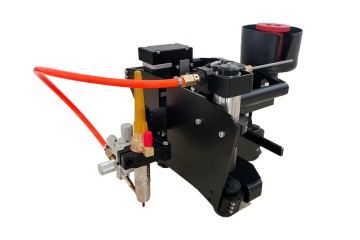
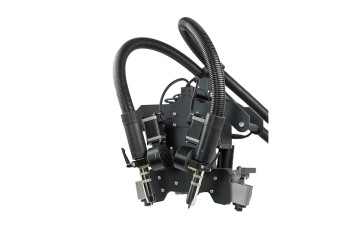
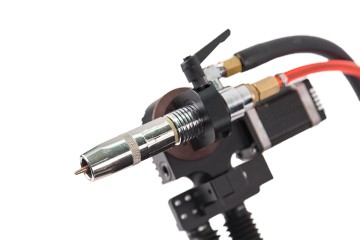
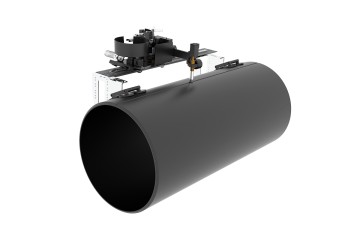
Explore our premium range of high-efficiency automatic welding units optimized for large-diameter steel pipeline joining.
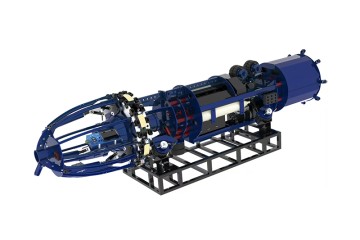
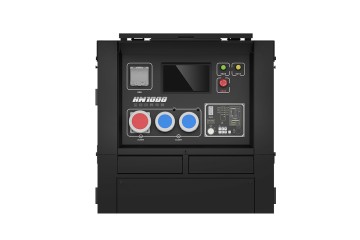
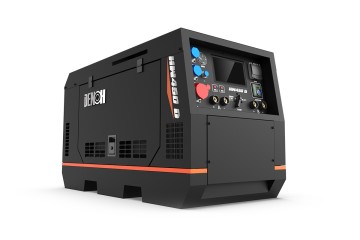
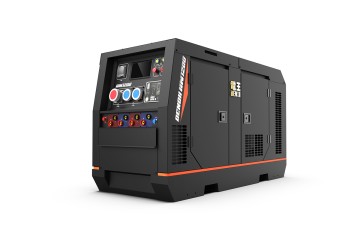
Modern energy distribution channels—spanning thousands of kilometers across rough terrains, subsea beds, and seismic zones—demand robust transport infrastructures. The global paradigm shift toward high-efficiency energy transit has triggered an unprecedented demand for large-diameter high-grade steel pipelines. Steel grades like API 5L X70, X80, and even X100 have become the industry standard due to their high yield strength, which allows for thinner pipe walls and higher operating pressures. However, joining these advanced metallurgical structures presents significant challenges. The application of specialized TIG (Tungsten Inert Gas) and MIG (Metal Inert Gas) welding machines has emerged as the definitive technological solution to guarantee structural integrity, reduce joint failure rates, and meet rigorous global safety standards.
"High-grade pipeline steel demands precise heat input controls. Standard welding procedures often fail to prevent hydrogen-induced cracking (HIC) and heat-affected zone (HAZ) softening. Modern automatic TIG/MIG orbital systems offer the exact thermal management required to preserve the base metal's mechanical properties."
The pipeline construction market is undergoing rapid evolution. Key commercial drivers include the construction of cross-border natural gas networks, LNG export terminals, and the progressive development of hydrogen-blend transmission lines. In these multi-billion dollar projects, field welding efficiency directly dictates project timelines and financial viability. Manual welding is increasingly phased out due to skilled welder shortages, rising labor costs, and the strict zero-defect tolerance enforced by international regulatory bodies. Automatic orbital TIG and MIG welding machines have transitioned from optional high-tech additions to mandatory project requirements, ensuring consistent, repeatable, and fully documentable weld quality.
For large-diameter high-grade steel pipeline joining, utilizing a single welding process is rarely optimal. Instead, engineers deploy a hybrid approach combining the strengths of TIG (GTAW) and MIG/MAG (GMAW) technologies:
TIG (GTAW) for Root Passes: The root pass is the critical foundation of the weld joint. TIG welding offers unmatched control over the weld pool, ensuring complete, defect-free root penetration and a smooth internal bead configuration. This is essential to prevent turbulent flow and internal erosion during pipeline operation.
MIG (GMAW) for Fill and Cap Passes: Once the root pass is secure, MIG welding, especially utilizing pulsed or modified spray-transfer modes, delivers high deposition rates. This dramatically reduces the cycle time for filling the deep bevels of thick-walled pipelines, optimizing productivity without sacrificing mechanical properties.
Advanced waveforms minimize heat input, protecting the crystalline structure of high-grade X80/X100 steels.
Automatic orbital tracking minimizes human error, eliminating root defects and slag inclusions.
Real-time parameter monitoring records voltage, current, and travel speed for regulatory compliance.
Joining large-diameter pipelines (typically ranging from 30 to 56 inches or larger) made of high-grade steel requires a deep understanding of metallurgy and mechanical engineering. As the steel grade increases from X70 to X100, the carbon equivalent is carefully controlled through micro-alloying (using elements like niobium, vanadium, and titanium) and thermo-mechanical control processing (TMCP). These steels derive their strength from a fine-grained bainitic or acicular ferritic microstructure. Excessive heat input during welding can cause grain growth in the Heat-Affected Zone (HAZ), leading to a drastic reduction in low-temperature toughness and making the joint susceptible to brittle fracture.
Here, the specialized TIG/MIG orbital welding machine plays a vital role. By utilizing high-frequency pulsing and precise travel speed control, these machines restrict the heat input to a narrow band, preserving the fine-grained microstructure. Furthermore, the use of low-hydrogen filler metals combined with the consistent shielding gas coverage provided by automatic systems reduces the risk of hydrogen pickup, effectively eliminating hydrogen-induced cracking (HIC)—a major failure mode in high-grade pipeline construction.
The pipeline welding sector is entering a digital revolution. The integration of Artificial Intelligence (AI) and Machine Learning into automatic welding power sources allows for real-time seam tracking and adaptive control. Laser vision sensors scan the groove geometry milliseconds ahead of the arc, dynamically adjusting the torch position and oscillation width to compensate for variation in root gap or bevel preparation. Additionally, the transition toward the hydrogen economy is driving the development of specialized welding protocols. Hydrogen molecules are extremely small and easily diffuse into steel, causing embrittlement. TIG and MIG welding machines optimized for hydrogen pipelines utilize ultra-pure shielding gases and precise waveform controls to achieve exceptionally clean welds with minimal residual stress.
A global pioneer in high-end pipeline welding equipment and automatic orbital systems.
With more than 20 years of deep cultivation and continuous innovation in the pipeline welding industry, we have forged a solid industry foundation and built an unshakable market position through decades of practical experience and technological breakthroughs.
Over the past 20-plus years, we have kept pace with the development of the global pipeline engineering industry, constantly optimizing technical solutions and upgrading product systems, witnessing and promoting the iterative upgrading of pipeline welding equipment technology.
The core strength of the company lies in its professional and elite team composed of senior industry experts, professional R&D engineers, skilled technical workers and efficient service personnel. Our R&D team gathers backbones with decades of experience in pipeline welding equipment research and development, many of whom have participated in the research and development of key national engineering supporting welding equipment and possess profound theoretical knowledge and rich practical experience.
Relying on the team's professional strength, we have been committed to tackling key technical problems in the pipeline welding field, breaking through foreign technical monopolies in many core technologies, and realizing the independent innovation and localization of high-end pipeline welding equipment. Meanwhile, our production, sales and service teams have been carefully trained and selected, with rich industry experience and strong professional capabilities, forming a collaborative and efficient working system from R&D and production to market sales and after-sales service.
Browse our complete system of internal/external welding machines, diesel generators, and multi-arc power sources.