

Leave Your Message
In the rapidly evolving landscape of global infrastructure, the demand for "Green" and "Zero-Emission" solutions has transitioned from a niche preference to an industrial mandate. The Tig Mig Welding Machine for Green Battery-powered Zero-emission Internal Pipe Welding represents the pinnacle of this shift. As the world moves toward carbon neutrality, the pipeline industry—traditionally reliant on heavy diesel-powered machinery—is undergoing a profound transformation.
Industrial Insight: Modern pipeline projects, especially those in urban areas, environmentally sensitive zones, or confined tunnel spaces, now require equipment that produces zero exhaust fumes and minimal noise. Battery-powered internal welding robots are the answer to these stringent ESG (Environmental, Social, and Governance) requirements.
Traditionally, internal pipe welding was powered by massive diesel generators that trailed behind the welding crawler. This not only consumed significant fuel but also created hazardous working conditions inside the pipe due to exhaust accumulation. The introduction of the DW-EH Series Fully Automatic Battery Flexible Internal Welding Machine has changed the game. By utilizing high-density lithium-ion or LiFePO4 battery packs, these machines provide consistent, high-amperage power for TIG (Tungsten Inert Gas) and MIG (Metal Inert Gas) processes without a single puff of smoke.
The commercial benefit is clear: reduced fuel logistics, lower operational costs, and the ability to work in "Zero-Emission Zones" where traditional machinery is banned. This technology is particularly vital for long-distance oil and gas pipelines where refueling logistics in remote terrains like deserts or arctic tundras can be a nightmare.
Choosing between TIG and MIG for internal welding depends on the specific requirements of the pipeline project. Our advanced robotic systems are designed to handle both, often in a hybrid configuration to maximize efficiency and weld integrity.
Internal TIG welding is the gold standard for the root pass in high-pressure pipelines. Because the arc is controlled independently of the filler metal, TIG provides unmatched precision. In a battery-powered setup, the challenge is maintaining a stable arc with fluctuating battery voltages. Our DW-TW-I Argon Arc Pipeline Automatic Welding Machine uses sophisticated power electronics to ensure a "stiff" arc, resulting in 100% X-ray quality welds. This is essential for hydrogen pipelines where even the smallest microscopic defect can lead to embrittlement.
For filling and capping passes, MIG (GMAW) is the preferred choice due to its high deposition rate. When integrated into an internal welding crawler, MIG torches can complete a joint significantly faster than manual or TIG processes. The DW-EW-I Single Torch Automatic External/Internal systems leverage pulsed MIG technology to reduce spatter—a critical factor when welding inside a pipe where cleaning is difficult.
The application of zero-emission internal welding machines is expanding into new frontiers:
DENOH Seimitsu Electric Appliance (Beijing) Co., Ltd. is a professional high-tech enterprise integrating independent R&D, sophisticated manufacturing, global sales and full-process professional services of high-end pipeline welding equipment.
With more than 20 years of deep cultivation and continuous innovation in the pipeline welding industry, we have forged a solid industry foundation and built an unshakable market position through decades of practical experience and technological breakthroughs.
The core strength of the company lies in its professional and elite team composed of senior industry experts, professional R&D engineers, skilled technical workers and efficient service personnel. Our R&D team gathers backbones with decades of experience in pipeline welding equipment research and development, many of whom have participated in the research and development of key national engineering supporting welding equipment.
The next decade of pipe welding will be defined by "Intelligence." Our latest DW-XW-I Pipeline Single Torch Automatic Welding Robot is already incorporating machine learning algorithms to adjust welding parameters in real-time based on the fit-up gap.
As the industry moves toward autonomous construction, these battery-powered units will become "Smart Nodes" in a connected job site. They will not only weld but also perform ultrasonic testing (UT) and laser profiling of the joint simultaneously, uploading data to the cloud via 5G or satellite links. This ensures that the project manager in a London office can verify the quality of a weld performed in the middle of the Sahara Desert in real-time.
The "Green" aspect is also evolving. Future iterations will likely feature Hydrogen Fuel Cell range extenders for the battery packs, creating a truly circular energy economy on the construction site. This isn't just about being "eco-friendly"; it's about the radical efficiency of energy use that diesel engines simply cannot match.
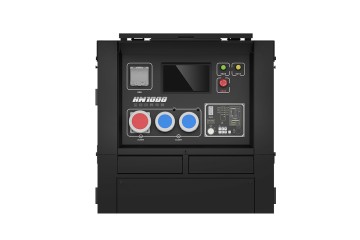 HW1000 Constant Speed Engine Driven Welding Machine
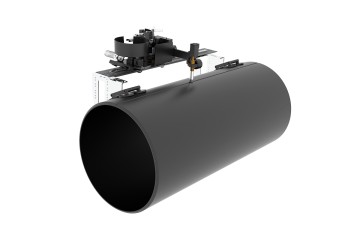 DW-BW-I Sleeve Type Pipeline Automatic Welding Machine
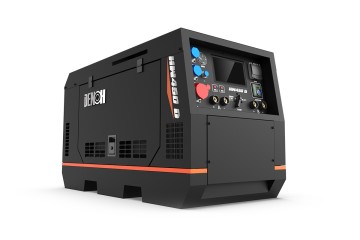 HW450D Engine Welding Machine
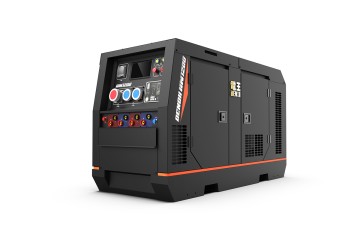 HW1200 Four-Arc Engine Driven Welding Machine
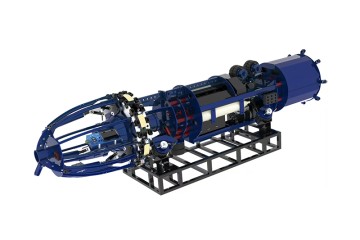 DW-EH Series Battery Flexible Internal Welding Machine
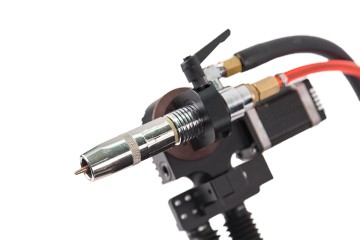 (DW-EW-I) Single Torch Pipeline Automatic External Welding Machine
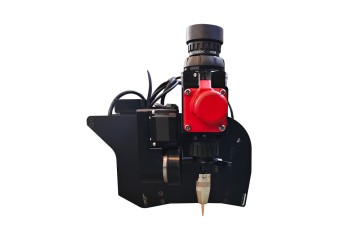 DW-XW-I Pipeline Single Torch Automatic Welding Robot
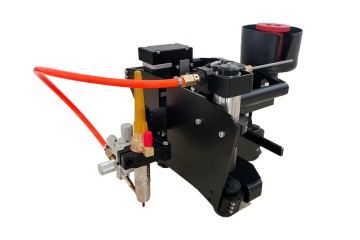 DW-TW-I Argon Arc Pipeline Automatic Welding Machine
Over the past 20-plus years, we have kept pace with the development of the global pipeline engineering industry, constantly optimizing technical solutions and upgrading product systems, witnessing and promoting the iterative upgrading of pipeline welding equipment technology. Relying on the team's professional strength, we have been committed to tackling key technical problems in the pipeline welding field, breaking through foreign technical monopolies in many core technologies, and realizing the independent innovation and localization of high-end pipeline welding equipment.
© 2024 DENOH Seimitsu Electric Appliance (Beijing) Co., Ltd. All Rights Reserved. Green Welding Technologies for a Sustainable Planet.