Leave Your Message
Engineered for seamless integration across field mainlines, remote tie-ins, river crossings, and demanding Right-of-Way (ROW) spreads.
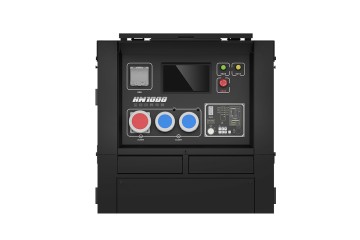
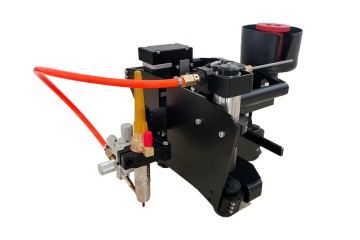
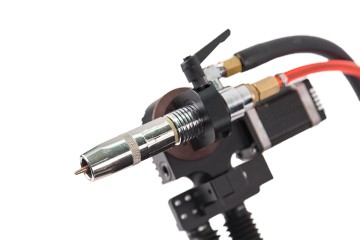
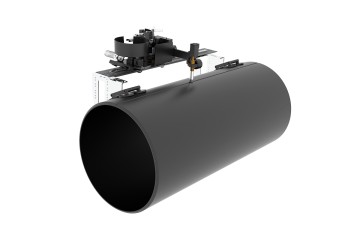
Cross-country hydrocarbons infrastructure demands uncompromising joint reliability across API 5L grades ranging from standard X52 up to advanced high-strength thermo-mechanically controlled processed (TMCP) steels such as X70, X80, and X100. In these high-performance metallurgy regimes, balancing weld metal yield strength with low-temperature impact toughness is paramount.
Gas Tungsten Arc Welding (TIG/GTAW) remains the golden standard for internal and open-root passes. Its concentrated electric arc produces pristine, spatter-free deposits that virtually eliminate burn-through and internal root concavity. When synchronized with automated cold-wire or hot-wire feeds, orbital TIG delivers uniform underbead reinforcement and superior root contouring, essential for resisting sour gas corrosion (H2S stress corrosion cracking) and cyclic pressure fatigue.
Conversely, Gas Metal Arc Welding (GMAW/MIG), particularly in pulsed-spray transfer and surface-tension-transfer modes, delivers unmatched deposition rates for the subsequent hot, fill, and cap passes. The synergistic combination of TIG for root integrity and mechanized multi-torch MIG for volume filling cuts weld station cycle time by over 60% compared to traditional Shielded Metal Arc Welding (SMAW) cellulosic spreads.
In harsh arctic terrains and remote desert spreads, manual cellulosic electrodes present inherent risks of cold cracking due to elevated hydrogen levels. Modern automated TIG-MIG pipeline processes employ continuous solid wire electrodes with optimized argon-CO2-helium shielding blends, ensuring ultra-low diffusible hydrogen contents and eliminating expensive pre-heating requirements on heavy-wall API 5L line pipes.
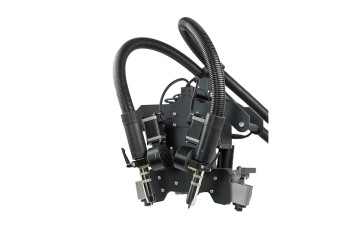
Operating in grueling Right-of-Way (ROW) spreads where hundreds of kilometers must be laid consecutively across rugged topographies. Crawler-mounted multi-process welding tractors and automated orbital carriages run uninterrupted along track bands, achieving uniform bevel tracking, zero freeze-stop defects, and exceptional joint-to-joint repeatability.
Trenchless river crossings, highway underpasses, and environmentally sensitive wetland intersections require pipe pull-back strings with 100% flaw-free welds. Precision TIG root sequencing combined with dual-torch external MIG ensures high impact toughness values (Charpy V-Notch > 120 J at -40°C), resisting extreme tensile stresses during pull-through operations.
Station tie-ins and metering skids involve heavy wall thickness, complex compound miters, and restricted clearances. Compact orbital TIG heads deliver automated 360-degree pipe welding without requiring manual torch repositioning, consistently surpassing Class 1 radiographic and ultrasonic testing criteria.
The core strength of the company lies in its professional and elite team composed of senior industry experts, professional R&D engineers, skilled technical workers and efficient service personnel. Our R&D team gathers backbones with decades of experience in pipeline welding equipment research and development, many of whom have participated in the research and development of key national engineering supporting welding equipment and possess profound theoretical knowledge and rich practical experience.
Relying on the team's professional strength, we have been committed to tackling key technical problems in the pipeline welding field, breaking through foreign technical monopolies in many core technologies, and realizing the independent innovation and localization of high-end pipeline welding equipment. Meanwhile, our production, sales and service teams have been carefully trained and selected, with rich industry experience and strong professional capabilities, forming a collaborative and efficient working system from R&D and production to market sales and after-sales service.
Technical parameter validation based on 48-inch (1219 mm) OD, 22.0 mm WT, API 5L X80 cross-country transmission pipeline installation.
| Welding Parameter / Key Metric | Cellulosic SMAW (E6010 / E8010) | Semi-Automatic Flux-Cored (FCAW-G) | Automated Internal TIG + External Dual MIG |
|---|---|---|---|
| Deposition Rate (kg/hr per station) | 1.8 – 2.4 kg/hr | 3.2 – 4.0 kg/hr | 6.5 – 8.8 kg/hr |
| Typical Arc Time (48" OD x 22mm WT) | 110 – 140 minutes | 65 – 85 minutes | 22 – 28 minutes |
| Diffusible Hydrogen (ml / 100g) | High (> 16 ml / 100g) | Medium (4 – 8 ml / 100g) | Ultra-Low (< 2.5 ml / 100g) |
| Root Pass Defect Rate (PAUT / RT) | 3.5% – 6.0% | 2.0% – 3.5% | < 0.45% |
| Low-Temp Charpy V-Notch (-40°C) | 35 – 55 Joules | 50 – 80 Joules | 110 – 160 Joules |
| Preheat & Interpass Requirements | Strict continuous heating > 120°C | Moderate heating > 100°C | Reduced heating (∼50°C – 80°C) |
Modern cross-country pipeline construction leaves zero margin for human positioning variance. The implementation of high-speed digital signal processors (DSP) and high-response servo axes within automated bug-and-band carriages enables Real-Time Arc Voltage Control (AVC) and Through-The-Arc (TTA) tracking.
During orbital oscillation in downhill or uphill MIG fill cycles, the digital controller samples welding current and voltage at kilohertz frequencies. It instantly calculates torch-to-work distance and groove sidewall proximity, executing micrometer adjustments to torch height and weave width. This eliminates sidewall lack of fusion (LOF) and ensures perfectly uniform cap-height profile even across out-of-round pipe ends and variable root openings.
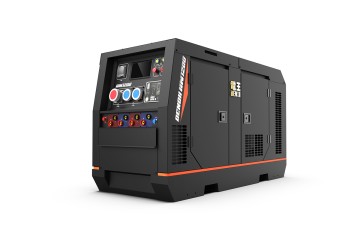
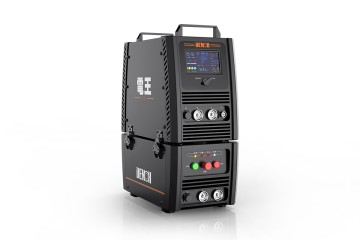
By pairing constant-speed high-torque engine-driven generators with high-frequency invertor power sources, electrical arc stiffness is preserved regardless of ambient power fluctuations or extreme climatic shifts, guaranteeing uniform metallurgical penetration along every segment of the 360-degree pipe circumference.
Anticipating the convergence of hydrogen fuel infrastructure, robotic automation, and real-time cloud analytics in next-generation long-distance pipeline construction.
The global transition demands pipelines capable of transporting high-pressure pure hydrogen, hydrogen-natural gas blends, and supercritical dense-phase Carbon Dioxide (CO2). Hydrogen embrittlement poses severe hazards at weld microstructures. Automated TIG-MIG solutions with precisely tailored consumable chemistry yield ultra-clean, uniform, fine-grained acicular ferrite microstructures that prevent atomic hydrogen entrapment.
Integrating compact 3D laser profiling sensors directly upstream of the welding arc allows the carriage computer to compute groove volume variations before the torch arrives. Dynamic adaptive algorithms adjust wire feed speed, travel speed, and oscillation frequency in real time, compensating for bevel fit-up tolerances, pipe out-of-roundness, and tack weld transitions seamlessly.
Field data from inverter power units, internal lineup clamps, and orbital carriages stream automatically into centralized project dashboards via satellite telemetry. Welding procedure specifications (WPS) are locked and monitored in real time; any transient thermal excursion is logged and cross-correlated with automated Phased Array Ultrasonic Testing (PAUT) records for end-to-end digital lifecycle tracing.
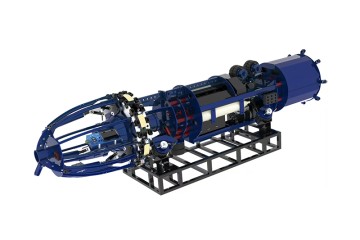
From internal line-up clamping and mechanized root deposition to multi-torch external capping and heavy engine generators.