Leave Your Message
High-performance orbital crawlers, battery-flexible internal welding rigs, and heavy-duty multi-function engine power stations engineered for seamless synchronization across multi-station arc configurations.
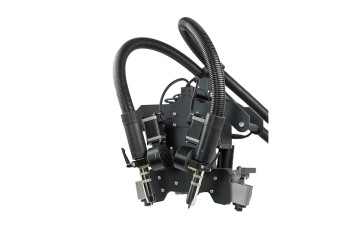
Modern infrastructure projects across remote overland oil corridors, LNG terminals, and transcontinental transmission lines demand an unprecedented transition from distributed single-arc engine units to centralized multi-station generator arrays.
Eliminating voltage cross-talk and current droop when multiple operators strike arcs simultaneously. Independent secondary inverter modulation prevents root-pass burn-through and ensures spatter-free TIG/MIG transitions.
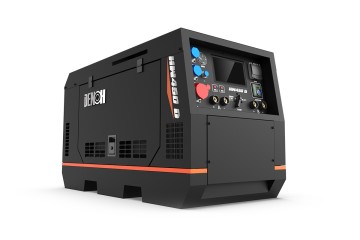
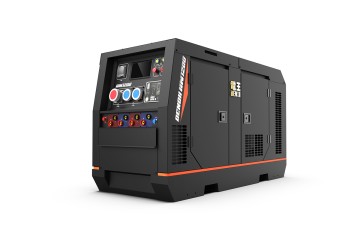
Consolidating multiple power heads into centralized diesel workhorses such as the HW1200 Quad-Arc and HW500E reduces site fuel burn by up to 34%, minimizes logistics footprints, and slashes periodic maintenance downtime.
Rated for operation between -40°C and +55°C. Equipped with high-altitude derating compensators, sandstorm hermetic filtration, and heavy-duty IP23S ingress-resistant electrical bays for zero-failure field longevity.
Pipeline welding demands absolute metallurgical discipline. In field pipeline tie-ins, tank construction, and mainline stringing, the root pass is the critical frontier where defective penetration or micro-fissures jeopardize hydro-testing compliance. TIG (GTAW) delivers the flawless puddle control and low hydrogen diffusion required for heavy-wall high-yield steels (X70, X80, and X100).
However, manual TIG root completion must transition swiftly to semi-automatic or robotic MIG/MAG (GMAW/FCAW) fill and cap passes to maintain high deposition rates (exceeding 4.5 kg/h per arc). Operating both processes from a common engine generator historically caused destructive voltage sags when a high-amperage MIG spray-arc initiated while a sensitive TIG puddle was being manipulated.
DENOH's multi-station diesel generator topology solves this through dual-stage decoupled inverter architectures. High-frequency digital signal processors (DSP) constantly balance inductive reactance, supplying microsecond current corrections that safeguard TIG arc softness regardless of heavy cyclical loads imposed by dual-torch external automated welding crawlers.
The HW-series engine generators utilize dedicated permanent magnet or brushless synchronous alternators with low total harmonic distortion (<3% THD). Each station operates through an isolated DC bus with high-speed PWM chopper modules.
Auxiliary 3-phase 380V/400V and single-phase 220V power feeds internal battery charging crawlers, hydraulic internal line-up clamps, pipe induction preheaters, and laser weld profiling crawlers concurrently without interrupting arc dynamics.
Examining how multi-station diesel welder generators and robotic TIG/MIG carriages conquer complex metallurgies, extreme geolocations, and stringent radiographic acceptance criteria.
In arid desert pipelines spanning hundreds of kilometers without electrical grid infrastructure, temperatures exceed 50°C with abrasive particulate contamination. The HW1200 four-arc diesel generator operates continuously as a roving power station, fueling two DW-EW-II dual-torch automated external welding machines while running auxiliary chilling compressors.
Cold-weather metallurgy requires strict preheat maintenance to prevent hydrogen-induced cold cracking (HICC). Multi-station generator setups feed high-frequency induction warming heads on station 1 while delivering precise low-heat-input pulsed MIG current across stations 2 and 3, maintaining preheat temperature ranges without thermal shock.
Tie-in joints and valve installation pits present confined spaces where engine exhaust must be kept outside the work zone while multi-process welding (TIG root + stick/flux-core fill) occurs inside the trench. The compact HW450D and HW500E supply isolated lines up to 100 meters away with zero voltage drop or arc instability.
Near-shore landfall approaches encounter high humidity, salt spray, and tidal windows. The combination of DW-BW-I sleeve welding crawlers and heavy-duty multi-station diesel supplies ensures rapid cycle turnaround on high-pressure clad pipelines, meeting stringent DNV-ST-F101 offshore subsea pipeline standards.
System sizing benchmarks for integrating single, dual, and four-arc engine generators with semi-automated and robotic orbital TIG/MIG welding carriages.
| Model Series | Arc Channels | Rated Output (per Arc) | Auxiliary AC Power | Supported Welding Processes | Recommended Automation Rigs |
|---|---|---|---|---|---|
| HW450D Series | Single / Dual Station | 450A @ 60% / 350A @ 100% | 15 kVA (3-Phase / 1-Phase) | SMAW, GTAW (TIG), GMAW/FCAW | DW-XW-I Single Torch Robotic Crawler |
| HW500E Multi-Function | Dual-Station Synchronous | 500A @ 60% / 400A @ 100% | 20 kVA Pure Sine Wave | High-Freq TIG, Pulse MIG, Carbon Gouging | DW-EW-I External Crawler, DW-BW-I Sleeve |
| HW1200 Heavy Enterprise | Four-Arc Independent | 4 x 400A @ 100% Duty Cycle | 45 kVA Heavy Utility Bus | Full-Process TIG/MIG/MAG/Cellulosic SMAW | DW-EW-II Dual Torch + DW-EH Internal Rig |
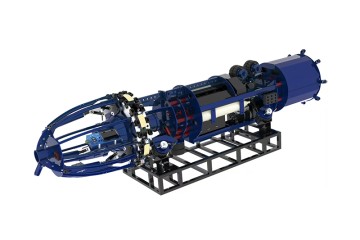
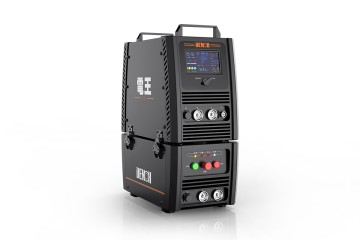
| DW-EH Hybrid Platform | Battery + Engine Hybrid | Digital Servo Synchronized | Auxiliary DC & Quick Charge Bus | Internal Short-Arc Micro-Wire Root MIG | Fully Automatic Internal Root Line-Up |
With more than 20 years of deep cultivation and continuous innovation in the pipeline welding industry, we have forged a solid industry foundation and built an unshakable market position through decades of practical experience and technological breakthroughs.
Over the past 20-plus years, we have kept pace with the development of the global pipeline engineering industry, constantly optimizing technical solutions and upgrading product systems, witnessing and promoting the iterative upgrading of pipeline welding equipment technology.
The core strength of the company lies in its professional and elite team composed of senior industry experts, professional R&D engineers, skilled technical workers and efficient service personnel. Our R&D team gathers backbones with decades of experience in pipeline welding equipment research and development, many of whom have participated in the research and development of key national engineering supporting welding equipment and possess profound theoretical knowledge and rich practical experience.
Relying on the team's professional strength, we have been committed to tackling key technical problems in the pipeline welding field, breaking through foreign technical monopolies in many core technologies, and realizing the independent innovation and localization of high-end pipeline welding equipment. Meanwhile, our production, sales and service teams have been carefully trained and selected, with rich industry experience and strong professional capabilities, forming a collaborative and efficient working system from R&D and production to market sales and after-sales service.
DENOH Seimitsu Electric Appliance (Beijing) Co., Ltd. is a professional high-tech enterprise integrating independent R&D, sophisticated manufacturing, global sales and full-process professional services of high-end pipeline welding equipment.
How industrial internet of things (IIoT), adaptive computer vision, and hybrid battery-diesel topologies are transforming remote pipeline project execution.
Integrating high-speed CMOS sensors and edge compute neural networks to track the weld seam in real time, automatically compensating for root bevel mismatch, hi-lo tolerances, and pipe thermal expansion without operator intervention.
Cellular and satellite telemetry modules embedded in HW-series generator units relay real-time voltage, current, heat input (kJ/mm), and fuel consumption metrics directly to cloud QA dashboards to guarantee absolute ASME IX and API 1104 compliance.
High-density lithium battery buffers absorb dynamic arc peak currents, enabling smaller Tier 4 Final/Stage V diesel engines to run continuously at their optimal brake-specific fuel consumption (BSFC) sweet spot, reducing site emissions by 40%.
Browse our complete range of fully automatic internal rigs, engine-driven multi-arc generators, dual-torch external crawlers, and sleeve-welding systems.
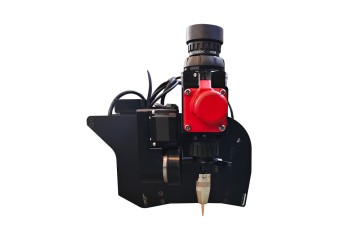
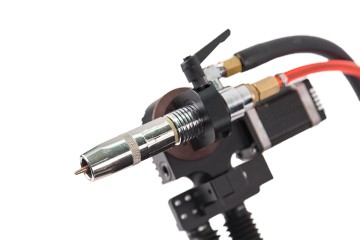

Key considerations when integrating diesel welder generators with automated orbital TIG and MIG pipelines.
Cross-interference is mitigated through completely isolated secondary inverter transformer channels combined with independent DSP feedback loops. Each station monitors its own arc voltage and current characteristics at 20 kHz. If Station 1 strikes a high-voltage HF TIG arc while Station 2 runs an erratic short-circuit MIG bead, inductive cross-talk is suppressed by localized capacitive decoupling on each channel's output bridge.
Yes. Systems like the HW500E and HW1200 are designed with dedicated auxiliary alternators or independent high-capacity stator windings. Auxiliary 3-phase (380V/400V) and single-phase (220V/110V) AC power remains strictly regulated at ≤3% total harmonic distortion (THD), allowing safe concurrent operation of bevel facing tools, pipe induction heating rings, and air compressors without affecting welding arc performance.
A consolidated 4-arc machine such as the HW1200 replaces four individual small engines with one heavy-duty industrial diesel power plant (e.g., Cummins or Deutz). This eliminates redundant alternator drag, idle consumption, oil filters, and radiator servicing. Fuel consumption across an 8-hour welding shift is reduced by 25% to 35%, while transport logistics and truck-bed space along pipeline rights-of-way (ROW) are cut by more than half.
Yes. DENOH DW-series automatic orbital crawlers and power supplies provide precise heat-input tracking (kJ/mm) required by metallurgical procedures for API 5L X70, X80, and X100 pipelines. Strict control over pulsed MIG waveforms and torch oscillation parameters prevents coarse grain boundary formation in the heat-affected zone (HAZ), easily meeting Charpy V-notch impact and CTOD fracture toughness thresholds.