

Leave Your Message
High-performance automatic welding systems engineered to deliver outstanding reliability and precision in remote mountainous project sites.
Modern energy infrastructure projects are increasingly pushing into geography once deemed inaccessible. Oil, gas, and water pipelines must traverse rugged mountain ranges, deep valleys, and vast remote expanses that are completely disconnected from national power grids. In these challenging terrains, the installation of high-pressure pipelines demands uncompromising structural integrity, making high-performance TIG and MIG welding equipment critical assets.
Operating in mountainous off-grid environments introduces severe challenges: volatile weather, extreme altitude-induced power de-rating, high humidity, and complex logistics where heavy machinery cannot easily travel. Under these conditions, standard industrial welding equipment is insufficient. Operators require self-contained, highly mobile, and technologically advanced welding systems capable of delivering stable arc performance under varying thermal and altitude conditions.
The current industrial trend highlights a rapid transition from manual Shielded Metal Arc Welding (SMAW/Stick) to semi-automatic and fully automatic gas metal arc welding (GMAW/MIG) and gas tungsten arc welding (GTAW/TIG) systems. This shift is driven by the strict quality standards of modern pipeline construction (such as API 1104 and ASME Section IX) and the urgent need to accelerate project timelines in narrow seasonal construction windows. TIG welding remains the gold standard for high-purity root passes to prevent internal weld defects, while MIG/FCAW (Flux-Cored Arc Welding) offers high deposition rates, enabling fast fill and cap passes on heavy-walled pipeline segments.
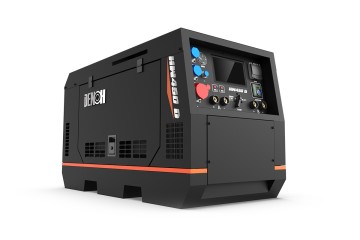
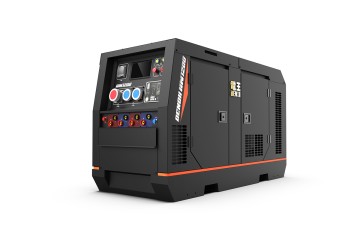
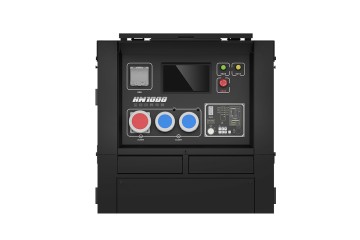
Off-grid pipeline projects lack access to stable utility grids, requiring heavy reliance on engine-driven generators. However, conventional generators often suffer from voltage fluctuations and frequency drift, which can compromise the sensitive electronics of modern inverter-based TIG and MIG welders. To address this, DENOH's advanced engine-driven welding machines integrate constant-speed diesel engines with high-frequency generator units, delivering ultra-stable auxiliary power and multi-process welding outputs simultaneously.
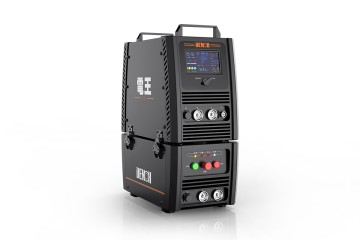
Whether executing precise root passes with Argon Arc (TIG) systems or filling joints with high-speed dual-torch MIG systems, our equipment utilizes active power factor correction (PFC) and digital waveform control to ensure arc stability, even when operating at the end of long cable extensions in steep mountain passes.
With more than 20 years of deep cultivation and continuous innovation in the pipeline welding industry, we have forged a solid industry foundation and built an unshakable market position through decades of practical experience and technological breakthroughs.
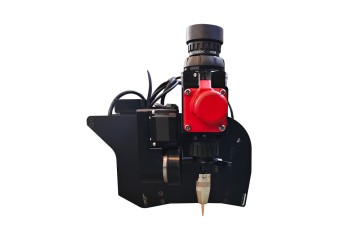
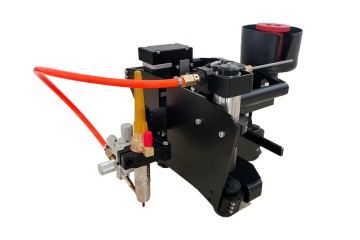
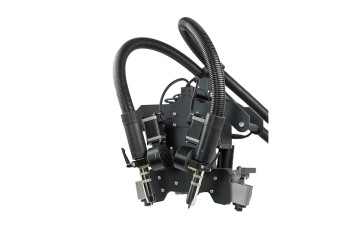
As mountainous terrain limits the space around the pipe joint, manual welding becomes physically exhausting, leading to inconsistent weld profiles. This is where pipeline single and dual-torch automatic welding robots excel. These systems crawl along temporary guide bands wrapped around the pipe, maintaining precise torch angles, travel speeds, and oscillation parameters. This level of automation ensures consistent penetration and bead appearance, drastically lowering repair rates on high-yield steel pipelines (such as X70 and X80 grades).
Over the past 20-plus years, we have kept pace with the development of the global pipeline engineering industry, constantly optimizing technical solutions and upgrading product systems, witnessing and promoting the iterative upgrading of pipeline welding equipment technology.
The core strength of the company lies in its professional and elite team composed of senior industry experts, professional R&D engineers, skilled technical workers and efficient service personnel. Our R&D team gathers backbones with decades of experience in pipeline welding equipment research and development, many of whom have participated in the research and development of key national engineering supporting welding equipment and possess profound theoretical knowledge and rich practical experience.
Relying on the team's professional strength, we have been committed to tackling key technical problems in the pipeline welding field, breaking through foreign technical monopolies in many core technologies, and realizing the independent innovation and localization of high-end pipeline welding equipment. Meanwhile, our production, sales and service teams have been carefully trained and selected, with rich industry experience and strong professional capabilities, forming a collaborative and efficient working system from R&D and production to market sales and after-sales service.
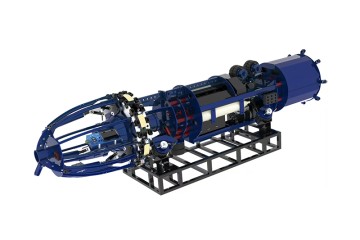
By integrating advanced digital control technology, high-efficiency power electronics, and rugged mechanical designs, DENOH has successfully developed a comprehensive range of products. This includes multi-station diesel welder generators, orbital external welding crawlers, and high-precision internal copper backup clamps. These systems are specifically designed to meet the rigorous demands of remote, off-grid pipeline installations.
How our specialized TIG and MIG welding solutions resolve complex field challenges under extreme atmospheric and geographical conditions.
At elevations exceeding 3,000 meters, thin air reduces engine cooling efficiency and causes standard diesel engines to lose power. DENOH's engine-driven welders utilize turbocharged diesel engines and smart electronic fuel injection (EFI) systems to maintain full rated welding output, ensuring uninterrupted dual-torch MIG welding operations.
In narrow ravines and steep slopes where heavy equipment cannot easily pass, lightweight, modular automatic welding robots are essential. The DW-XW-I robot features a compact, quick-clamp track design that allows operators to set up and initiate automatic orbital TIG or MIG welding in minutes, minimizing manual labor in hazardous locations.
From sub-zero Siberian winters to scorching desert summers, ambient temperatures can degrade electronic performance. Our welding machines feature intelligent thermal management systems and heavy-duty cooling tunnels that protect internal boards, guaranteeing a 100% duty cycle under harsh environmental conditions.
Explore our full line of professional automatic welding robots, engine-driven welder generators, and internal welding systems engineered for off-grid success.
As pipeline operators face increasing pressure to lower environmental impacts, reduce labor costs, and improve safety standards, the technology driving off-grid pipeline construction is evolving. Key trends shaping the future of this sector include:
Modern diesel-powered generators are increasingly incorporating battery storage systems. This hybrid configuration allows the diesel engine to run at peak efficiency to charge onboard batteries while the welding system draws energy from the battery pack. This setup delivers quiet, emissions-free operation during root-pass setups and provides instantaneous peak current output for demanding MIG fill passes.
Even in off-grid mountain ranges, welding parameters (such as current, voltage, travel speed, and gas flow rates) are increasingly logged in real-time. Using satellite communication or cellular links, this data is uploaded to cloud databases. This allows quality assurance teams located in metropolitan headquarters to monitor weld quality, troubleshoot equipment issues, and approve joints remotely.
Advanced pipeline automatic welding crawlers are integrating real-time laser seam tracking. These systems automatically adjust the torch position to compensate for minor alignment variations between pipe ends. This technology reduces the operator's cognitive workload and ensures perfect root penetration, even on large-diameter pipes where manual adjustments are slow and prone to error.
By keeping pace with these technological developments, DENOH continues to provide international contractors with the reliable, high-performance tools needed to overcome the challenges of remote pipeline installation. Our systems ensure that even under the most demanding conditions, every weld meets the highest standards of safety and efficiency.