Leave Your Message
Explore our flagship smart pipeline welding systems designed to drive down emissions and maximize field productivity.
The global energy pipeline construction industry is facing an unprecedented paradigm shift. As nations align to meet strict net-zero carbon targets, pipeline operators are demanded to dramatically reduce scope 1 and scope 2 emissions across the entire project lifecycle. Traditionally, pipeline internal welding has relied heavily on diesel-powered generator units. These units run continuously, generating massive carbon dioxide, carbon monoxide, nitrogen oxides, and particulate emissions in remote or confined spaces.
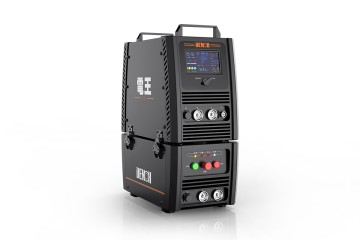
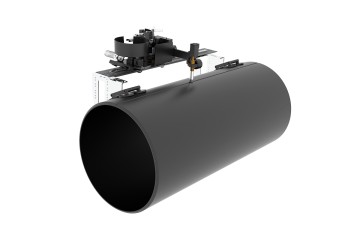
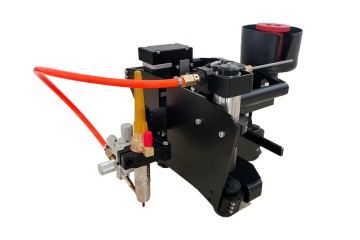
Enter the Smart Welding Robot For Green Battery-powered Zero-emission Internal Pipe Welding. This breakthrough technology completely replaces traditional fossil-fuel-reliant generators with high-capacity, safe, and efficient lithium iron phosphate (LiFePO4) battery packs. By combining battery energy storage with intelligent robotic positioning and seam-tracking, this system achieves a 100% emission-free operation inside the pipe, offering a cleaner, safer, and more sustainable construction framework.
Internal pipe welding is performed in extremely confined environments. Fumes and exhaust from diesel-fueled machines present hazardous working conditions for operators nearby. A battery-powered system eliminates toxic gases, reduces ambient noise levels, and satisfies strict environmental protection laws mandated near municipal waterways, nature reserves, and urban zones.
A smart welding robot operating inside a steel pipe must be self-sufficient, highly stable, and capable of executing precise movements. Integrating a battery power source requires advanced energy management systems (EMS) to balance the high current draw of the welding arc with the mechanical power required for traveling and clamping.
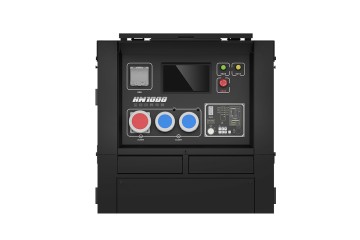
The core of the zero-emission system is its custom-engineered battery module. By utilizing high-discharge-rate lithium battery cells, the robot can deliver stable welding currents (up to 400A or more) required for GMAW (Gas Metal Arc Welding) and FCAW (Flux-Cored Arc Welding) processes. The integrated smart BMS (Battery Management System) monitors cell temperature, voltage balance, and state-of-charge in real-time, preventing thermal runaway and ensuring maximum cycle life even under harsh field conditions.
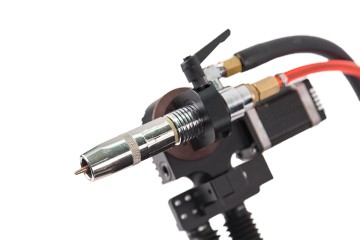
Without physical operators inside the pipe, the robot relies on a suite of AI-driven sensors. High-definition cameras and laser profiling sensors map the internal geometry of the pipe joint. The onboard microprocessor processes this data in milliseconds, automatically adjusting the torch position to compensate for minor hi-lo mismatches or pipe out-of-roundness. This ensures zero weld defects and consistent root pass penetration.
To ensure structural integrity during the welding cycle, the robot features heavy-duty pneumatic copper backing shoes. These shoes expand against the inner diameter of the pipe, aligning the pipe ends perfectly and acting as a heat sink to control weld puddle cooling rates. The high-torque electric motors drive the robot smoothly along the pipe interior, climbing slopes and navigating bends without slipping.
Ensuring reliability from R&D design to finished product delivery.
With more than 20 years of industry accumulation, we have accumulated profound technical expertise and strictly adhere to high-standard production norms.
We have built a comprehensive and rigorous whole-process quality control system to ensure the excellent performance and stable quality of every product.
Covering pre-sales consultation, on-site guidance and after-sales support, we form a well-laid, efficient and reliable global product supply network.
Hydrogen gas molecules are extremely small and can easily penetrate weld defects, leading to hydrogen embrittlement. The smart internal welding robot ensures a flawless, ultra-smooth root pass weld without porosity or micro-cracks, which is critical for long-term safe containment of high-pressure hydrogen gas networks.
When laying pipelines through national parks, wetlands, or agricultural zones, diesel spills and exhaust emissions are strictly prohibited. The battery-powered robot generates zero carbon emissions, zero fumes, and operates with minimal noise, making it the only compliant choice for eco-sensitive infrastructure projects.
Urban utility tunnels and municipal water pipeline installations are situated in crowded residential zones. Using diesel generators causes noise pollution and safety hazards. The zero-emission internal welder ensures quiet, safe, and highly efficient operation inside narrow city streets and underground channels.
On lay barges, deck space is at a premium and ventilation inside the pipe assembly stations is highly limited. Traditional diesel power sources take up valuable footprint and require complicated ventilation ducting. By utilizing battery-powered internal welding robots, marine contractors can save space, eliminate heavy power cabling, and improve the safety of the welding deck crew.
Transporting diesel fuel to remote mountainous pipeline rights-of-way is logistically complex and expensive. A battery-powered robot can be recharged via solar arrays or hybrid micro-grids at the base camp, drastically simplifying logistics and reducing the total cost of ownership (TCO) of the pipeline project.
Equipped with independently developed core patented technologies, these products feature outstanding advantages such as high efficiency, energy saving, precise welding, stable operation, durability and strong adaptability to harsh field and complex engineering conditions. We hold multiple independent intellectual property patents and have obtained a number of national and international authoritative industry certifications, which fully affirm our technical strength and product quality.
The integration of Artificial Intelligence and Green Power is just the beginning. As we look to the next decade, several key trends will shape the evolution of internal pipeline welding technologies:
Future smart welding robots will continuously stream welding parameters, battery health data, and laser telemetry to the cloud. Engineers at headquarters can monitor weld quality in real-time, creating a digital twin of every single joint along thousands of kilometers of pipeline. This enables predictive maintenance and instant quality auditing, virtually eliminating the need for expensive post-weld repair work.
As solid-state battery technology matures, we expect to see even higher energy densities and faster charging capabilities. Future robots will be able to perform continuous welding for 12 hours on a single 30-minute charge, further increasing the rate of joints welded per day while keeping the system lightweight and easy to handle.
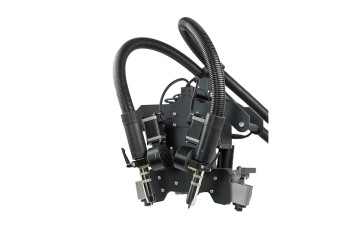
In large-diameter pipelines, multiple robots can work in tandem. For example, a battery-powered internal alignment clamp can communicate wirelessly with an external dual-torch orbital welding system, coordinating their speeds and heat inputs to achieve perfect metallurgical properties across the weld joint.
Relying on reliable product strength, professional and efficient full-process services, as well as the team's dedicated craftsmanship and 20 years of brand reputation, we have established long-term stable cooperation with leading enterprises in domestic oil and gas long-distance pipelines, municipal engineering, new energy infrastructure and other key fields.
Adhering to technological innovation as the core driving force and ingenuity quality as the foundation, we are committed to providing global customers with customized one-stop pipeline welding solutions, and continuously contributing to the high-quality and sustainable development of energy infrastructure projects at home and abroad.
Discover our full range of heavy-duty, high-precision automatic and manual welding systems engineered for global energy projects.