

Leave Your Message
Explore our high-efficiency automatic pipeline welding systems optimized for Iraq's oil fields, long-distance desert transmission networks, and heavy industrial gas installations.
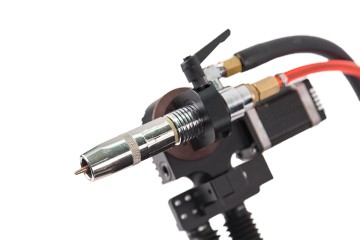
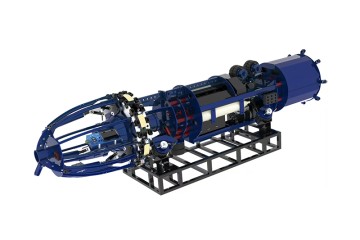
Iraq stands as one of the most vital hubs for global energy supply, housing some of the world's largest proven crude oil reserves. As the nation continues its intensive reconstruction and modernization efforts, the demand for robust industrial infrastructure has surged. From the massive oil fields of Basra, West Qurna, and Rumaila to the northern refining complexes in Kirkuk, the construction of secure, high-capacity oil and gas pipelines is a national priority.
Building and maintaining these vast pipeline networks requires advanced welding technologies that can withstand extreme environmental challenges. This is where high-quality Metal Inert Gas (MIG) and Tungsten Inert Gas (TIG) welding solutions, supported by precise shielding gas systems, play a transformative role. The reliance on manual welding is rapidly shifting toward automated systems to satisfy strict international standards and accelerate project timelines across the country.
To support this industrial boom, local contractors and international consortiums operating in Iraq are seeking dependable manufacturers and suppliers who can deliver state-of-the-art MIG/TIG automatic welding machines. These systems must be capable of operating continuously under high ambient temperatures, dusty desert environments, and remote off-grid locations where power stability is a constant concern.
In high-pressure oil and gas pipeline construction, the integrity of every single weld joint determines the safety and longevity of the entire network. MIG (GMAW) and TIG (GTAW) welding processes are the industry standards for securing these critical connections due to their precision, speed, and clean output.
MIG welding is highly favored for filling and capping pipeline joints due to its high deposition rate and continuous wire feed. In the vast desert expanses of Iraq, where laying miles of pipeline daily is crucial, automated MIG welding systems drastically reduce cycle times compared to traditional stick welding.
For the critical root pass—the foundational weld layer that directly contacts the oil or gas—TIG welding is unmatched. It provides complete penetration control and eliminates slag inclusions, ensuring that the inner pipe joint remains defect-free and resistant to high-pressure corrosive environments.
The quality of a MIG or TIG weld is heavily dependent on the shielding gas (typically Argon, CO2, or Helium mixtures). The gas protects the molten weld pool from atmospheric contaminants like oxygen and nitrogen, which cause porosity and embrittlement. Modern automatic welding machines integrate advanced gas-flow regulators to ensure steady shielding even in windy desert conditions.
Deploying industrial welding equipment in Iraq demands solutions engineered for extreme conditions. Unlike controlled factory environments, pipeline construction in regions like the Al-Faw Peninsula or the Western Desert presents unique challenges:
Summer temperatures in southern Iraq regularly exceed 50°C (122°F). Standard welding machines can easily overheat, leading to thermal shutdown and project delays. Our DW-EW and DW-EH series automatic welding systems are built with advanced duty-cycle management and heavy-duty cooling channels to ensure continuous operation under intense heat.
Finely grained desert sand can infiltrate internal electronics, causing short circuits and mechanical wear. To combat this, our machines feature sealed control units, dust-resistant wire feeders, and protected gas paths, ensuring that the MIG/TIG process remains clean and uninterrupted.
Many pipeline projects cross remote regions far from the national power grid. Relying on unstable field generators can damage sensitive welding microprocessors. The DW-EH series addresses this by integrating robust, high-efficiency battery systems that stabilize power delivery, allowing for consistent, high-quality welds anywhere in the field.
International energy companies operating in Iraq (such as BP, Lukoil, and Petronas) enforce strict non-destructive testing (NDT) standards, including ultrasonic and radiographic inspections. Automated MIG/TIG systems provide the precise, repeatable parameters needed to pass these tests on the first attempt, preventing costly weld repairs.
DENOH Seimitsu Electric Appliance (Beijing) Co., Ltd. is a professional high-tech enterprise integrating independent R&D, sophisticated manufacturing, global sales and full-process professional services of high-end pipeline welding equipment.
With more than 20 years of deep cultivation and continuous innovation in the pipeline welding industry, we have forged a solid industry foundation and built an unshakable market position through decades of practical experience and technological breakthroughs. Over the past 20-plus years, we have kept pace with the development of the global pipeline engineering industry, constantly optimizing technical solutions and upgrading product systems, witnessing and promoting the iterative upgrading of pipeline welding equipment technology.
The core strength of the company lies in its professional and elite team composed of senior industry experts, professional R&D engineers, skilled technical workers and efficient service personnel. Our R&D team gathers backbones with decades of experience in pipeline welding equipment research and development, many of whom have participated in the research and development of key national engineering supporting welding equipment and possess profound theoretical knowledge and rich practical experience.
Relying on the team's professional strength, we have been committed to tackling key technical problems in the pipeline welding field, breaking through foreign technical monopolies in many core technologies, and realizing the independent innovation and localization of high-end pipeline welding equipment. Meanwhile, our production, sales and service teams have been carefully trained and selected, with rich industry experience and strong professional capabilities, forming a collaborative and efficient working system from R&D and production to market sales and after-sales service.
As Iraq works toward ending gas flaring and capturing natural gas for domestic power generation, the speed at which new pipeline networks can be laid is crucial. This shift is driving key trends in the local welding and gas supply market:
Manual pipeline welding is slow and highly dependent on scarce, highly-skilled labor. Iraqi contractors are rapidly adopting orbital and automatic pipeline welding machines to achieve consistent quality, reduce human error, and complete projects ahead of schedule.
Reducing carbon footprints and fuel consumption in the field is a growing priority. Dual-purpose battery-assisted welding systems allow projects to run with smaller, more efficient generators, cutting fuel costs and emissions across remote job sites.
Modern automatic welding systems record real-time parameters (current, voltage, travel speed, gas flow rate). This data provides a digital footprint for every weld bead, giving project managers in Iraq complete transparency and facilitating easier compliance audits.
Explore our full line of specialized welding machinery, engineered to deliver top-tier MIG and TIG performance under the demanding conditions of Iraq's oil, gas, and utility infrastructure developments.