

Leave Your Message
Engineered to deliver high radiographic qualification rates across urban gas mains and potable water supply lines.
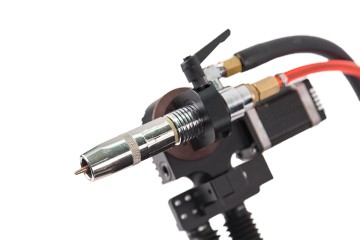
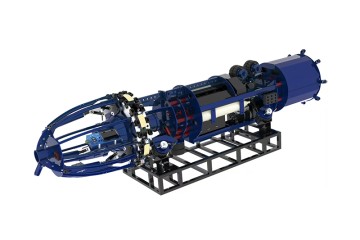
Navigating modern infrastructure transitions with advanced gas-shielded fusion welding technologies.
Subterranean corridors demand ultra-compact orbital welding equipment with minimal trench clearance and rapid setup cycles.
Municipal zones enforce strict noise, fume, and carbon restrictions, elevating the necessity for electric battery-driven internal weld units.
Zero tolerance for porosity or lack of fusion in high-pressure gas mains requires precise MIG/TIG shielding gas flow stability.
Urban municipal utility networks form the invisible circulatory system of modern metropolises. From high-pressure natural gas transmission loops to large-diameter potable water trunk lines, the modern underground layout faces an unprecedented evolution. Rapid urbanization, the retrofitting of aging ductile iron lines with modern API 5L steel pipelines, and the integration of hydrogen-blended natural gas require welded joints of uncompromising metallurgical integrity.
In municipal piping networks, manual shielded metal arc welding (SMAW) is increasingly unable to satisfy stringent modern timelines and environmental constraints. The transition toward automatic MIG (Metal Inert Gas / GMAW) and TIG (Tungsten Inert Gas / GTAW) gas-shielded processes has become the industry benchmark. These automated systems deliver precise heat input control, uniform weld bead geometry, and superior mechanical toughness under severe traffic cyclic loading and soil subsidence conditions.
Gas pipelines require flawless root pass fusion with zero internal spatter to prevent downstream valve clogging and stress corrosion cracking. Water distribution mains require smooth internal root profiles to eliminate biological colonization and turbulence. Gas-shielded TIG and MIG processes deliver an optimized internal weld bead contour that maximizes fluid dynamics while preventing localized corrosion.
Evaluating arc physics, shielding mixtures, and productivity benchmarks across urban utility networks.
The choice between MIG and TIG processes in urban utility construction is dictated by pipe diameter, wall thickness, metallurgical composition, and pipeline location within the municipal corridor. While TIG welding provides absolute control over the molten pool for critical root passes, automated MIG offers rapid fill and cap deposition rates that drastically compress project schedules.
| Parameter / Feature | TIG (GTAW) Gas Shielded Process | MIG (GMAW / Pulsed GMAW) Process | Combined Orbital Hybrid Approach |
|---|---|---|---|
| Primary Municipal Use | High-pressure natural gas root pass & stainless water piping | Intermediate fill and cosmetic cap passes on heavy-wall steel pipes | Internal automatic root + external dual-torch fill/cap |
| Shielding Gas Formulation | 100% High-Purity Argon or Ar + He (for increased penetration) | 80/20 Ar/CO₂ or 90/10 Ar/CO₂ for optimal droplet transfer | Pure Argon internal purge + mixed gas external shielding |
| Deposition Rate & Speed | Moderate (0.5 to 1.5 kg/h); highly refined heat input | High (3.0 to 6.5 kg/h); maximized wire deposition | Ultra-high productivity, shortening trench exposure |
| Root Pass Spatter & Cleanup | Absolute zero spatter; mirror-smooth root reinforcement | Low spatter with pulsed digital waveform control | Eliminates internal post-weld grinding requirements |
| NDT Radiographic Pass Rate | > 99.2% on standard radiographic & phased array tests | > 98.5% with calibrated automated travel carriage | Highest industry pass rate with repeatable parameters |
In municipal excavations, atmospheric turbulence from traffic and ventilation systems presents a significant risk to shielding gas stability. Gas-shielded pipeline welding relies heavily on laminar gas delivery nozzles and optimized diffuser cups to shield the arc zone from nitrogen and oxygen contamination. For municipal natural gas pipes, trailing gas shields and continuous internal back-purging with commercial-grade argon ensure that the root bead does not develop heat tinting or chromium depletion.
Furthermore, digital inverter power sources paired with pulse-width modulation adjust the metal transfer mode in real time. Spray-arc and pulsed-spray modes prevent undercut and cold lap defects when welding in vertical-up (5G/6G) positions across municipal pipeline tie-ins.
Comprehensive engineering support and quality assurance across the full lifecycle of municipal utility construction.
With more than 20 years of industry accumulation, we have accumulated profound technical expertise and strictly adhere to high-standard production norms.
We have built a comprehensive and rigorous whole-process quality control system to ensure the excellent performance and stable quality of every product.
Covering pre-sales consultation, on-site guidance and after-sales support, we form a well-laid, efficient and reliable global product supply network.
Patented pipeline joining equipment engineered for harsh field and constrained municipal environments.
Equipped with independently developed core patented technologies, these products feature outstanding advantages such as high efficiency, energy saving, precise welding, stable operation, durability and strong adaptability to harsh field and complex engineering conditions. We hold multiple independent intellectual property patents and have obtained a number of national and international authoritative industry certifications, which fully affirm our technical strength and product quality.
Comprehensive deployment across modern municipal engineering and smart city infrastructure layouts.
Urban municipal engineering frequently avoids open-trench excavations to minimize traffic disruption and protect historic surface assets. Trenchless installation methods, such as pipe jacking and Horizontal Directional Drilling (HDD), require pipe strings to be welded sequentially in narrow launch pits before being pulled underground. Automatic external orbital MIG welders significantly reduce the tie-in weld time per joint from several hours to minutes, preventing borehole collapse and reducing pit retention costs.
City gate stations and ring networks handle high-pressure natural gas that feeds district reduction stations. These pipelines utilize thick-walled high-strength carbon steel (API 5L X52 through X70). Utilizing automated internal welders equipped with continuous gas-shielding allows simultaneous multi-torch root welding, achieving uniform internal bead height and defect-free metallurgy that easily withstands 100% Non-Destructive Testing (Phased Array Ultrasonic and Radiographic testing).
Potable water transmission requires structural durability combined with sanitary interior surfaces. When welding large-diameter carbon steel or stainless steel municipal water pipes, automated MIG/TIG orbital systems prevent root suck-back and erratic burn-through. The resulting smooth transition eliminates hydraulic drag and mitigates bacterial accumulation along pipe seams, extending pipeline service life beyond 50 years.
Explore our complete array of internal, external, single-torch, and multi-process pipeline automatic welding systems.
Relying on reliable product strength, professional and efficient full-process services, as well as the team's dedicated craftsmanship and 20 years of brand reputation, we have established long-term stable cooperation with leading enterprises in domestic oil and gas long-distance pipelines, municipal engineering, new energy infrastructure and other key fields.
Adhering to technological innovation as the core driving force and ingenuity quality as the foundation, we are committed to providing global customers with customized one-stop pipeline welding solutions, and continuously contributing to the high-quality and sustainable development of energy infrastructure projects at home and abroad.
Let's start your project together →