

Leave Your Message
In the complex ecosystem of refinery process piping and petrochemical plants, the integrity of every weld is paramount. As global energy demands shift and the industry pushes toward more efficient, high-pressure, and high-temperature operations, the technologies behind MIG (Metal Inert Gas), TIG (Tungsten Inert Gas), and Gas-Shielded welding have evolved from manual crafts to high-precision engineering disciplines. Today, the petrochemical sector faces unprecedented challenges: aging infrastructure requiring meticulous repair, the transition to LNG and hydrogen, and the need for rapid deployment in remote locations.
The industrial status of welding in these sectors is characterized by a move toward total automation. Human error is the leading cause of weld failure in high-stress environments. Consequently, the adoption of fully automatic battery-powered internal welders and external orbital welding systems has become the gold standard. These machines ensure that the root pass—the most critical part of a pipe joint—is consistent, regardless of environmental variables or operator fatigue.
In petrochemical plants, where pipes often carry corrosive chemicals or volatile gases, the TIG process is favored for its extreme precision. It is the go-to method for root passes on stainless steel and high-alloy piping. The use of an inert gas shield (typically Argon) prevents oxidation, ensuring a clean, slag-free weld that can withstand rigorous X-ray and ultrasonic testing.
When speed and deposition rates are critical—such as in long-distance refinery feeder lines—MIG welding excels. Modern automatic external welding machines utilize pulsed MIG technology to control heat input, reducing distortion in thick-walled process piping. The integration of advanced gas mixtures optimizes arc stability and penetration.
The synergy between these processes, often referred to as "combo welding," involves TIG for the root and MIG or Flux-Cored Arc Welding (FCAW) for the fill and cap. This approach balances the need for metallurgical integrity with the economic necessity of project timelines.
With more than 20 years of industry accumulation, we have accumulated profound technical expertise and strictly adhere to high-standard production norms.
We have built a comprehensive and rigorous whole-process quality control system to ensure the excellent performance and stable quality of every product.
Covering pre-sales consultation, on-site guidance and after-sales support, we form a well-laid, efficient and reliable global product supply network.
The future of welding for refinery process piping is being shaped by three major trends:
As petrochemical plants move toward "Industry 4.0," the welding equipment must be as smart as the refineries they build. This includes cloud-based monitoring and remote diagnostics, ensuring that a fleet of welding machines across a 500-mile pipeline can be managed from a single central hub.
Equipped with independently developed core patented technologies, these products feature outstanding advantages such as high efficiency, energy saving, precise welding, stable operation, durability and strong adaptability to harsh field and complex engineering conditions. We hold multiple independent intellectual property patents and have obtained a number of national and international authoritative industry certifications, which fully affirm our technical strength and product quality.
The application of MIG/TIG and Gas-Shielded welding extends beyond simple pipe joining. In a refinery environment, these technologies are applied in highly specialized scenarios:
Heat exchangers are the lungs of a refinery. TIG welding is used to create hermetic seals between tubes and tubesheets, where even a microscopic leak could lead to catastrophic chemical reactions. Our automated TIG heads provide the consistency required for these thousands of repetitive, high-stakes welds.
Steam lines in petrochemical plants operate at extreme pressures. Here, MIG welding with specialized gas mixtures provides the deep penetration needed for heavy-wall chrome-moly steel pipes, ensuring the joints can withstand thermal cycling over decades of service.
During a refinery turnaround, every hour of downtime costs millions. Our battery-powered internal welding machines allow for rapid deployment, enabling repair crews to weld from the inside out in confined spaces, significantly cutting down project timelines without sacrificing safety.
Relying on reliable product strength, professional and efficient full-process services, as well as the team's dedicated craftsmanship and 20 years of brand reputation, we have established long-term stable cooperation with leading enterprises in domestic oil and gas long-distance pipelines, municipal engineering, new energy infrastructure and other key fields.
Adhering to technological innovation as the core driving force and ingenuity quality as the foundation, we are committed to providing global customers with customized one-stop pipeline welding solutions, and continuously contributing to the high-quality and sustainable development of energy infrastructure projects at home and abroad.
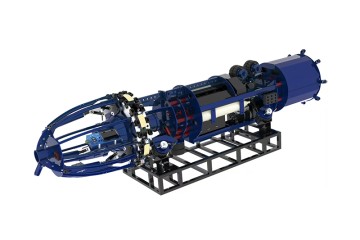 DW-EH Internal Welding Machine (Battery Powered)
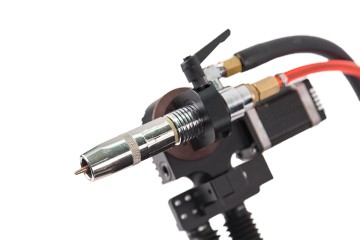 DW-EW-I Single Torch External Welder
Petrochemical Grade Internal Welding System
High-Efficiency Dual-Torch Pipeline Welder
Long-Distance Gas Pipeline Internal Welder
Automatic External Welder for Large Diameter Pipes
Smart-Control Battery Internal Welding Unit
Harsh Condition External Welding Equipment