Leave Your Message
Cross-country pipeline construction projects represent the arteries of global energy distribution, transporting crude oil, natural gas, refined petroleum, and increasingly, hydrogen over thousands of kilometers. These pipelines must withstand extreme geological, environmental, and mechanical stresses. Consequently, the integrity of every single circumferential joint weld is paramount. In modern pipeline engineering, manual SMAW (Shielded Metal Arc Welding) is rapidly yielding to automated and semi-automated MIG (Metal Inert Gas / GMAW) and TIG (Tungsten Inert Gas / GTAW) welding systems. The selection of the shielding gas and the automation of these processes dictate the speed, efficiency, and structural safety of the entire installation.
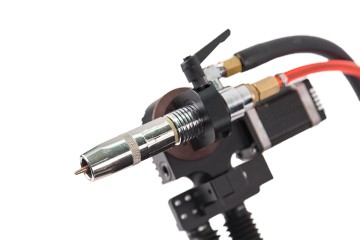
Long-distance pipelines typically cross complex terrains, including deserts, mountains, wetlands, and permafrost regions. In these demanding environments, manual welding struggles to maintain the consistency required to pass stringent non-destructive testing (NDT) such as Automated Ultrasonic Testing (AUT). Automated MIG and TIG systems mitigate human error by controlling critical parameters including travel speed, wire feed rate, oscillation, and voltage. Using systems like the DW-EW-I Single Torch Pipeline Automatic External Welding Machine allows contractors to achieve high deposition rates and consistent penetration profiles, drastically reducing joint repair rates to under 1.5%.
Shielding gas is not merely a barrier to protect the molten weld pool from atmospheric contamination (oxygen, nitrogen, and moisture); it is an active component that determines arc stability, metal transfer mode, penetration depth, bead profile, and the mechanical properties of the weldment. For cross-country pipelines, which are increasingly constructed from high-strength low-alloy (HSLA) steels like API 5L X70, X80, and X100, the chemistry of the gas mixture is critical:
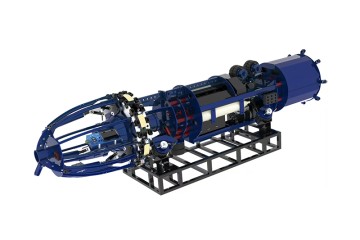
The practical execution of cross-country pipeline construction requires equipment that can adapt to environmental extremes. In Arctic and sub-zero regions, gas flow rates must be carefully regulated to prevent regulator freeze-up, and the welding equipment must operate reliably without component failure. The DW-EH Series Fully Automatic Battery Flexible Internal Welding Machine addresses these challenges by integrating its own independent power source, eliminating the need for bulky external generator lines that are prone to failure in freezing temperatures.
In desert and high-dust environments, maintaining the integrity of the shielding gas envelope is a major engineering hurdle. Wind speeds exceeding 5 meters per second can disperse the shielding gas, leading to atmospheric contamination and subsequent porosity in the weld bead. Automated external welders utilize specialized wind shields and optimized gas nozzle geometries to maintain a stable gas shroud even in turbulent conditions. Furthermore, when traversing mountainous terrain, the flexibility and lightweight design of the welding carriage are critical. The ability of the welder to track the pipe circumference smoothly on steep slopes ensures that the critical root and hot passes are executed without defects.
With more than 20 years of industry accumulation, we have accumulated profound technical expertise and strictly adhere to high-standard production norms.
We have built a comprehensive and rigorous whole-process quality control system to ensure the excellent performance and stable quality of every product.
Covering pre-sales consultation, on-site guidance and after-sales support, we form a well-laid, efficient and reliable global product supply network.
Equipped with independently developed core patented technologies, these products feature outstanding advantages such as high efficiency, energy saving, precise welding, stable operation, durability and strong adaptability to harsh field and complex engineering conditions. We hold multiple independent intellectual property patents and have obtained a number of national and international authoritative industry certifications, which fully affirm our technical strength and product quality.
The pipeline construction industry is shifting rapidly towards digital integration and carbon footprint reduction. The integration of IoT (Internet of Things) sensors on welding carriages allows real-time monitoring of gas flow rates, current, voltage, and travel speed. This data is transmitted to cloud-based systems for instant quality verification, creating a digital birth certificate for every weld joint.
Traditionally, cross-country pipeline spreads required massive, fuel-burning diesel generators to power internal alignment clamps and welding heads. This setup is logistically challenging in remote areas and carries a high carbon footprint. Modern construction sites are increasingly adopting battery-powered systems like the DW-EH Series Fully Automatic Battery Welding Machine. These systems utilize high-capacity lithium-iron-phosphate (LFP) batteries that can power the internal welding system through multiple joint welds on a single charge. This innovation reduces fuel consumption, lowers site noise levels, and minimizes logistics requirements in environmentally sensitive areas.
As the global energy transition accelerates, existing gas networks are being upgraded, and new pipelines are being built to transport hydrogen (either pure or blended with natural gas). Hydrogen molecules are extremely small and highly prone to causing hydrogen embrittlement in standard pipeline steels. This requires ultra-low hydrogen welding processes. The combination of automated TIG root passes (using high-purity argon shielding gas) and automated MIG fill passes with precise gas metering systems ensures that the weld metal and heat-affected zone (HAZ) maintain the required fracture toughness and low diffusible hydrogen levels needed to safely transport hydrogen under high pressure.
Relying on reliable product strength, professional and efficient full-process services, as well as the team's dedicated craftsmanship and 20 years of brand reputation, we have established long-term stable cooperation with leading enterprises in domestic oil and gas long-distance pipelines, municipal engineering, new energy infrastructure and other key fields.
Adhering to technological innovation as the core driving force and ingenuity quality as the foundation, we are committed to providing global customers with customized one-stop pipeline welding solutions, and continuously contributing to the high-quality and sustainable development of energy infrastructure projects at home and abroad.
Let's start your project together