

Leave Your Message
Configured for centralized diesel welder power modules and continuous shielding gas delivery manifolds on heavy pipeline spreads.
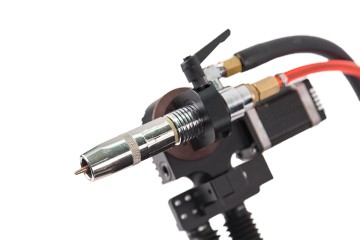
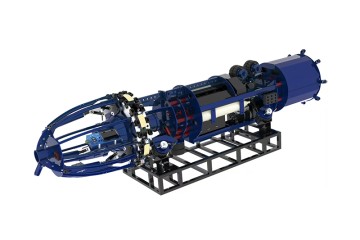
In the rigorous domain of overland pipeline construction, marine spoolbase fabrication, and structural petrochemical installations, modern engineering mandates an uninterrupted harmony between diesel-driven electrical generation and micro-regulated shielding gas mechanics.
When multiple welders draw power from a shared generator stator, mutual electromagnetic interference causes arc wandering. Advanced multi-station diesel platforms deploy insulated gate bipolar transistor (IGBT) inverters with dedicated high-speed feedback chokes to isolate simultaneous high-current MIG spatter peaks from ultra-sensitive TIG high-frequency arc stabilization circuits.
Supplying continuous shielding gas (pure Argon, Ar/CO2 binaries, or Helium trimixes) across multi-station field skids requires dynamic manifold thermal regulation. Integrated pre-heaters powered by auxiliary alternator windings prevent regulator freezing during vapor transitions in sub-zero climates, ensuring lamina flow free of venturi turbulence.
Single-engine multi-operator diesel sets replace up to four independent diesel trailers. Tier 4 Final/Stage V common rail turbodiesels interface with internal load algorithms, throttling down during arc-off interpass cleaning and scaling instantaneously to meet concurrent 350-amp pulsed MIG demands without voltage sag or frequency decay.
The operational landscape of long-distance pipeline construction has evolved past the era of manual Shielded Metal Arc Welding (SMAW / Stick) with cellulosic electrodes. Modern pipeline metallurgical specifications—such as API 5L Grade X70, X80, and X100 line pipe—strictly mandate narrow groove automatic external MIG (GMAW), pulsed MIG (GMAW-P), and specialized automated TIG (GTAW) root passes to avert hydrogen-induced cracking (HIC) and satisfy strict Charpy V-notch impact toughness criteria.
Achieving this level of metallurgical integrity requires uncompromised gas shielding envelopes. In an open Right-of-Way (ROW) environment exposed to crosswinds and fluctuating atmospheric pressures, shielding gas flow rates must remain strictly controlled between 15 and 35 liters per minute depending on cup diameter and nozzle standoff distance. When an operator triggers a high-amperage MIG fill pass on torch carriage one, the generator's rotational inertia must not provoke a transient frequency drop that disturbs torch carriage two executing an automated cold-wire TIG root. Multi-station diesel welder generators designed for pipeline spreads resolve this with oversized copper alternators, brushless synchronous excitation, and multi-bank capacitor stabilization.
The economic justification for multi-station diesel generator platforms over discrete single-operator welder trailers is grounded in empirical field metrics:
DENOH Seimitsu Electric Appliance (Beijing) Co., Ltd. is a professional high-tech enterprise integrating independent R&D, sophisticated manufacturing, global sales and full-process professional services of high-end pipeline welding equipment.
With more than 20 years of deep cultivation and continuous innovation in the pipeline welding industry, we have forged a solid industry foundation and built an unshakable market position through decades of practical experience and technological breakthroughs.
Over the past 20-plus years, we have kept pace with the development of the global pipeline engineering industry, constantly optimizing technical solutions and upgrading product systems, witnessing and promoting the iterative upgrading of pipeline welding equipment technology.
The core strength of the company lies in its professional and elite team composed of senior industry experts, professional R&D engineers, skilled technical workers and efficient service personnel. Our R&D team gathers backbones with decades of experience in pipeline welding equipment research and development, many of whom have participated in the research and development of key national engineering supporting welding equipment and possess profound theoretical knowledge and rich practical experience.
Relying on the team's professional strength, we have been committed to tackling key technical problems in the pipeline welding field, breaking through foreign technical monopolies in many core technologies, and realizing the independent innovation and localization of high-end pipeline welding equipment. Meanwhile, our production, sales and service teams have been carefully trained and selected, with rich industry experience and strong professional capabilities, forming a collaborative and efficient working system from R&D and production to market sales and after-sales service.
A detailed architectural breakdown illustrating efficiency metrics, gas management capabilities, and arc performance characteristics.
| Performance Dimension | Multi-Station Diesel Welder Generator (Centralized Gas) | Conventional Single-Arc Engine Welder Skids | Key Engineering Advantage |
|---|---|---|---|
| Simultaneous Arc Density | Up to 4–8 Inverter Welding Stations driven by 1 primary alternator | 1 operator per diesel engine set (4 engines needed for 4 welders) | 70% Smaller Spatial Footprint |
| MIG/TIG Shielding Precision | Central digital gas blending manifold with thermal de-icing & electronic mass flow | Independent cylinder bottles, mechanical ball flowmeters, vulnerable to icing | Zero Porosity / Constant Laminar Flow |
| Dynamic Arc Isolation | Digital DSP/FPGA inverter modules with real-time decoupling circuitry (<2ms response) | Analog engine governor; current drops on adjacent machines when arcs initiate | Spatter-Free Smooth Droplet Transfer |
| Fuel Consumption (4 Arcs) | 11.5 – 15.2 Liters/Hour (Optimized variable speed load management) | 22.0 – 28.5 Liters/Hour (Cumulative idling losses across 4 engines) | Over 40% Diesel Savings |
| Emissions & Maintenance | Single Tier 4F / Stage V engine filter cycle; halved preventative downtime | 4 sets of oil filters, fuel filters, starter motors, and exhaust outputs | Massive OPEX Reduction |
Modern pipeline infrastructure spans from Siberian tundra permafrost to Saharan dune fields. In each theater, the synergy of reliable electrical generation and precise gas delivery dictates completion schedules.
Long-distance pipelines crossing varying elevations require rapid root-to-cap progression. Integrating high-pressure internal gas-backed clamps with external multi-torch bug units powered by tractor-mounted multi-operator diesel sets enables welding spreads to hit over 120 pipe joints per 10-hour shift without arc stall.
Supercritical CO2 and hydrogen transmission require zero-defect metallurgy. Micro-alloyed pipeline steels mandate strict limits on diffusible hydrogen (<3 ml/100g). Multi-station TIG root systems operating with 99.999% argon purge backed by digital welder generator power supply ensure total root fusion and eliminate micro-porosity.
The industry is transitioning toward fully connected digital welding payloads. Multi-station generators now integrate cellular and satellite transceivers that upload arc current, wire feed rate, shielding gas mass consumption, and thermal interpass profiles directly to enterprise quality assurance dashboards in real time.
Explore our field-tested orbital welders, automated pipe crawlers, and high-performance gas-shielded carriages built for harsh contractor duty cycles.