Leave Your Message
In the realm of global energy transportation, the construction of cross-country pipelines represents one of the most significant engineering challenges of the 21st century. As demand for natural gas, oil, and hydrogen increases, the need for high-efficiency welding technologies has never been more critical. The integration of Mig (Metal Inert Gas), Tig (Tungsten Inert Gas), and specialized Gas shielding techniques into multi-arc welding systems has revolutionized how these massive infrastructures are built.
Multi-arc welding, particularly in the context of long-distance pipelines, refers to the simultaneous use of multiple welding torches or arcs to deposit filler metal into a joint. This approach drastically reduces the time required for "golden joints" and mainline welding, ensuring that projects are completed on schedule and within budget. By combining the speed of Mig welding with the precision of Tig welding, engineers can achieve a perfect balance of structural integrity and aesthetic quality.
Multi-arc systems can increase welding speed by up to 300% compared to traditional single-torch manual methods, significantly shortening project timelines.
Advanced gas shielding (Argon/CO2 mixtures) ensures that the weld pool is protected from atmospheric contamination, preventing porosity and cracks.
Modern equipment utilizes AI sensors to monitor arc stability and seam tracking in real-time, adapting to minor pipe misalignments automatically.
DENOH Seimitsu Electric Appliance (Beijing) Co., Ltd. is a professional high-tech enterprise integrating independent R&D, sophisticated manufacturing, global sales and full-process professional services of high-end pipeline welding equipment.
The core strength of the company lies in its professional and elite team composed of senior industry experts, professional R&D engineers, skilled technical workers and efficient service personnel. Our R&D team gathers backbones with decades of experience in pipeline welding equipment research and development, many of whom have participated in the research and development of key national engineering supporting welding equipment and possess profound theoretical knowledge and rich practical experience.
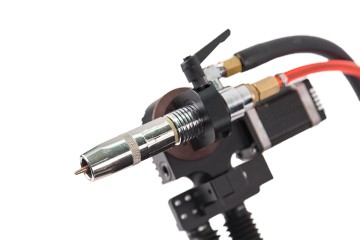
Mig welding, or Gas Metal Arc Welding, is the workhorse of the pipeline industry. In a multi-arc configuration, Mig torches are often used for fill and cap passes. The continuous wire feed allows for high deposition rates, which is essential for thick-walled pipes used in high-pressure cross-country networks. By using specialized gas mixtures—often a blend of Argon and CO2—the arc remains stable even at high speeds, minimizing spatter and reducing the need for post-weld cleaning.
While Mig is known for speed, Tig welding is unmatched in precision. In many high-efficiency setups, Tig is utilized for the critical root pass. This ensures full penetration and a clean internal bead, which is vital for pipelines carrying corrosive fluids or high-pressure gas. The "Gas" in Tig welding (typically pure Argon) provides a focused, clean environment for the tungsten electrode to create a flawless fusion of the pipe ends.
The true innovation occurs when these processes are combined. A multi-arc station might feature a Tig torch leading the way to establish the root, followed immediately by multiple Mig torches to build up the weld volume. This "tandem" or "multi-station" approach is what defines modern high-efficiency pipeline construction.
With more than 20 years of deep cultivation and continuous innovation in the pipeline welding industry, we have forged a solid industry foundation and built an unshakable market position through decades of practical experience and technological breakthroughs.
Over the past 20-plus years, we have kept pace with the development of the global pipeline engineering industry, constantly optimizing technical solutions and upgrading product systems, witnessing and promoting the iterative upgrading of pipeline welding equipment technology.
The global market for pipeline welding is undergoing a massive shift. Historically, pipeline projects relied heavily on manual labor. However, a global shortage of certified high-pressure welders has driven the industry toward full automation. Companies like DENOH are at the forefront of this transition, providing internal and external welding robots that can operate 24/7 in harsh environments.
Current Trends Include:
In terms of application, we are seeing these Mig/Tig multi-arc systems deployed in the most extreme conditions—from the sub-zero temperatures of Siberian gas fields to the scorching deserts of the Middle East. The resilience of the equipment, combined with the precision of the gas shielding, ensures that the integrity of the energy grid remains uncompromised.
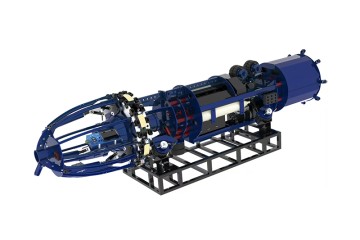
Cross-country pipelines often traverse varied terrain, including mountains, rivers, and swamps. This requires welding equipment that is not only efficient but also flexible. DENOH's battery-powered internal welding machines are a prime example of this flexibility. By removing the need for heavy external power cables, these machines can operate in remote areas where infrastructure is non-existent.
Furthermore, the use of Multi-Arc Internal Welding allows for the simultaneous welding of the internal circumference of the pipe, providing a "back-up" to the external passes. This dual-sided approach is the gold standard for high-safety-rated pipelines. Whether it is a 48-inch diameter natural gas line or a smaller high-pressure oil line, the combination of Mig speed and Tig precision ensures a lifetime of service without leaks.
Utilizing hyperbaric welding chambers where gas shielding is even more critical due to pressure variations.
Pre-heating systems integrated with multi-arc torches to prevent rapid cooling and martensite formation.
The integration of Mig, Tig, and advanced gas shielding into high-efficiency multi-arc welding systems is not just a technological upgrade; it is a necessity for the modern world. As we build the infrastructure for the next generation of energy, the reliability and speed provided by DENOH's innovative solutions will play a pivotal role. By focusing on R&D and breaking through foreign technical monopolies, the industry is moving toward a more efficient, safer, and localized future of high-end pipeline engineering.