The Critical Role of Welding in Downstream Petrochemical Infrastructure
Refinery process piping and petrochemical plants constitute the high-pressure circulatory system of the modern downstream oil and gas sector. Carrying volatile, flammable, corrosive, and toxic fluids at extreme temperatures and pressures, these piping networks demand absolute structural integrity. A single weld failure can lead to catastrophic consequences, including explosive releases, environmental disasters, and multi-million-dollar operational shutdowns. Consequently, the selection and execution of welding processes—specifically Metal Inert Gas (MIG), Manual Metal Arc (MMA), and Tungsten Inert Gas (TIG) welding—are governed by the most stringent engineering codes (such as ASME B31.3, API 570, and ASME Section IX).
In refinery environments, process piping connects complex units including atmospheric distillation columns, catalytic crackers, hydrotreater reactors, and coker units. Each of these systems handles different media, ranging from superheated steam and high-pressure hydrogen to corrosive sour crude and acidic chemical reagents. The welds joining these pipes must not only withstand the internal pressure but also resist various degradation mechanisms such as high-temperature hydrogen attack (HTHA), stress corrosion cracking (SCC), and thermal fatigue. Thus, understanding the physics, metallurgy, and operational parameters of MIG, MMA, and TIG welding is paramount for ensuring the long-term reliability of refinery piping systems.
In refinery process piping, non-destructive testing (NDT) such as radiographic testing (RT) and phased array ultrasonic testing (PAUT) are mandatory. Welds must achieve a near-zero defect rate. Any porosity, slag inclusion, lack of fusion, or undercut can lead to reject status, requiring expensive gouging and re-welding, which disrupts tight turnaround schedules.
Comparative Analysis of Welding Technologies in Petrochemical Facilities
Tungsten Inert Gas (TIG) Welding (GTAW): The Gold Standard for Root Passes
In refinery piping, the root pass (the initial weld bead that seals the inside of the pipe) is the most critical. TIG welding offers unparalleled control over heat input and weld pool behavior, making it the preferred choice for root passes on thin-walled and high-alloy pipes. By using a non-consumable tungsten electrode and an inert shielding gas (typically pure argon), TIG produces clean, high-quality, slag-free welds with excellent penetration.
This is crucial for preventing internal defects like lack of fusion or root concavity, which could act as stress concentrators or initiation sites for corrosion. TIG is also extensively used for welding exotic alloys such as duplex stainless steel, nickel alloys, and chrome-moly steels, which are commonly found in hydrocracking and catalytic reforming units. The absence of spatter and precise control over the arc profile makes TIG the benchmark for quality, despite its lower deposition rate compared to MIG and MMA.
Manual Metal Arc (MMA) Welding (SMAW): The Versatile and Rugged Workhorse
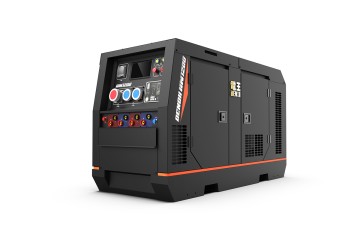
Despite the rise of automated systems, MMA welding remains indispensable in petrochemical construction and maintenance. Its primary advantage lies in its simplicity, portability, and adaptability to harsh field environments. Unlike MIG or TIG, MMA does not require external shielding gas, making it highly effective for outdoor welding in windy conditions, such as on piperacks or high-elevation structures.
The choice of electrode coating (e.g., basic low-hydrogen electrodes like E7018 or cellulosic electrodes like E6010) allows engineers to tailor the weld properties. Low-hydrogen electrodes are critical in refinery environments to prevent hydrogen-induced cracking (HIC) in high-strength carbon steels. MMA is heavily relied upon for structural steel supports, heavy-wall pipe filling, and rapid emergency repairs during turnaround periods where access is severely restricted.
Metal Inert Gas (MIG) & Flux-Cored Arc Welding (GMAW/FCAW): Driving High-Productivity Fabrication
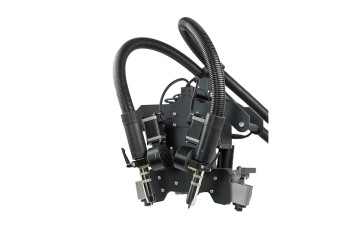
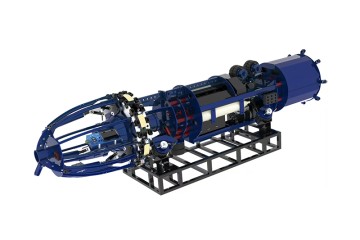
For shop fabrication and large-diameter pipeline installation, MIG and its sister process, Flux-Cored Arc Welding (FCAW), are the champions of productivity. By utilizing a continuously fed wire electrode, MIG welding offers significantly higher deposition rates and duty cycles compared to TIG and MMA. In petrochemical applications, semi-automatic or fully automatic orbital MIG welding systems are increasingly deployed to weld long runs of process piping.
When combined with advanced wave-form control (pulsed MIG), these systems can achieve high-quality welds with minimal spatter and excellent fusion, even in out-of-position welding. FCAW, with its flux-filled wire, provides additional metallurgical benefits, such as slag protection and alloy addition, making it ideal for high-deposition welding of heavy-wall vessels and thick-walled process lines.