Leave Your Message
High-performance automated external bugs, internal root clamps, and autonomous multi-process engine-driven power sources built for harsh field environments.
The construction of cross-country transmission arteries for crude oil, refined petroleum products, natural gas, and emerging hydrogen blends represents the pinnacle of heavy industrial pipe fabrication. Driven by escalating global demand for energy security and infrastructural modernization, pipeline projects traverse thousands of kilometers under punishing topographical conditions—ranging from scorching desert dunes and rocky plateaus to sub-zero permafrost and marshy river deltas.
In modern pipeline construction, capital expenditure (CAPEX) efficiency hinges directly on linear construction speed (joints per day) and nondestructive testing (NDT/AUT) acceptance rates. A single joint defect triggering repair can disrupt an entire pipeline spread—halting pipe-laying tractors, ditching rigs, and internal alignment units. Consequently, pipeline contractors are migrating rapidly from conventional manual shield metal arc welding (MMA) to high-duty-cycle automated metal inert/active gas (MIG/GMAW/FCAW) systems, while reserving high-precision tungsten inert gas (TIG/GTAW) processes for critical station tie-ins and corrosion-resistant alloy (CRA) cladded segments.
Mainline projects increasingly specify API 5L X70, X80, and even X100/X120 grades to operate at ultra-high pressures (up to 12-15 MPa), requiring strictly regulated heat inputs ($0.8 - 1.4\text{ kJ/mm}$) to prevent heat-affected zone (HAZ) softening.
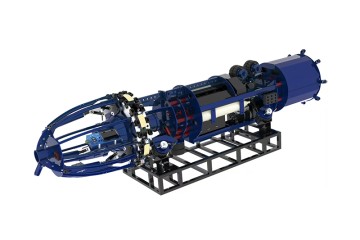
Mainline front-end spreads demand cycle times of under 4 minutes per joint on 48-inch (1219 mm) OD pipes, necessitating mechanized multi-torch setups or internal battery-driven root welders.
Low-hydrogen welding regimes (
A rigorous understanding of welding physics and metallurgy dictates how contractors distribute MMA, MIG, and TIG processes across the pipeline right-of-way (ROW). Each methodology occupies a distinctive operational niche based on electrode efficiency, shielding gas integrity, deposition rate, and positional versatility.
MMA remains the historic backbone of cross-country pipelining, particularly via vertical-down downhill welding utilizing high-cellulose coated electrodes (AWS EXX10, such as E6010, E7010, and E8010). The energetic dig of cellulosic arcs ensures deep, aggressive root penetration even when root face misalignment and hi-lo conditions occur in tough field terrains.
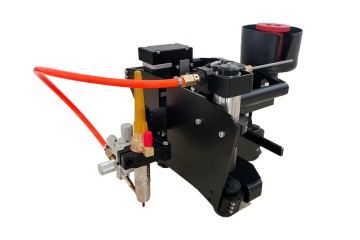
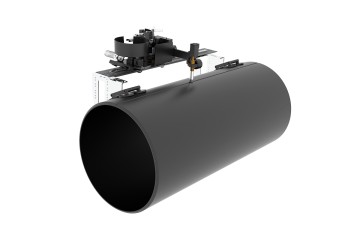
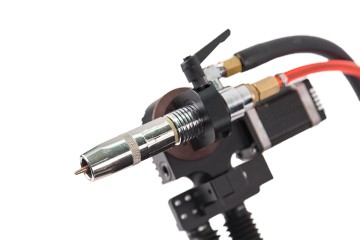
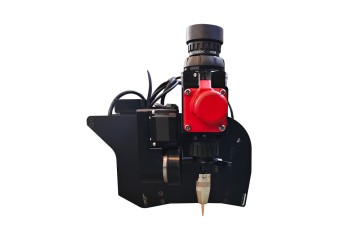
Mechanized and semi-automated MIG/GMAW represents the modern benchmark for high-speed transmission pipelines. Utilizing solid ER70S-6 wire or metal-cored consumables under mixed argon/CO2 gas shields, automated orbital external welding bugs (such as the DW-EW-I and DW-XW-I) deliver uniform root, hot pass, fill, and cap passes.
While slower in deposition ($0.6 - 1.2\text{ kg/h}$), mechanized and manual TIG remains indispensable for zero-defect metallurgical tolerances. It is predominantly deployed for station piping, above-ground block valve assemblies, river/road trenchless crossing tie-ins, and corrosion-resistant clad pipelines (e.g., Inconel 625 or 316L clad linepipes for wet sour gas).
| Process Metric | MMA / SMAW (Downhill Cellulosic) | MIG / GMAW (Automated Orbital) | TIG / GTAW (Mechanized Argon Arc) |
|---|---|---|---|
| Primary Application | Mountainous spreads, repair, tie-ins | Mainline high-speed spread production | Station tie-ins, CRA cladding, valves |
| Deposition Rate | 1.5 - 2.5 kg/h | 3.5 - 6.0 kg/h (per bug) | 0.8 - 1.5 kg/h |
| Diffusible Hydrogen | High (25 - 40 ml / 100g) | Ultra-Low (< 3 ml / 100g) | Extremely Low (< 1 ml / 100g) |
| Wind Resistance | High (Up to 35 km/h without shielding loss) | Requires wind shelter / canopy tents | Requires complete enclosure protection |
| AUT Acceptance Rate | 92% - 95% typical | 98.5% - 99.4% achievable | > 99.5% achievable |
| Automation Readiness | Manual only | Full Robotic / Autonomous | Semi to fully automated orbital |
Cross-country pipeline rights-of-way span thousands of miles of unpredictable geology. Welding engineers and site directors must adapt power equipment, metallurgy, and shielding systems to the host climate:
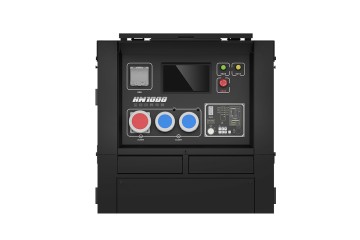
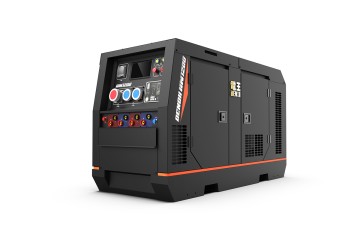
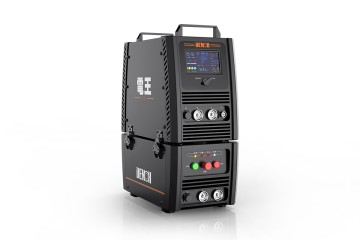
In high-latitude natural gas projects (such as Siberia, Northern Canada, or Alaska), ambient temperatures plunge to -45°C. Steel brittleness rises exponentially, elevating the risk of cold cracking. Welding protocols mandate strict induction preheating to 120°C - 150°C and continuous interpass monitoring. Heavy-duty diesel welder-generators, like the HW1000 and HW1200 series, provide uninterrupted multi-arc output alongside auxiliary 380V power for induction coils and heating blankets without voltage fluctuations.
Middle Eastern and North African pipeline spreads experience ambient temperatures exceeding +50°C combined with particulate-laden sandstorms. Standard welding power sources suffer premature thermal shutdown or circuit-board abrasive degradation. Modern field welders feature insulated IP23S ingress enclosures, independent cooling tunnels, and brushless generators capable of 100% duty cycle continuous operation under blistering sun.
In mountainous regions where heavy welding crawler tractors cannot climb, compact equipment is vital. Single-torch external bug systems (such as the DW-EW-I and DW-XW-I) allow rapid rail mounting directly onto narrow-trench pipe joints, while multi-operator diesel rigs (HW1200 Four-Arc) positioned hundreds of meters away deliver constant-current/constant-voltage energy through long lead cables.
A comprehensive lifecycle delivery ecosystem engineered to uphold the integrity of global energy arteries from drawing board to joint verification.
With more than 20 years of industry accumulation, we have accumulated profound technical expertise and strictly adhere to high-standard production norms.
We have built a comprehensive and rigorous whole-process quality control system to ensure the excellent performance and stable quality of every product.
Covering pre-sales consultation, on-site guidance and after-sales support, we form a well-laid, efficient and reliable global product supply network.
High-speed mechanized internal and external pipeline welders engineered for the world's most demanding pipeline specifications.
Equipped with independently developed core patented technologies, these products feature outstanding advantages such as high efficiency, energy saving, precise welding, stable operation, durability and strong adaptability to harsh field and complex engineering conditions. We hold multiple independent intellectual property patents and have obtained a number of national and international authoritative industry certifications, which fully affirm our technical strength and product quality.
Relying on reliable product strength, professional and efficient full-process services, as well as the team's dedicated craftsmanship and 20 years of brand reputation, we have established long-term stable cooperation with leading enterprises in domestic oil and gas long-distance pipelines, municipal engineering, new energy infrastructure and other key fields.
Adhering to technological innovation as the core driving force and ingenuity quality as the foundation, we are committed to providing global customers with customized one-stop pipeline welding solutions, and continuously contributing to the high-quality and sustainable development of energy infrastructure projects at home and abroad.
Let's start your project together →Browse our comprehensive lineup of automatic internal root welders, single-torch & sleeve orbital welding robots, and industrial multi-operator diesel generator stations.