

Leave Your Message
In the contemporary landscape of heavy industrial construction, the synergy between Mig (Metal Inert Gas), Mma (Manual Metal Arc), and Tig (Tungsten Inert Gas) welding processes has become the gold standard for versatility. When these processes are integrated into a Multi-station Diesel Welder Generator Power Supply, they create a formidable tool capable of tackling the most rigorous demands of remote pipeline construction, offshore oil rig maintenance, and large-scale structural engineering.
The industrial status of diesel-driven multi-station welders has shifted from being "backup equipment" to becoming the "primary power hub" for field operations. Historically, projects required separate generators and multiple welding machines, leading to logistical nightmares and high fuel consumption. Today, a single high-performance diesel engine drives multiple independent welding arcs, significantly reducing the carbon footprint and operational costs of major infrastructure projects.
Designed for high-speed production, MIG welding in multi-station setups allows for continuous wire feeding, making it ideal for the filling and capping passes of long-distance oil and gas pipelines. The stable power supply from a diesel generator ensures minimal spatter and deep penetration.
Often referred to as stick welding, MMA remains essential for outdoor work where wind might interfere with shielding gases. Multi-station generators provide the high OCV (Open Circuit Voltage) required for easy arc starting with cellulosic electrodes, common in pipeline root passes.
For critical welds requiring the highest metallurgical quality, TIG capability within a diesel generator setup is indispensable. It provides the clean, precise heat control necessary for alloy pipes and root runs in high-pressure systems.
The modern Multi-station Diesel Welder Generator is no longer just a mechanical engine coupled to an alternator. It is a sophisticated electronic device. By utilizing high-frequency inverter technology, these machines can deliver "clean" power to multiple operators simultaneously without arc interference. When one welder strikes an arc, the others do not experience a voltage drop, thanks to advanced microprocessor control and fast-acting IGBT modules.
As global regulations tighten (such as EPA Tier 4 and EU Stage V), diesel welder generators have evolved. Modern units feature electronic governors and auto-idle functions that adjust engine speed to the exact load required by the welding stations. This not only reduces fuel consumption by up to 30% but also extends the service life of the engine components.
The "AI Tech" era has brought connectivity to the job site. High-end units like the DENOH HW-series now often include GPS tracking, remote diagnostics, and weld data logging. Project managers can monitor fuel levels, engine health, and even the "arc-on" time of each station from a central dashboard, ensuring maximum productivity across vast pipeline spreads.
Cross-Country Oil & Gas Pipelines: In the middle of a desert or a frozen tundra, there is no power grid. A multi-station diesel welder acts as a mobile factory. Two welders can perform the root pass using MMA, while another two follow immediately with MIG filling, all powered by the same HW1000 unit. This synchronized workflow is what allows modern projects to lay kilometers of pipe per day.
Emergency Infrastructure Repair: During bridge failures or power plant shutdowns, time is the most expensive factor. The ability to deploy one machine that provides 40kW of auxiliary power for lights and tools, while simultaneously supporting four TIG welding stations, makes the multi-station diesel generator an elite asset for rapid response teams.
Global Pipeline Solutions
DENOH Seimitsu Electric Appliance (Beijing) Co., Ltd. is a professional high-tech enterprise integrating independent R&D, sophisticated manufacturing, global sales and full-process professional services of high-end pipeline welding equipment.
With more than 20 years of deep cultivation and continuous innovation, we have forged a solid industry foundation and built an unshakable market position through decades of practical experience and technological breakthroughs.
Our core strength lies in our professional and elite team. Our R&D team gathers backbones with decades of experience, many of whom have participated in the research and development of key national engineering supporting welding equipment. We have been committed to tackling key technical problems, breaking through foreign technical monopolies in many core technologies, and realizing the independent innovation and localization of high-end pipeline welding equipment.
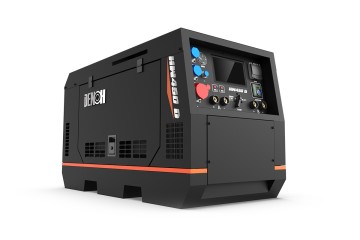 HW450D Engine Welding Machine
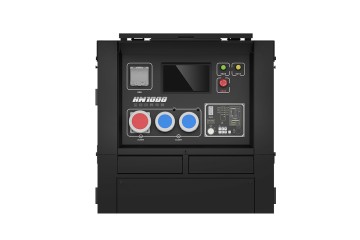 HW1000 Multi-Function Diesel Welder Generator
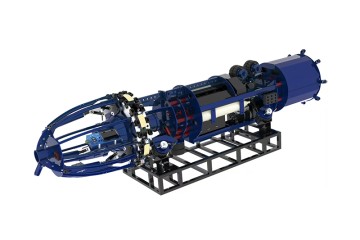 DW-EH Series Fully Automatic Internal Welding Machine
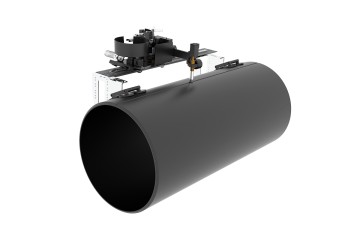 DW-BW-I Sleeve Type Pipeline Automatic Welder
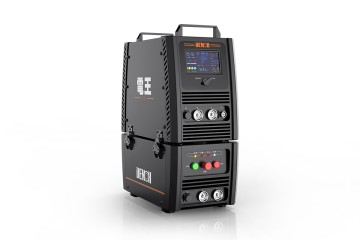 HW500E Multi-Function Engine Driven Welder
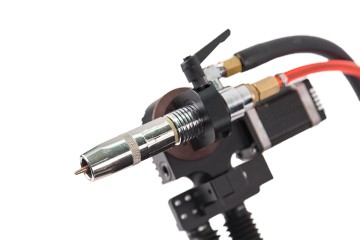 (DW-EW-I) Single Torch Automatic External Welder
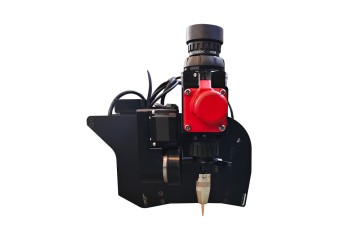 DW-XW-I Pipeline Single Torch Automatic Welding Robot
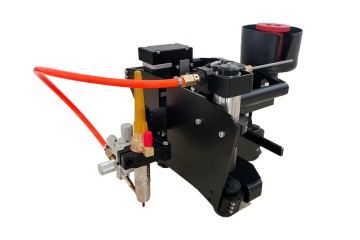 DW-TW-I Argon Arc Pipeline Automatic Welding Machine
The convergence of Mig, Mma, and Tig welding within a single diesel-powered multi-station unit is just the beginning. As we look toward the future, the integration of robotics—such as the DW-XW-I Pipeline Automatic Welding Robot—with these robust power supplies will redefine efficiency. We are moving toward a "Smart Jobsite" where the diesel generator power supply acts as the brain, communicating with robotic torches to adjust parameters in real-time based on environmental sensors.
For industrial giants and construction firms, investing in high-end multi-station diesel welder generators is not just about buying a machine; it is about securing a competitive advantage in a market that demands faster, safer, and higher-quality welding results. DENOH remains at the forefront of this revolution, bridging the gap between traditional heavy-duty engineering and the next generation of AI-driven welding technology.