Leave Your Message
Urban municipal utility networks, specifically water supply and natural gas distribution lines, form the vital life support systems of modern smart cities. As urban populations expand and megacities emerge, the demand for highly reliable, zero-leakage pipeline infrastructure has reached unprecedented levels. In this context, the choice of welding technology is not merely a matter of structural assembly; it directly dictates the safety, longevity, and operational efficiency of the city's underground grid.
Historically, manual stick welding (SMAW) dominated municipal layouts. However, the modern industry is undergoing a massive shift towards semi-automatic and fully automatic Gas Metal Arc Welding (GMAW/MIG) and Gas Tungsten Arc Welding (GTAW/TIG) processes. This transition is driven by the stringent quality controls required for urban gas mains—where even a micro-fissure can result in catastrophic gas leaks—and water mains, which must withstand high pressures and corrosive soil chemistry over a service life exceeding 50 years.
"The modernization of urban utility grids relies on advanced MIG and TIG welding to secure robust, high-integrity joints under demanding, high-traffic city landscapes."
Furthermore, municipal engineering projects face unique challenges: congested underground spaces, strict environmental regulations regarding noise and emissions, and the absolute necessity of minimizing road closure times. Advanced multi-process engine-driven welder generators and compact automatic orbital systems have emerged as the industry gold standard, allowing contractors to achieve rapid, high-deposition welds without compromising on metallurgical integrity.
Natural gas distribution networks in urban areas operate under high and medium pressures, utilizing carbon steel or stainless steel pipelines. For these critical lines, TIG (GTAW) welding is preferred for the root pass. The precise control over heat input and weld puddle behavior offered by TIG ensures a smooth, defect-free root bead with complete penetration. This eliminates the risk of internal crevices or lack of fusion, which could act as stress concentrators.
Once the root pass is successfully completed using TIG, the hot, fill, and cap passes are typically completed using MIG (GMAW) or flux-cored arc welding (FCAW) to maximize deposition rates and speed up construction. This hybrid approach guarantees both structural integrity and economic efficiency.
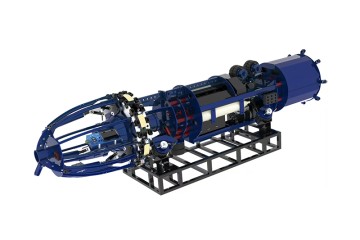
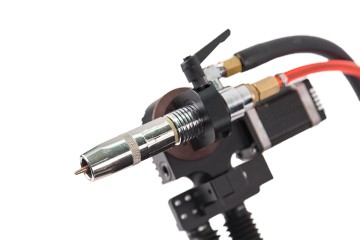
Water networks often employ large-diameter steel pipes that require extensive weld volumes. Here, high-efficiency MIG welding is the dominant process. Automatic external orbital MIG welders, such as the DW-EW-I system, are deployed to execute continuous, uniform welds around the pipe circumference. The automatic system controls parameter variations, ensuring consistent quality even in difficult vertical-up or overhead positions.
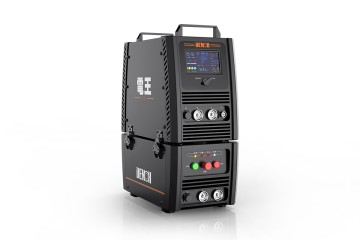
For internal joints, particularly in large-diameter pipes where access is possible, automatic battery-operated internal welding machines are used to apply sealing runs, protecting the joints from internal corrosion caused by treated water.
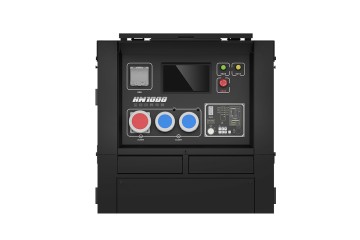
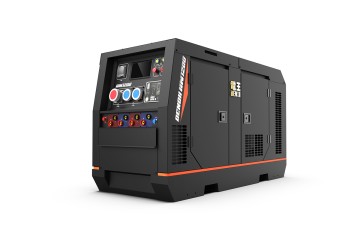
In urban centers, open-cut excavation is often restricted. Tie-ins and repairs are frequently performed in tight, muddy trenches or through small access shafts. In these confined spaces, compact multi-function diesel welder generators play a crucial role. They provide stable auxiliary power for grinding, preheating, and lighting, while delivering the precise current control needed for both delicate TIG root passes and heavy MIG filling.
| Application Scenario | Primary Welding Process | Key Quality Metric | Recommended Equipment Type |
|---|---|---|---|
| Urban Gas Mains (Root Pass) | TIG (GTAW) | 100% Radiographic Pass Rate, Zero Spatter | Multi-Function Diesel Welder (e.g., HW500E) |
| Water Transmission (Fill & Cap) | MIG (GMAW) / FCAW | High Deposition, Tensile Strength | Automatic External Welder (e.g., DW-EW-I) |
| Confined Space Tie-ins & Repairs | TIG & MIG Hybrid | Adaptability, Low Defect Rate | Engine-Driven Multi-Arc Gen-Sets (e.g., HW1200) |
| Internal Joint Sealing | Automatic MIG | Corrosion Resistance, Smooth Profile | Battery Flexible Internal Welder (e.g., DW-EH) |
The integration of smart sensors, laser tracking, and real-time weld pool monitoring in automatic orbital MIG/TIG systems is reducing reliance on highly scarce skilled manual welders, ensuring consistent quality.
Modern municipal projects require strict documentation. Smart welders now log parameters (current, voltage, travel speed, gas flow) for every joint, uploading data to cloud systems for quality assurance auditing.
To comply with urban emission and noise limits, the industry is adopting hybrid welder generators and battery-powered internal welders that minimize carbon footprints and noise pollution in residential areas.
With more than 20 years of deep cultivation and continuous innovation in the pipeline welding industry, we have forged a solid industry foundation and built an unshakable market position through decades of practical experience and technological breakthroughs.
Over the past 20-plus years, we have kept pace with the development of the global pipeline engineering industry, constantly optimizing technical solutions and upgrading product systems, witnessing and promoting the iterative upgrading of pipeline welding equipment technology.
DENOH Seimitsu Electric Appliance (Beijing) Co., Ltd. is a professional high-tech enterprise integrating independent R&D, sophisticated manufacturing, global sales and full-process professional services of high-end pipeline welding equipment.
The core strength of the company lies in its professional and elite team composed of senior industry experts, professional R&D engineers, skilled technical workers and efficient service personnel. Our R&D team gathers backbones with decades of experience in pipeline welding equipment research and development, many of whom have participated in the research and development of key national engineering supporting welding equipment and possess profound theoretical knowledge and rich practical experience.
Relying on the team's professional strength, we have been committed to tackling key technical problems in the pipeline welding field, breaking through foreign technical monopolies in many core technologies, and realizing the independent innovation and localization of high-end pipeline welding equipment. Meanwhile, our production, sales and service teams have been carefully trained and selected, with rich industry experience and strong professional capabilities, forming a collaborative and efficient working system from R&D and production to market sales and after-sales service.
Breaking technological barriers to deliver localized, high-end automated pipeline welding solutions for global municipal networks.