

Leave Your Message
In the modern landscape of oil and gas infrastructure, the integration of Mig and Tig Welder for Multi-station Diesel Welder Generator Power Supply has become a cornerstone of efficiency. Traditionally, remote pipeline construction relied on individual welding units, which increased logistics costs and fuel consumption. Today, high-performance engine-driven systems like the HW1200 provide a centralized power source capable of supporting multiple welding arcs simultaneously.
The global demand for energy security is driving massive pipeline projects across Central Asia, Africa, and the Americas. In these terrains, power grids are non-existent. Diesel welder generators serve as the "heart" of the operation. By utilizing multi-station units, contractors can reduce their equipment footprint by 60%, significantly lowering the carbon footprint and operational overhead. The commercial trend is shifting toward "All-in-One" solutions where a single diesel engine powers MIG, TIG, and Stick welding processes for a whole crew.
MIG (Metal Inert Gas) welding is favored for its high deposition rate and speed, making it ideal for the filling and capping passes of large-diameter pipes. Conversely, TIG (Tungsten Inert Gas) welding is the gold standard for the critical "root pass," where precision and structural integrity are paramount to prevent leaks under high pressure. The synergy of these two processes, powered by a stable diesel generator, ensures that pipeline joints meet the most stringent international standards (API 1104).
With more than 20 years of deep cultivation and continuous innovation in the pipeline welding industry, we have forged a solid industry foundation and built an unshakable market position through decades of practical experience and technological breakthroughs.
Over the past 20-plus years, we have kept pace with the development of the global pipeline engineering industry, constantly optimizing technical solutions and upgrading product systems, witnessing and promoting the iterative upgrading of pipeline welding equipment technology.
The future of Mig and Tig Welder for Multi-station Diesel Welder Generator Power Supply lies in digital intelligence. Modern systems are now being equipped with IoT (Internet of Things) sensors that monitor engine health, fuel consumption, and welding parameters in real-time. This "AI-ready" approach allows for predictive maintenance, ensuring that a generator doesn't fail in the middle of a critical weld in a remote desert or arctic environment.
Whether it is the sub-zero temperatures of Siberian gas fields or the humid, corrosive environments of offshore pipeline landings, diesel-driven multi-station welders are engineered for resilience. High-end models feature specialized cooling systems and dust-proof electronics. The ability to switch between MIG and TIG on a single power source without losing arc stability is what separates professional-grade equipment from standard industrial units.
In offshore lay-barge operations, space is at a premium. A multi-station diesel welder generator like the HW1200 allows four welders to work on different sections of a pipe joint simultaneously. This parallel workflow is essential for maintaining the "lay rate" of the vessel. For long-distance onshore pipelines, the mobility of these units—often mounted on 4x4 trucks or trailers—allows the welding crew to move rapidly across difficult terrain without waiting for a mobile power grid to be established.
Furthermore, the development of battery-flexible internal welding machines (like the DW-EH Series) represents a massive leap in "Green Welding." By combining battery technology with diesel power, these machines offer a "hybrid" approach that ensures consistent voltage even when the diesel engine is fluctuating under heavy load, resulting in cleaner, stronger welds.
DENOH Seimitsu Electric Appliance (Beijing) Co., Ltd. is a professional high-tech enterprise integrating independent R&D, sophisticated manufacturing, global sales and full-process professional services of high-end pipeline welding equipment.
The core strength of the company lies in its professional and elite team composed of senior industry experts, professional R&D engineers, skilled technical workers and efficient service personnel. Our R&D team gathers backbones with decades of experience in pipeline welding equipment research and development.
Many of our experts have participated in the research and development of key national engineering supporting welding equipment and possess profound theoretical knowledge and rich practical experience. Relying on the team's professional strength, we have been committed to tackling key technical problems in the pipeline welding field.
We have successfully broken through foreign technical monopolies in many core technologies, realizing the independent innovation and localization of high-end pipeline welding equipment. Our production, sales and service teams form a collaborative and efficient working system.
As the industry moves toward more complex alloys and thinner-walled pipes to save material costs, the precision of the power supply becomes the deciding factor in project success. A Mig and Tig Welder for Multi-station Diesel Welder Generator Power Supply provides a "stiff" arc that is unaffected by the power surges of other tools on the job site. This electrical isolation within a multi-arc system ensures that a TIG welder performing a delicate root pass isn't disrupted by a MIG welder starting a high-current fill pass nearby.
In conclusion, the evolution of diesel-driven welding technology is not just about power; it's about control, efficiency, and reliability. DENOH continues to lead this evolution, providing the global market with tools that are as rugged as the environments they operate in.
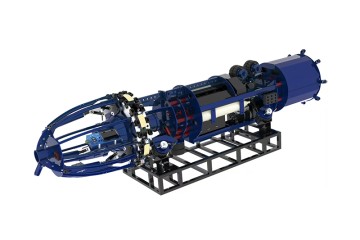 DW-EH Series Automatic Internal Welding Machine
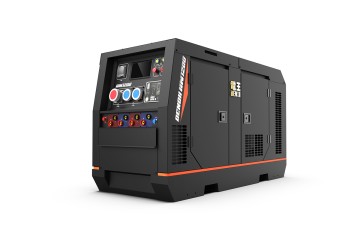 HW1200 Four-Arc Diesel Welder Generator
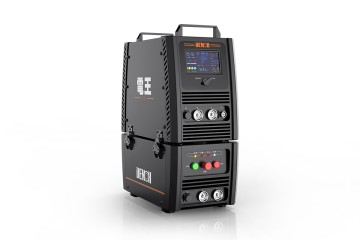 HW500E Multi-Function Diesel Welder
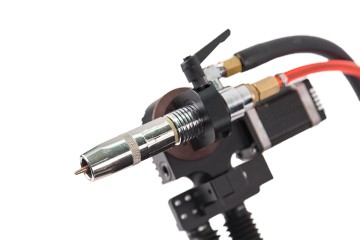 (DW-EW-I) Single Torch External Welder
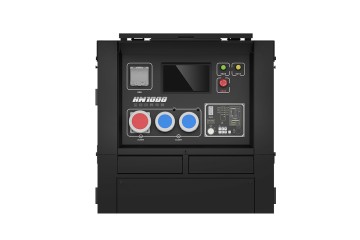 HW1000 Constant Speed Diesel Welder
Four-Arc Multi-Station Power Solution
Internal Pipeline Construction System
High-Efficiency Engine Driven Series