Leave Your Message
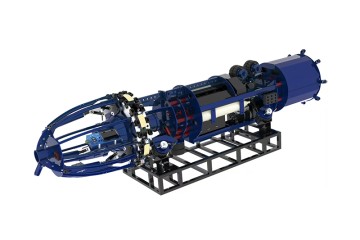
Cross-country pipelines are the lifeblood of global energy infrastructure, transporting crude oil, natural gas, refined products, and increasingly hydrogen over thousands of kilometers. Constructing these networks requires joining hundreds of thousands of high-strength steel pipe segments under tight project schedules and severe environmental conditions. In this demanding sector, the combination of MIG (Metal Inert Gas) and TIG (Tungsten Inert Gas) welding technologies stands as the pinnacle of high-efficiency joint fabrication.
Historically, manual Shielded Metal Arc Welding (SMAW), commonly known as stick welding, dominated pipeline construction. While reliable, stick welding is slow, labor-intensive, and generates significant slag, leading to high repair rates. The modern commercial landscape has shifted decisively toward mechanized and automated multi-arc welding processes. By utilizing advanced multi-arc MIG and TIG systems, pipeline contractors can achieve unprecedented deposition rates, reduce cycle times per joint, and maintain the rigorous weld quality demanded by international safety standards (such as API 1104 and ASME Section IX).
To understand the efficiency of modern pipeline welding, one must examine the specific roles played by MIG and TIG processes. In a typical high-efficiency cross-country setup, the welding workflow is segmented to capitalize on the unique strengths of each process:
The root pass is the most critical part of a pipeline weld, directly contacting the transported medium. Any defect here, such as lack of penetration or burn-through, can lead to catastrophic pipeline failure under high pressure. TIG welding offers unmatched control over the arc heat input and weld pool dynamics. Using a non-consumable tungsten electrode and inert shielding gas (typically pure Argon), TIG produces clean, slag-free, and exceptionally high-quality root joints. In automated setups, internal TIG welding heads or specialized orbital external TIG systems guarantee 100% root pass integrity.
Once the root pass is securely deposited, the remaining groove must be filled quickly to maintain laying speed. This is where MIG welding, specifically pulsed-MIG or Flux-Cored Arc Welding (FCAW), excels. MIG uses a continuously fed consumable wire electrode, allowing for extremely high metal deposition rates. By configuring multi-arc systems—where two or more MIG torches operate simultaneously on a single carriage—contractors can fill the joint groove up to four times faster than traditional methods, completing the hot pass, fill passes, and final cap pass in record time.
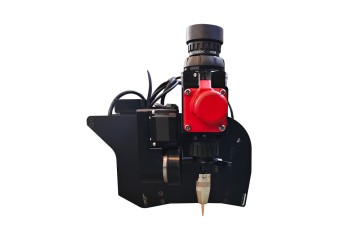
In multi-arc pipeline welding, multiple welding arcs are deployed in tandem or parallel. For instance, a dual-torch orbital welding bug moves along the pipe circumference, with the lead torch depositing the primary fill layer and the trailing torch immediately laying down the second layer. This not only increases speed but also refines the grain structure of the weld metal due to the controlled thermal cycle, improving the mechanical properties and toughness of the joint.
Cross-country pipeline construction does not happen in controlled factory environments. Pipelines traverse deserts, mountain ranges, wetlands, and arctic tundra. Each terrain introduces distinct metallurgical and operational challenges that require specialized MIG and TIG welding solutions.
Low temperatures risk hydrogen-induced cracking. Multi-arc MIG/TIG systems with integrated pre-heating control ensure optimal thermal management.
Fine sand can contaminate shielding gas. Enclosed orbital welding cabins combined with high-flow gas lenses protect the weld pool.
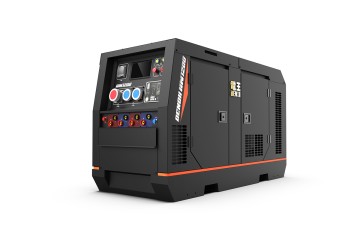
Thin air affects arc stability and engine performance. Heavy-duty diesel welder generators adapt fuel injection to maintain stable electrical output.
High humidity and wave motion require rapid joint completion. Multi-arc automated bugs minimize the barge cycle time per joint.
The pipeline welding industry is undergoing a digital transformation. The integration of advanced technologies is changing how operators manage weld quality and productivity in the field:
Modern automated MIG and TIG systems are equipped with optical sensors, laser tracking, and AI algorithms. These systems scan the joint groove ahead of the arc, dynamically adjusting the torch position, wire feed speed, and voltage to compensate for any variations in fit-up or bevel geometry. Real-time data logging captures parameters for every millimeter of the weld, creating a digital birth certificate for each joint that simplifies compliance audits.
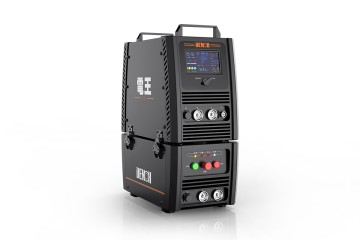
With the global focus on reducing carbon footprints, pipeline construction fleets are adopting eco-friendly power solutions. Battery-assisted welding machines and highly efficient variable-speed diesel generators drastically cut fuel consumption and emissions. These smart power sources deliver clean, ripple-free electricity, which is critical for maintaining arc stability in delicate TIG root passes.
As the industry transitions to hydrogen transport, welding requirements have become significantly more stringent. Hydrogen molecules are extremely small and can easily penetrate steel, leading to hydrogen embrittlement. To prevent this, welds must have exceptionally low diffusible hydrogen content and precise microstructures. Automated multi-arc MIG systems using specialized solid wires and gas mixtures, backed by rigorous TIG root passes, are essential to meet these new metallurgical standards.
DENOH Seimitsu Electric Appliance (Beijing) Co., Ltd. is a professional high-tech enterprise integrating independent R&D, sophisticated manufacturing, global sales and full-process professional services of high-end pipeline welding equipment.
With more than 20 years of deep cultivation and continuous innovation in the pipeline welding industry, we have forged a solid industry foundation and built an unshakable market position through decades of practical experience and technological breakthroughs. Over the past 20-plus years, we have kept pace with the development of the global pipeline engineering industry, constantly optimizing technical solutions and upgrading product systems, witnessing and promoting the iterative upgrading of pipeline welding equipment technology.
The core strength of the company lies in its professional and elite team composed of senior industry experts, professional R&D engineers, skilled technical workers and efficient service personnel. Our R&D team gathers backbones with decades of experience in pipeline welding equipment research and development, many of whom have participated in the research and development of key national engineering supporting welding equipment and possess profound theoretical knowledge and rich practical experience.
Relying on the team's professional strength, we have been committed to tackling key technical problems in the pipeline welding field, breaking through foreign technical monopolies in many core technologies, and realizing the independent innovation and localization of high-end pipeline welding equipment. Meanwhile, our production, sales and service teams have been carefully trained and selected, with rich industry experience and strong professional capabilities, forming a collaborative and efficient working system from R&D and production to market sales and after-sales service.
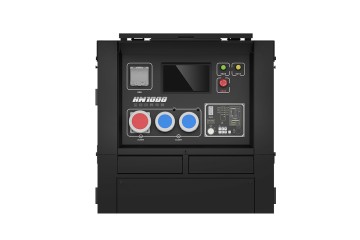
Explore our complete range of engine-driven welding machines, autonomous battery-powered systems, and intelligent welding robots engineered for high-efficiency cross-country pipeline construction.