

Leave Your Message
Engineered specifically for the high-stakes demands of oil and gas cross-country pipeline construction.
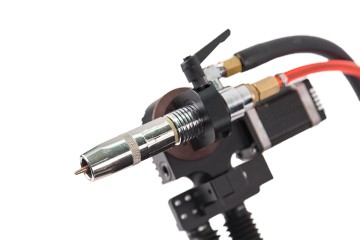
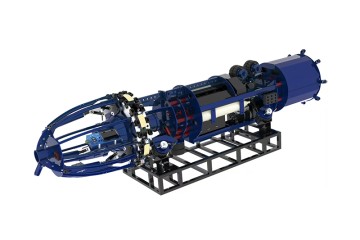
Cross-country pipeline construction for the oil and gas sector represents one of the most demanding engineering disciplines globally. Spanning thousands of miles across deserts, mountains, permafrost, and swampy wetlands, these lifelines demand absolute structural integrity. A single weld failure can lead to catastrophic environmental damage, massive financial loss, and severe operational disruptions. Consequently, the selection of welding technologies is a highly scrutinized commercial and technical decision.
Historically, manual Shielded Metal Arc Welding (SMAW), commonly known as stick welding, was the industry standard. However, as global energy demands escalate and project timelines compress, the industry is undergoing a massive shift toward semi-automatic and fully automatic welding systems. Among these, Gas Metal Arc Welding (GMAW/MIG) and Gas Tungsten Arc Welding (GTAW/TIG) have emerged as the premier technologies driving modern pipeline construction. When integrated into orbital and automatic systems, MIG and TIG processes deliver the high deposition rates, precise control, and low defect rates required to meet stringent modern standards such as API 1104 and ASME Section IX.
Automated MIG welding delivers deposition rates up to three times higher than traditional stick welding, cutting construction timelines drastically.
TIG welding provides unmatched root pass quality, ensuring complete fusion and a clean interior surface, preventing turbulence and corrosion inside the pipe.
Transitioning from manual to automated orbital MIG/TIG systems reduces weld repair rates from upwards of 5% to less than 0.5% on large-scale projects.
Commercially, the economics of pipeline construction dictate that productivity is measured in "joints per day." Automated systems utilizing advanced MIG and TIG processes allow contractors to maintain consistent, high-quality output regardless of operator fatigue or environmental hostility. This reliable performance significantly lowers non-destructive testing (NDT) rejection rates, saving millions of dollars in repair costs and keeping multi-billion-dollar infrastructure projects on schedule.
To optimize pipeline construction, engineers must understand the distinct metallurgical and physical characteristics of both MIG (GMAW) and TIG (GTAW) processes, and how they are strategically deployed across different welding passes.
The root pass—the very first weld bead deposited at the bottom of the joint bevel—is the most critical phase of pipeline welding. It seals the inside of the pipe and supports all subsequent weld layers. TIG welding, which utilizes a non-consumable tungsten electrode and an external inert shielding gas (typically pure Argon), provides the welder with absolute control over heat input and weld pool behavior.
Because TIG is a highly precise process, it produces clean, slag-free deposits with exceptional penetration. This prevents common defects like "lack of root fusion" or "burning through" the pipe wall. In high-pressure gas transmission lines, where even minor internal irregularities can cause turbulent flow or localized stress concentration, the ultra-smooth internal profile of a TIG root pass is highly valued. However, because manual TIG is relatively slow, modern pipeline construction often utilizes specialized automated internal hot-wire TIG systems or highly controlled pulsed-MIG systems to balance quality with speed.
Once the root and hot passes are securely deposited, the remaining groove of the pipe joint must be filled and capped. This requires depositing a large volume of weld metal quickly and efficiently. This is where MIG welding, particularly in its pulsed and flux-cored (FCAW) variations, excels.
MIG welding utilizes a continuously fed consumable wire electrode, allowing for uninterrupted welding over long distances—a feature perfectly suited for orbital configurations. The shielding gas (often an Argon/CO2 blend) stabilizes the arc and protects the weld pool from atmospheric nitrogen and oxygen. Pulsed MIG technology has revolutionized pipeline construction by rapidly cycling the welding current, allowing for out-of-position welding (such as vertical-down and overhead positions required on round pipes) while maintaining a highly controllable weld pool, high deposition rates, and minimal spatter.
With more than 20 years of deep cultivation, we ensure the excellent performance and stable quality of every product from R&D design to finished product delivery.
With more than 20 years of industry accumulation, we have accumulated profound technical expertise and strictly adhere to high-standard production norms.
We have built a comprehensive and rigorous whole-process quality control system to ensure the excellent performance and stable quality of every product.
Covering pre-sales consultation, on-site guidance and after-sales support, we form a well-laid, efficient and reliable global product supply network.
Cross-country pipeline construction presents unique, harsh, and unpredictable application environments. Understanding how MIG and TIG technologies adapt to these conditions is essential for project success.
Modern pipelines increasingly utilize high-strength, low-alloy (HSLA) steels such as API 5L X70, X80, and even X100 to withstand higher operating pressures while reducing wall thickness. Welding these materials requires precise heat-input control to prevent the formation of brittle phases in the Heat-Affected Zone (HAZ), which can lead to hydrogen-induced cracking (HIC). Automated MIG and TIG systems allow for exact parameter programming—controlling current, voltage, travel speed, and wire feed rate—to ensure consistent cooling rates and preserve the mechanical properties and toughness of the parent metal.
Unlike controlled factory environments, field welding is subject to wind, moisture, temperature extremes, and dust. Because both MIG and TIG rely on external shielding gases, wind speeds exceeding 5 mph (8 km/h) can disrupt the gas shield, leading to atmospheric contamination, porosity, and embrittlement. To combat this, advanced pipeline construction setups utilize integrated wind shelters, specialized gas lenses, and heavy-duty gas flow systems. Furthermore, in sub-zero arctic environments, preheating systems are paired with automated welding crawlers to prevent rapid cooling of the weld pool.
With the integration of AI and smart sensors, modern automatic welding systems like the DW-EW-I and DW-EH series capture real-time data for every millimeter of weld. Parameters such as arc voltage, current, travel speed, and gas flow are logged instantly. This "digital birth certificate" of the weld joint allows engineers to spot deviations immediately, ensuring that any potential defect is corrected before the joint is buried, vastly streamlining the QA/QC process.
Engineered for extreme performance and adaptability in the field.
Equipped with independently developed core patented technologies, these products feature outstanding advantages such as high efficiency, energy saving, precise welding, stable operation, durability and strong adaptability to harsh field and complex engineering conditions. We hold multiple independent intellectual property patents and have obtained a number of national and international authoritative industry certifications, which fully affirm our technical strength and product quality.
The future of cross-country pipeline welding is characterized by rapid technological convergence, focusing on automation, mobility, and environmental sustainability.
One of the most significant logistical challenges in cross-country pipeline construction is power distribution. Traditional heavy-duty welding spreads require massive, fuel-thirsty diesel generators that must be constantly towed along the pipeline right-of-way. The emergence of fully automatic, battery-powered systems like the DW-EH Series represents a paradigm shift. By utilizing high-capacity, robust battery systems integrated directly into the internal welding machine, contractors can operate with a significantly smaller footprint, reduced fuel consumption, and zero localized emissions, all while maintaining the high power output required for consistent welding.
To further accelerate construction speeds, modern external pipeline crawlers are transitioning from single-torch to dual-torch or multi-torch configurations. By operating two welding arcs simultaneously within the same bevel, deposition rates are effectively doubled. This configuration requires highly advanced control systems to prevent electromagnetic interference between the two closely spaced arcs, a hurdle solved by state-of-the-art synchronized pulsed-current power sources.
As the global energy sector pivots toward hydrogen blending and carbon capture, utilization, and storage (CCUS) pipelines, the metallurgical requirements for pipeline welds are becoming even more stringent. Hydrogen pipelines are highly susceptible to hydrogen embrittlement. This places an unprecedented premium on low-hydrogen welding processes like TIG and highly controlled automated MIG. Advanced automatic welders are being optimized to deliver ultra-low hydrogen weld deposits, ensuring that the pipelines built today are fully compatible with the green energy carrier systems of tomorrow.
Relying on reliable product strength, professional and efficient full-process services, as well as the team's dedicated craftsmanship and 20 years of brand reputation, we have established long-term stable cooperation with leading enterprises in domestic oil and gas long-distance pipelines, municipal engineering, new energy infrastructure and other key fields.
Adhering to technological innovation as the core driving force and ingenuity quality as the foundation, we are committed to providing global customers with customized one-stop pipeline welding solutions, and continuously contributing to the high-quality and sustainable development of energy infrastructure projects at home and abroad.
Let's start your project together →High-performance solutions tailored for diverse cross-country project specifications.