Leave Your Message
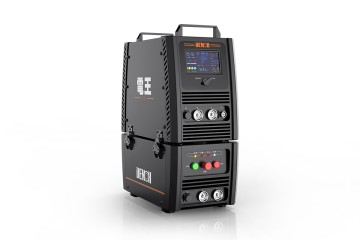
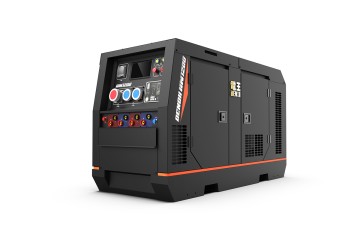
Discover our specialized high-performance mobile diesel-driven welding generator sets engineered for rapid cross-country pipeline construction, automated multi-torch welding, and heavy contractor operations.
The construction of long-distance oil, natural gas, hydrogen-blend, and carbon capture pipelines represents one of the most demanding engineering environments on the planet. Spanning thousands of kilometers through deserts, permafrost, marshlands, and alpine elevations, cross-country pipeline projects operate on relentless deadlines where contractor profitability is strictly dictated by daily joint completion rates—commonly known in the industry as the speed of the "spread."
Traditional single-operator welding machines are increasingly creating severe logistical bottlenecks along narrow Right-of-Way (ROW) corridors. Transporting, fueling, maintaining, and repositioning separate engine-driven welding machines for each welder consumes critical space, escalates diesel expenditure, and compounds carbon footprints. Consequently, tier-one pipeline contractors have transitioned toward high-efficiency, multi-arc field welder generators capable of powering two to four independent welding arcs alongside high-capacity auxiliary power tools simultaneously from a single heavy-duty prime mover.
Our advanced digital chopper and IGBT inverter control topology isolates power channels, preventing arc strike dips or voltage sagging when multiple operators initiate or sever high-amperage welding arcs simultaneously on API 5L X70, X80, and X100 grade line pipe.
Conventional multi-operator systems historically suffered from cross-circuit arc degradation. Our multi-arc architecture employs fully isolated primary winding taps and fast-switching microprocessors that recalculate waveform dynamics in sub-millisecond cycles, ensuring flawless stability across SMAW, FCAW-G, and GMAW processes.
Designed for nonstop fill-and-cap cycles, our units boast a 100% duty cycle rating at maximum output currents. Equipped with heavy-duty copper alternators and oversized cooling radiators, our machines withstand continuous ambient operations exceeding 55°C without thermal tripping.
Mainline spreads require massive supplementary power for pipe beveling machines, internal line-up clamps (ILUC), induction preheating blankets, hydraulic power packs, and heavy gouging equipment. Integrated ultra-clean AC three-phase generators supply simultaneous power without disturbing arc stability.
High-strength microalloyed steels (API Spec 5L X65 through X100) require accurate heat input control, strict hydrogen cracking mitigation, and consistent puddle fluidity. See how our multi-arc welder generators excel across the pipeline sequence.
The root pass is the foundation of any pipeline girth weld. Whether utilizing cellulosic electrodes (E6010, E8010) via stovepipe downward progression or automated internal GMAW welding tractors, arc force control is paramount. The fast dynamic response of our diesel welder generators ensures deep penetration and keyhole stability while eliminating burn-through or internal undercut. Immediately behind the root gang, the hot pass operators demand instantaneous high amperage without choking the arc, ensuring complete slag remelt and rapid joint build-up.
Mechanized and orbital pipeline welding bands require constant voltage (CV) modes with tight voltage windows (±0.5V) to drive multi-torch carriages smoothly. The HW-series provides pure sine-wave excitation, preventing electrical ripple from disturbing microprocessor-controlled wire feeders, orbital oscillation servos, or shielding gas solenoid valves during heavy FCAW or pulse GMAW cap passes.
From the freezing winds of Arctic transmission lines to high-salinity coastal tie-ins and remote desert pipeline rights-of-way, our welder generators are enclosed in corrosion-resistant zinc-rich phosphated steel housings with IP23 weatherproofing. Integrated glow plug preheaters and heavy cold-crank batteries ensure unassisted engine starts at -40°C, while oversized sand-separating air intake filters protect the engine block during desert dust storms.
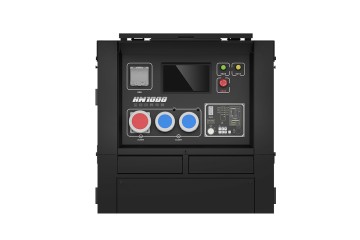
In field pipeline construction, process versatility prevents costly delays. A single machine can configure Arc 1 for Carbon Arc Gouging (CAC-A) to excavate root defects, while Arcs 2, 3, and 4 deliver smooth Low-Hydrogen DC-Stick or Flux-Cored wire welding simultaneously, all managed through ruggedized analog and digital dual interfaces.
| Operational Parameter | Standard Multi-Arc Spec | Single-Arc Traditional Setup | Contractor Economic Advantage |
|---|---|---|---|
| Simultaneous Arcs | 2 to 4 Independent Arcs | 1 Arc per Machine | Up to 75% smaller equipment footprint on narrow mountain ROWs |
| Fuel Consumption Rate | 14.5 – 18.2 L/h (Full Spread Load) | 32.0 – 38.0 L/h (Equivalent 4 units) | Up to $15,000+ monthly diesel savings per spread section |
| Auxiliary AC Generator Power | Up to 30-50 kVA Three Phase Clean Output | 5 - 10 kVA Single Phase Limited | Directly powers induction coils, bevelers, and lighting towers |
| Main Engine Maintenance | 1 Engine to service (250h / 500h interval) | 4 Engines to service simultaneously | Cuts oil, filter replacements, and mechanical downtime by 75% |
| Weld Process Versatility | Cellulosic SMAW, CV-GMAW, Pulsed FCAW, GTAW | Dedicated CC or CV only in budget models | Eliminates need for secondary power sources on repair crews |
With more than 20 years of deep cultivation and continuous innovation in the pipeline welding industry, we have forged a solid industry foundation and built an unshakable market position through decades of practical experience and technological breakthroughs.
Over the past 20-plus years, we have kept pace with the development of the global pipeline engineering industry, constantly optimizing technical solutions and upgrading product systems, witnessing and promoting the iterative upgrading of pipeline welding equipment technology.
The core strength of the company lies in its professional and elite team composed of senior industry experts, professional R&D engineers, skilled technical workers and efficient service personnel. Our R&D team gathers backbones with decades of experience in pipeline welding equipment research and development, many of whom have participated in the research and development of key national engineering supporting welding equipment and possess profound theoretical knowledge and rich practical experience.
Relying on the team's professional strength, we have been committed to tackling key technical problems in the pipeline welding field, breaking through foreign technical monopolies in many core technologies, and realizing the independent innovation and localization of high-end pipeline welding equipment. Meanwhile, our production, sales and service teams have been carefully trained and selected, with rich industry experience and strong professional capabilities, forming a collaborative and efficient working system from R&D and production to market sales and after-sales service.
The pipeline welding industry is undergoing unprecedented modernization. Meeting the dual mandates of reduced emissions and automated data acquisition requires high-tech generation equipment built for tomorrow's intelligent welding networks.
Modern EPC contracts require verifiable Quality Assurance. Built-in IoT telemetry gateways stream real-time heat input, arc time, voltage, amperage, and GPS tracking to cloud dashboards, immediately flagging deviation from qualified Welding Procedure Specifications (WPS).
Stricter environmental regulations require lower particulate and nitrogen oxide emissions on transmission corridors. Our latest engine partnerships integrate clean common-rail diesel engines with smart electronic governors that modulate RPM based on instant multi-arc electrical demands.
Designed for rapid deployment on custom pipe-welding crawler tractors (such as Paywelders) and rough-terrain road trailers with heavy-duty torsion axles, lifting eyes, and unified forklift pockets that make relocation along the trench effortless.