


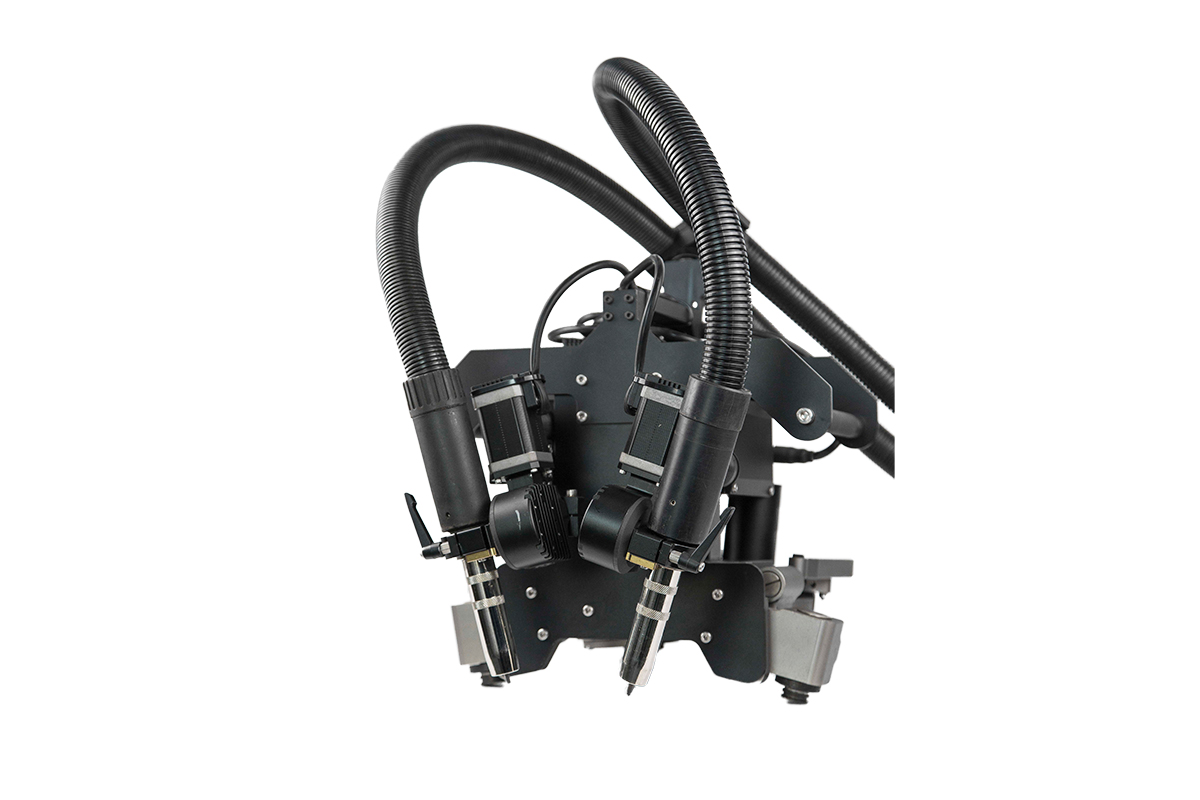
DW-EW-II Dual Torch Pipeline Automatic External Welding Machine | Automatic Welding Equipment for Pipeline
description1
Core Application Scenarios
Applicable for 168–1422mm and larger pipes, with allowable pipe misalignment ≤1.5mm, adaptable to low-temperature, high-altitude and other extreme working conditions, widely used in long-distance oil and gas pipelines, high-pressure fluid pipelines, petrochemical engineering and other key engineering fields.
Core Advantages
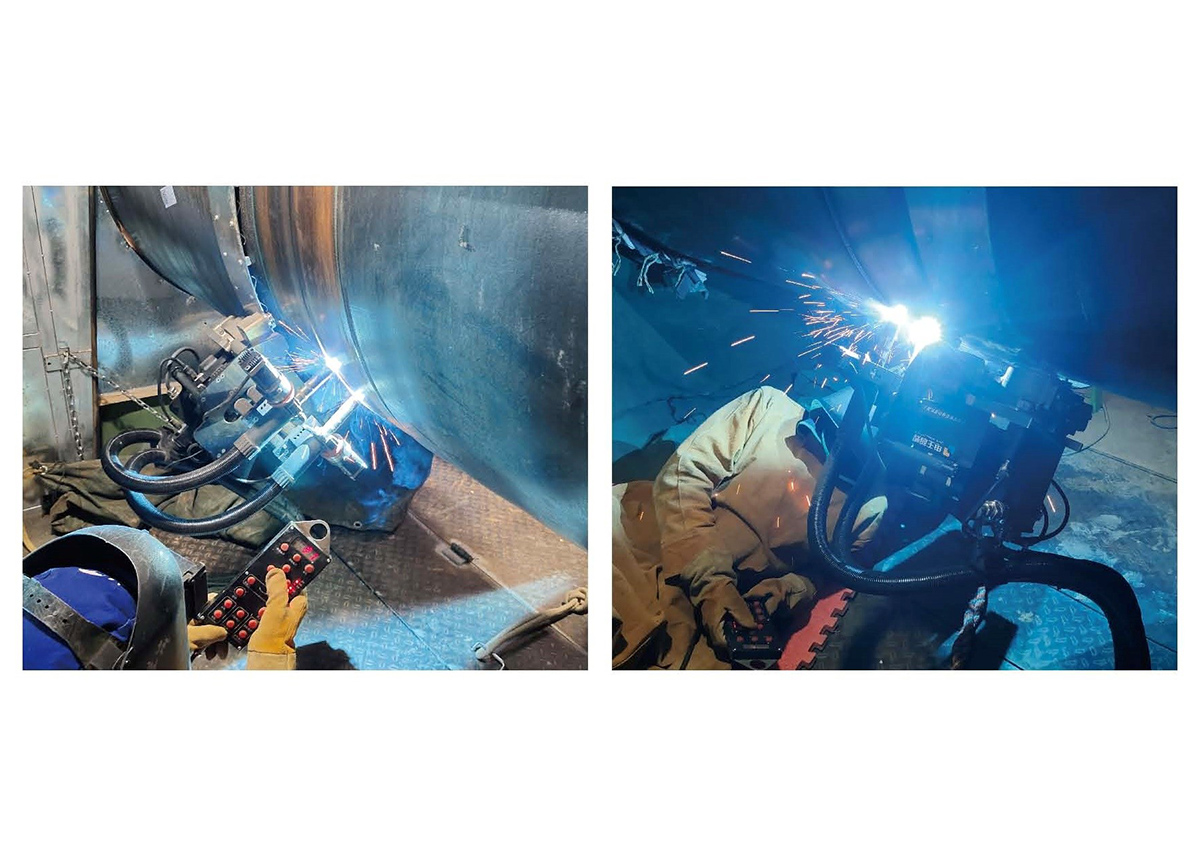
1. Flexible steel track with high rigidity and light weight; gear-rack meshing drive ensures high walking accuracy and stable movement during welding; split ring quick-install structure enables fast installation and disassembly on site, and racks are replaceable, effectively reducing construction preparation time and improving overall work efficiency.
2. Digital communication control between control box and welding power supply provides precise parameter control, strong anti-interference ability and stable long-term operation; standardized structural parts ensure high versatility and interchangeability, making equipment maintenance and spare parts management more convenient.
3. Walking speed: 0-1200mm/min, wire feeding speed: 0-25000mm/min, obviously faster than traditional single torch welding models, fully satisfying the requirements of high-speed dual torch welding and greatly improving pipeline welding efficiency.
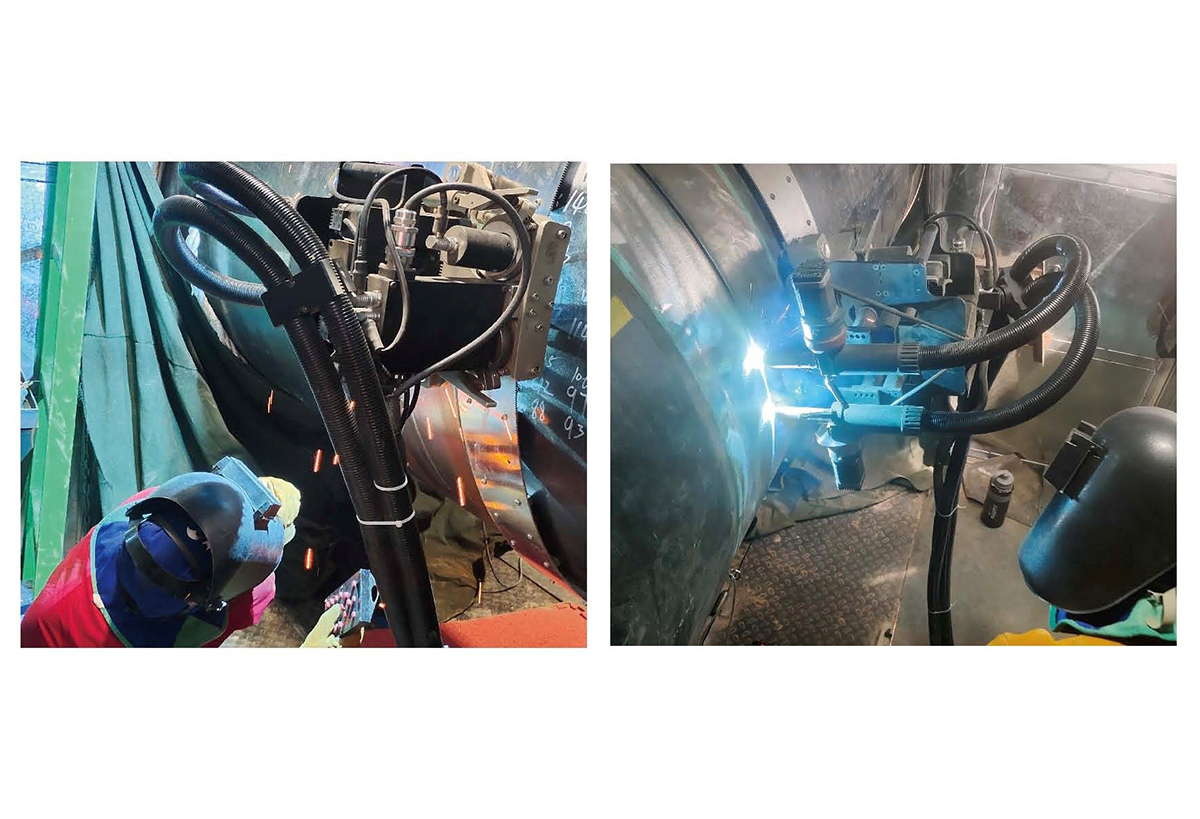
4. Visual touchscreen supports multi-group parameter storage, quick recall and USB import/export functions for easy operation and program management; handheld control box with reasonable button layout is ergonomically designed, easy to hold and operate even in complex construction environments.
5.Free switching between straight swing and angle swing is available for various welding processes and groove types; one-key intelligent switching of left and right working positions is specially designed for small-diameter pipes, greatly improving equipment adaptability.
6. Built-in automatic arc tracking system intelligently adjusts the welding path and controls weld formation in real time without manual intervention, ensuring more stable and consistent welding quality and reducing the impact of human factors.