Leave Your Message
In the modern era of global energy logistics, the construction of cross-country pipelines represents the circulatory system of industrial civilization. From the frozen tundras of Siberia to the scorching deserts of the Middle East, the integrity of these pipelines depends entirely on the quality of their welds. The introduction of CNC TIG Welder technology for high-efficiency multi-arc welding has marked a turning point, moving away from labor-intensive manual processes toward a future of automated precision.
Cross-country pipelines often span thousands of miles, requiring hundreds of thousands of individual girth welds. Traditionally, manual Tungsten Inert Gas (TIG) welding was the gold standard for quality but the bottleneck for speed. Today, the integration of CNC (Computer Numerical Control) with multi-arc systems allows for simultaneous welding passes, drastically reducing project timelines while maintaining the metallurgical excellence required for high-pressure gas and oil transport.
The global demand for natural gas as a transition fuel has spurred a massive increase in pipeline infrastructure. Current industrial data suggests a 15% annual growth in automated welding adoption. Companies are no longer looking for just a machine; they are looking for integrated "welding factories" on wheels that can operate in remote environments with minimal human intervention.
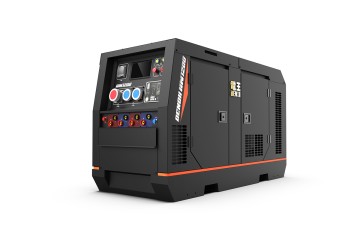
The core of high-efficiency welding lies in the "Multi-Arc" configuration. By utilizing systems like the HW1200 Four-Arc Engine Driven Machine, operators can execute root, hot, fill, and cap passes with unprecedented coordination. CNC logic ensures that the thermal input is balanced across the pipe circumference, preventing distortion and ensuring a uniform Heat Affected Zone (HAZ). This is critical for high-strength steels like X80 and X100, which are sensitive to thermal cycles.
Unlike factory-based CNC, pipeline CNC welders must account for variable factors: pipe ovality, fit-up gaps, and environmental wind. Advanced CNC TIG systems now feature real-time seam tracking and adaptive control. If the gap widens by even 0.5mm, the AI-driven controller adjusts the wire feed speed and travel speed instantaneously. This level of precision is humanly impossible to maintain over a 12-hour shift in the field.
TIG welding (GTAW) is preferred for pipeline root passes because it provides a smooth, defect-free internal bead. However, its slow speed was its downfall. Multi-arc CNC TIG solves this by combining the purity of the TIG process with the speed of automated multi-wire systems. The result is a weld that passes 100% X-ray and Ultrasonic testing with virtually zero repair rates.
DENOH Seimitsu Electric Appliance (Beijing) Co., Ltd. is a professional high-tech enterprise integrating independent R&D, sophisticated manufacturing, global sales and full-process professional services of high-end pipeline welding equipment.
With more than 20 years of deep cultivation and continuous innovation in the pipeline welding industry, we have forged a solid industry foundation and built an unshakable market position through decades of practical experience and technological breakthroughs.
Over the past 20-plus years, we have kept pace with the development of the global pipeline engineering industry, constantly optimizing technical solutions and upgrading product systems, witnessing and promoting the iterative upgrading of pipeline welding equipment technology.
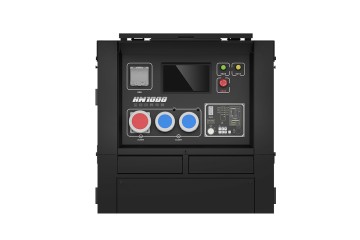
Our CNC TIG systems are engineered with specialized cooling and heating circuits, allowing the HW1000 and HW1200 series to operate in temperatures ranging from -40°C to +50°C. In the Arctic, pre-heating and inter-pass temperature control are automated via the CNC interface, ensuring the integrity of the weld metal.
Cross-country pipelines don't just run on flat ground. They climb mountains. The compact, engine-driven design of our multi-function diesel welders allows them to be mounted on tracked carriers or suspended from side-booms, providing stable arc characteristics even at steep angles.
As the world moves toward a Hydrogen economy, the demand for "Hydrogen-ready" pipelines is surging. Hydrogen embrittlement is a major risk. CNC TIG welding provides the ultra-clean, low-hydrogen weld deposit necessary to transport hydrogen safely, a task that traditional stick welding struggles to achieve consistently.
The next decade of pipeline construction will be defined by the "Smart Pipeline" concept. At DENOH, we are already integrating IoT (Internet of Things) capabilities into our CNC TIG welders. This allows project managers in central offices to monitor the real-time welding parameters of a machine located in a remote mountain range. Data analytics can predict equipment failure before it happens and track the productivity of every arc on the line.
Furthermore, the move toward multi-arc systems is not just about speed; it's about data density. Each arc provides feedback on the pipe's metallurgy and fit-up quality, creating a "Digital Twin" of every weld joint. This data is invaluable for long-term pipeline integrity management and regulatory compliance.
The core strength of the company lies in its professional and elite team composed of senior industry experts, professional R&D engineers, skilled technical workers and efficient service personnel. Our R&D team gathers backbones with decades of experience in pipeline welding equipment research and development, many of whom have participated in the research and development of key national engineering supporting welding equipment and possess profound theoretical knowledge and rich practical experience.
Relying on the team's professional strength, we have been committed to tackling key technical problems in the pipeline welding field, breaking through foreign technical monopolies in many core technologies, and realizing the independent innovation and localization of high-end pipeline welding equipment.
Choosing a CNC TIG Welder for high-efficiency cross-country pipeline multi-arc welding is more than a capital expenditure; it is a commitment to project safety and longevity. As the global energy landscape evolves, the tools we use to build its foundation must be smarter, faster, and more reliable. DENOH Seimitsu remains at the forefront of this evolution, delivering equipment that meets the rigorous demands of today while anticipating the technological needs of tomorrow.
Our collaborative and efficient working system—from R&D and production to market sales and after-sales service—ensures that every DENOH customer has the support they need to conquer the toughest pipeline projects on earth. With over two decades of experience, we don't just sell machines; we provide the engineering excellence that powers the world's most critical infrastructure.