Leave Your Message
Turkey stands as a unique industrial powerhouse, acting as both a physical and economic bridge between Europe, Asia, and the Middle East. With a rapidly growing infrastructure sector, massive automotive assembly plants in Bursa and Kocaeli, shipbuilding yards in Tuzla and Yalova, and cross-continental energy pipelines like the Trans-Anatolian Natural Gas Pipeline (TANAP), the demand for high-precision, robust, and automated welding systems has reached unprecedented heights. TIG (Tungsten Inert Gas) and MIG (Metal Inert Gas) welding technologies serve as the backbone of these diverse manufacturing and construction activities.
To meet the stringent international quality standards required for global projects, Turkish fabricators and EPC contractors are increasingly looking towards China's leading TIG and MIG welding manufacturers. Chinese factories have evolved from low-cost machinery suppliers into high-tech R&D hubs, delivering state-of-the-art automatic welding robots, diesel engine-driven welding generators, and intelligent inverter systems. This combination of advanced software control, mechanical reliability, and competitive pricing makes Chinese welding equipment the preferred choice for Turkish industrial developers.
DENOH is a professional high-tech enterprise integrating independent R&D, sophisticated manufacturing, global sales and full-process professional services of high-end pipeline welding equipment. Our systems are engineered to withstand the most demanding environments, from high-altitude pipeline installations to heavy-duty industrial fabrications across Turkey.
The industrial landscape in Turkey demands welding systems that offer a blend of high efficiency, minimal defect rates, and adaptability to tough environmental conditions. Several sectors are currently driving this demand:
With more than 20 years of deep cultivation and continuous innovation in the pipeline welding industry, we have forged a solid industry foundation and built an unshakable market position through decades of practical experience and technological breakthroughs.
Over the past 20-plus years, we have kept pace with the development of the global pipeline engineering industry, constantly optimizing technical solutions and upgrading product systems, witnessing and promoting the iterative upgrading of pipeline welding equipment technology.
Through strategic partnerships with international contractors, our technology has been deployed in diverse terrains, ensuring high-quality weld joints that comply with ASME, API, and EN standards, positioning us as a leading global manufacturer.
The Turkish manufacturing sector is currently undergoing a digital transformation, often referred to as Industry 4.0. This transformation directly impacts the procurement of welding machinery. Traditional, manual welding units are rapidly being replaced by intelligent, networked systems that offer real-time data monitoring and automation. Let's explore the key trends dominating the market:
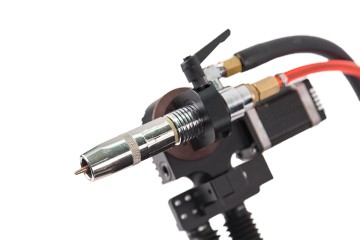
In cities like Kocaeli and Izmir, manufacturing plants are facing a shortage of highly skilled manual welders. To maintain production speeds and eliminate human error, companies are investing in automatic welding robots. Single-torch automatic pipeline welding robots, for instance, allow operators to set precise parameters and let the machine execute uniform welds. This is especially vital in pipeline construction where consistency across hundreds of kilometers is required.
With rising energy costs in Turkey, factories are prioritizing energy-efficient inverter-based TIG and MIG welding machines. Modern IGBT inverter technology reduces power consumption while delivering a highly stable arc, minimal spatter, and superior weld appearance. This makes Chinese manufacturers, who have heavily optimized IGBT technology, incredibly competitive in the Turkish local market.
Industrial sites in remote parts of Turkey often experience voltage fluctuations. High-end Chinese welding machines are designed with wide voltage input tolerances and integrated generator compatibility, ensuring stable arc characteristics even when powered by diesel engines on-site.
Turkish workshops value versatility. A machine that can switch seamlessly between MIG, TIG, and Shielded Metal Arc Welding (SMAW) offers immense value. Multi-process diesel welder generators are highly sought after by maintenance crews working on infrastructure projects, agricultural machinery repair, and remote pipeline tie-ins.
The core strength of the company lies in its professional and elite team composed of senior industry experts, professional R&D engineers, skilled technical workers and efficient service personnel. Our R&D team gathers backbones with decades of experience in pipeline welding equipment research and development, many of whom have participated in the research and development of key national engineering supporting welding equipment and possess profound theoretical knowledge and rich practical experience.
Relying on the team's professional strength, we have been committed to tackling key technical problems in the pipeline welding field, breaking through foreign technical monopolies in many core technologies, and realizing the independent innovation and localization of high-end pipeline welding equipment. Meanwhile, our production, sales and service teams have been carefully trained and selected, with rich industry experience and strong professional capabilities, forming a collaborative and efficient working system from R&D and production to market sales and after-sales service.
To understand the true value of advanced TIG and MIG welding equipment, we must look at how these systems are deployed across specific Turkish industries and regions:
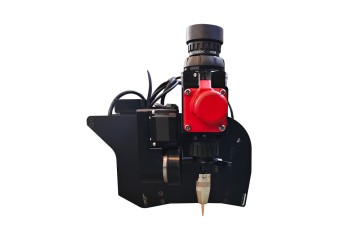
The rugged terrain of Eastern Anatolia presents extreme challenges for pipeline installation. Temperatures can drop significantly, and the terrain is steep and rocky. Standard manual welding under these conditions leads to high defect rates and slow progress. By deploying the DW-XW-I Pipeline Single Torch Automatic Welding Robot, contractors can achieve high-speed, high-precision orbital welds. The system tracks the weld seam automatically, reducing the reliance on manual positioning and ensuring that every joint passes non-destructive testing (NDT) on the first attempt.
Bursa is the heart of Turkey's automotive sector. Here, tier-1 suppliers fabricate exhaust systems, chassis components, and fuel tanks. These parts require thin-gauge metal joining, where TIG and MIG welding must be executed without burn-through or distortion. High-frequency TIG welding machines and pulsed MIG systems imported from China allow local manufacturers to achieve clean, aesthetic welds on aluminum and stainless steel parts at high speeds, keeping production lines running 24/7.
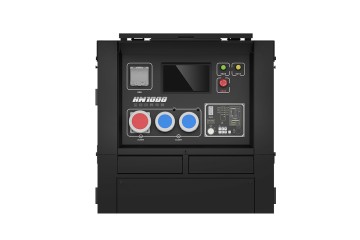
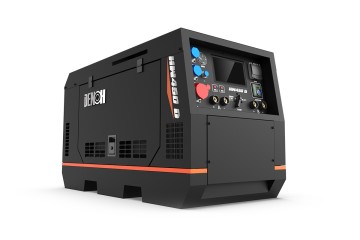
Istanbul's massive urban renewal and infrastructure projects demand structural steel elements of immense thickness and strength. Heavy-duty diesel engine-driven welders, such as the HW450D Engine Welding Machine, are widely utilized on-site. These machines operate independently of the local power grid, providing high-amperage output for continuous flux-cored arc welding (FCAW) and MIG welding, ensuring structural integrity for bridges, transit stations, and skyscrapers.
The shipyards of Yalova handle complex repairs on international cargo vessels. Marine environments demand corrosion-resistant welds, often using exotic alloys. TIG welding is the standard for root passes on critical marine piping systems. Chinese TIG welding manufacturers supply units with advanced wave-shape controls, allowing Turkish marine engineers to adjust the arc characteristics precisely to match the metallurgical requirements of marine-grade steels.
Navigating the global supply chain requires careful evaluation to ensure the imported machinery meets local regulations and project demands. Here are the key factors Turkish businesses should consider:
Since Turkey maintains a customs union with the European Union, all industrial machinery imported into the country must carry the CE mark. Reliable Chinese manufacturers ensure their TIG, MIG, and automatic welding systems comply with CE low-voltage and electromagnetic compatibility directives. Always request certification documentation before finalizing an order.
Minimizing downtime is critical for any production facility or pipeline project. When sourcing from China, verify if the manufacturer offers remote diagnostics, comprehensive English manuals, and a rapid spare parts delivery network. Leading brands provide modular designs, allowing local technicians to swap out boards or torches easily without needing specialized factory assistance.
Every project has unique parameters—whether it's specific pipe diameters, unusual alloy compositions, or specialized power supply needs. Choose a manufacturer with a dedicated R&D team (like DENOH) capable of modifying software parameters, torch angles, or carriage designs to fit your specific application in the Turkish market.