Leave Your Message
Explore our top-tier pipeline automatic systems and engine-driven welder generators optimized for harsh Nigerian environments.
With more than 20 years of deep cultivation and continuous innovation in the pipeline welding industry, we have forged a solid industry foundation and built an unshakable market position through decades of practical experience and technological breakthroughs.
Over the past 20-plus years, we have kept pace with the development of the global pipeline engineering industry, constantly optimizing technical solutions and upgrading product systems, witnessing and promoting the iterative upgrading of pipeline welding equipment technology. Today, we are proud to extend our robust engineering capabilities to Nigeria, catering to the growing demands of West Africa's industrial powerhouse.
The core strength of the company lies in its professional and elite team composed of senior industry experts, professional R&D engineers, skilled technical workers and efficient service personnel. Our R&D team gathers backbones with decades of experience in pipeline welding equipment research and development, many of whom have participated in the research and development of key national engineering supporting welding equipment and possess profound theoretical knowledge and rich practical experience.
Relying on the team's professional strength, we have been committed to tackling key technical problems in the pipeline welding field, breaking through foreign technical monopolies in many core technologies, and realizing the independent innovation and localization of high-end pipeline welding equipment. Meanwhile, our production, sales and service teams have been carefully trained and selected, with rich industry experience and strong professional capabilities, forming a collaborative and efficient working system from R&D and production to market sales and after-sales service.
"By breaking technical monopolies and customizing our automatic MIG and TIG systems for challenging environments like the Niger Delta and Lekki Free Zone, we guarantee Nigerian engineers unmatched precision, uptime, and structural integrity."
Analyzing the growth driver, local applications, and technological transitions in the Nigerian metal fabrication sector.
Nigeria's industrial landscape is undergoing a massive transformation. Historically reliant on manual shielded metal arc welding (SMAW) or stick welding, the country's manufacturing, construction, and oil & gas sectors are rapidly adopting MIG (Metal Inert Gas) and TIG (Tungsten Inert Gas) welding processes. This shift is driven by the need for higher productivity, superior weld aesthetics, and compliance with stringent international quality standards, such as those set by the American Petroleum Institute (API) and the American Society of Mechanical Engineers (ASME).
MIG welding, or Gas Metal Arc Welding (GMAW), has become the preferred choice for structural steel fabrication and general assembly lines in key economic hubs like Lagos, Kano, and Port Harcourt. Its semi-automatic nature allows local fabricators to complete projects in a fraction of the time compared to stick welding, significantly lowering labor costs and reducing material waste. On the other hand, TIG welding, or Gas Tungsten Arc Welding (GTAW), is the undisputed standard for critical applications requiring high precision. In Nigerian breweries, chemical plants, and oil refineries, TIG welding is extensively used to weld thin sheets of stainless steel, aluminum, and copper alloys, ensuring clean, slag-free joints that resist corrosion under extreme pressure.
The oil and gas industry remains the cornerstone of the Nigerian economy. With major pipeline networks traversing the Niger Delta region and connecting offshore platforms to onshore processing facilities, the demand for high-integrity pipeline welding is constant. Traditional manual welding in these challenging terrains is slow and prone to defects, which can lead to catastrophic oil spills and operational downtime.
By introducing automatic pipeline welding robots and multi-arc engine-driven welding systems, Chinese manufacturers like Denoh are enabling Nigerian contractors to execute pipeline jointing with extreme speed and precision. Whether it is the construction of trunklines, flowlines, or large-scale storage tanks at the Dangote Refinery, automatic MIG/TIG orbital welding systems ensure uniform penetration, minimal repairs, and consistent mechanical properties. These machines are engineered to operate continuously under the humid, high-salinity conditions typical of coastal Nigeria.
Beyond oil and gas, Nigeria is experiencing an unprecedented construction boom. The development of the Lekki Free Zone, the expansion of deep-sea ports, and the construction of national railway networks demand massive structural steel fabrication. Heavy-duty MIG welding machines are utilized to construct warehouse frameworks, bridges, and high-rise building skeletons.
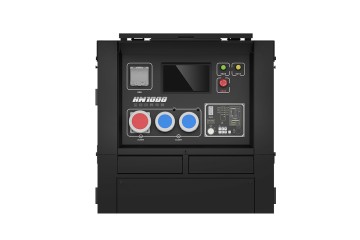
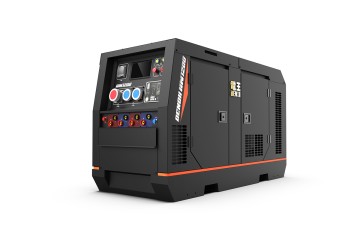
Local fabricators working on these projects require robust equipment that can withstand the erratic power supply common in the region. This is where engine-driven welder generators become indispensable. By combining a high-performance MIG/TIG welder with a diesel generator, these units provide independent power, allowing construction teams to weld and run power tools simultaneously in remote, off-grid locations across Nigeria.
Embracing automation, off-grid reliability, and specialized skills training to drive industrial growth.
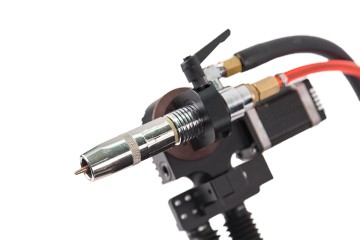
The adoption of single-torch and multi-torch automatic welding robots to eliminate human error and accelerate large-scale pipeline installations across Nigeria.
High demand for multi-function diesel welder generators that solve power grid instability, allowing uninterrupted welding at remote sites.
Increased focus on training local Nigerian technicians on advanced MIG/TIG parameters, ensuring compliance with global API and ISO standards.
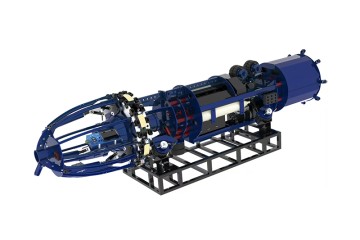
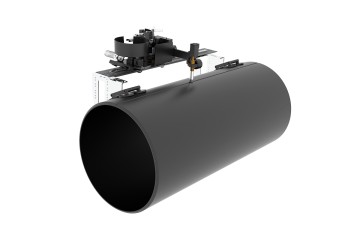
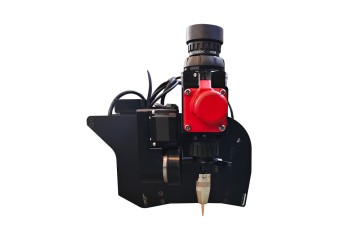
The AKK Gas Pipeline project is a testament to Nigeria's commitment to gas monetization and industrialization. Projects of this magnitude require thousands of kilometers of pipeline joints to be welded under strict timelines. Using manual stick welding is labor-intensive and runs the risk of defects like porosity and lack of fusion. By deploying automatic pipeline welding robots (such as the DW-XW-I), contractors can achieve continuous, high-quality MIG root, hot, and fill passes. The automatic tracking system ensures that even on uneven terrain, the torch maintains the optimum angle and speed, reducing repair rates to less than 1%.
Nigeria's ports are busy hubs for maritime commerce. Ship hulls, offshore supply vessels, and barges constantly require structural repairs and retrofitting. Marine grade steel and aluminum alloys require specialized welding techniques. Heavy-duty MIG welding machines equipped with water-cooled torches are essential for handling the thick plates used in ship construction. The high deposition rate of MIG welding allows dry docks in Lagos and Port Harcourt to complete repairs quickly, returning vessels to service without costly delays.
Nigeria is home to some of the largest food and beverage manufacturing plants in West Africa. From breweries in Onitsha to milk processing facilities in Kaduna, maintaining sanitary piping systems is critical. TIG welding is the only viable method for welding the stainless steel tubes that transport ingredients. The precision of TIG welding prevents oxidation on the backside of the weld (purging), ensuring a perfectly smooth internal joint where bacteria cannot accumulate. Chinese TIG welding machines with advanced pulse controls allow Nigerian technicians to control heat input precisely, preventing warping of thin-walled sanitary tubes.
With agriculture being a major employer, there is a growing industry in northern states like Kano and Kaduna for the assembly of tractors, trailers, and crop processing machinery. MIG welding is widely adopted here for its ease of use and speed. Fabricators can rapidly weld thick structural steel frames for plows and seeders, ensuring the equipment can withstand the rugged conditions of Nigerian farmlands.
Explore our full range of professional welding systems and pipeline robots built for heavy-duty industrial performance.