Leave Your Message
The United States industrial sector is undergoing a profound transformation. Driven by the reshoring of manufacturing, significant federal investments in infrastructure projects via the Infrastructure Investment and Jobs Act (IIJA), and an accelerating shift toward green energy, the demand for high-precision fabrication has reached unprecedented heights. At the center of this technological leap is CNC TIG (Tungsten Inert Gas) welding automation.
Traditionally, TIG welding has been regarded as the gold standard for high-quality, aesthetically clean, and structurally sound joints. However, manual TIG welding requires exceptional skill, consistent hand-eye coordination, and years of training. With the current skilled labor shortage facing the US manufacturing and construction sectors—where the average age of a welder is over 55—relying solely on manual operations is no longer viable for high-volume or critical infrastructure projects. This is where CNC TIG welders and automated orbital welding systems step in, providing consistent, repeatable, and high-speed welding solutions that meet the stringent codes of the American Welding Society (AWS) and American Society of Mechanical Engineers (ASME).
Did You Know? The integration of CNC automated welding systems can increase production throughput by up to 300% while reducing weld defect rates to near zero, making American fabricators highly competitive on the global stage.
Engineered to meet the demanding requirements of American pipeline construction, heavy fabrication, and field engineering.
The requirements for CNC TIG and automated welding systems vary dramatically across different US regions and industries:
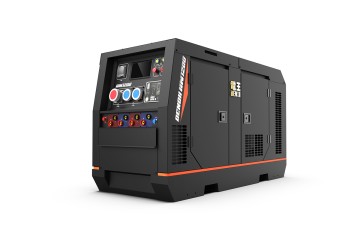
1. Oil & Gas Pipeline Construction (Gulf Coast & Permian Basin): In states like Texas, New Mexico, and Louisiana, thousands of miles of transmission pipelines require flawless structural integrity. The use of multi-arc diesel welder generators is critical here. These machines must withstand extreme heat, dust, and continuous operation in remote environments, ensuring that every girth weld meets API 1104 standards.
2. Aerospace and Defense (West Coast & Southeast): From California to Florida, aerospace giants and private space exploration firms utilize CNC TIG welding for thin-gauge exotic metals such as titanium, Inconel, and aluminum alloys. Here, micro-precision, arc stability, and comprehensive data logging are mandatory to guarantee safety under extreme aerospace conditions.
3. Semiconductor & High-Purity Piping (Pacific Northwest & Arizona): With the expansion of domestic semiconductor fabrication facilities (Fabs), ultra-high purity (UHP) stainless steel orbital TIG welding is in massive demand. These systems require precise gas shielding and exact parameter control to prevent any contamination inside the gas and chemical delivery lines.
When procurement managers in the US evaluate global suppliers for automated welding equipment, they prioritize several critical factors:
With more than 20 years of deep cultivation, we ensure the excellent performance and stable quality of every product from R&D design to finished product delivery.
With more than 20 years of industry accumulation, we have accumulated profound technical expertise and strictly adhere to high-standard production norms.
We have built a comprehensive and rigorous whole-process quality control system to ensure the excellent performance and stable quality of every product.
Covering pre-sales consultation, on-site guidance and after-sales support, we form a well-laid, efficient and reliable global product supply network.
Equipped with independently developed core patented technologies, our products feature outstanding advantages such as high efficiency, energy saving, precise welding, stable operation, durability and strong adaptability to harsh field and complex engineering conditions.
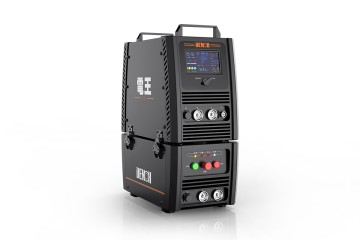
We hold multiple independent intellectual property patents and have obtained a number of national and international authoritative industry certifications, which fully affirm our technical strength and product quality. Our engineering team continuously refines our control algorithms to ensure seamless integration with modern CNC gantry systems and robotic arms, making our power sources the preferred choice for automated systems across North America.
Relying on reliable product strength, professional and efficient full-process services, as well as the team's dedicated craftsmanship and 20 years of brand reputation, we have established long-term stable cooperation with leading enterprises in domestic oil and gas long-distance pipelines, municipal engineering, new energy infrastructure and other key fields.
Adhering to technological innovation as the core driving force and ingenuity quality as the foundation, we are committed to providing global customers with customized one-stop pipeline welding solutions, and continuously contributing to the high-quality and sustainable development of energy infrastructure projects at home and abroad.
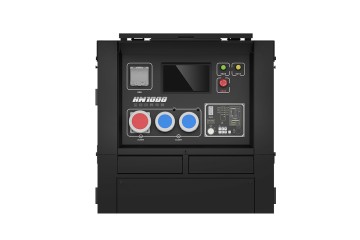
Explore our full line of high-performance engine-driven welding systems and generators configured for the United States market.
As we look toward the next decade, the North American welding market is poised to adopt even higher levels of automation. The integration of collaborative robots (cobots) with CNC TIG power sources is making automation accessible to smaller job shops, not just large-scale automotive or aerospace plants. These cobots can be programmed quickly using intuitive lead-through teaching methods, allowing operators to set weld paths without extensive coding knowledge.
Furthermore, the push for reduction in carbon footprints is driving manufacturers to develop hybrid battery-diesel systems. These innovative systems utilize stored battery power to handle peak welding currents, allowing the diesel engine to run at lower, more efficient speeds or shut off entirely during setup phases. This not only reduces fuel consumption and emissions but also significantly lowers noise levels, which is a key priority for municipal projects in densely populated urban centers across the United States.
By partnering with a forward-thinking CNC TIG welding supplier that understands both the technological demands and the regulatory landscape of the US market, fabricators can future-proof their operations, maintain compliance, and achieve superior productivity.