Leave Your Message
Modern crude oil refineries, downstream petrochemical units, and ethylene cracker plants represent some of the most unforgiving industrial operating environments on earth. Within these mega-complexes, process piping networks handle volatile hydrocarbons, superheated steam, cryogenic liquefied natural gas, highly corrosive sulfuric and hydrofluoric acids, and pure high-pressure hydrogen. Consequently, the integrity of pipe welds—beginning at the crucial tack and spot welding stage—dictates the safe operation and commercial longevity of the entire facility.
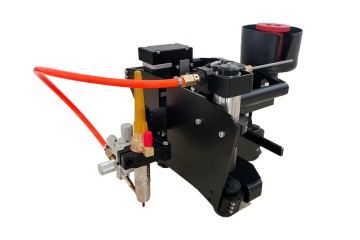
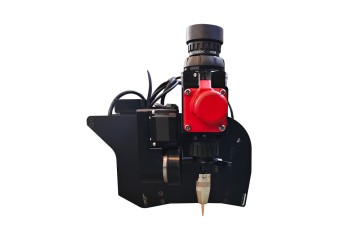
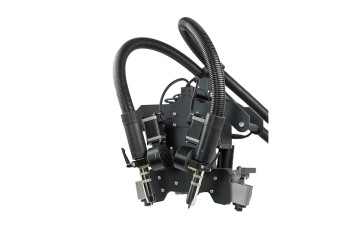
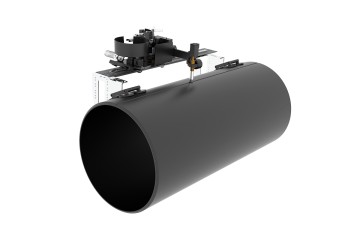
Traditionally, process pipe fit-up and spot welding relied heavily on manual shielded metal arc welding (SMAW) or manual gas tungsten arc welding (GTAW). Boilermakers and pipefitters spent countless hours manually clamping pipe joints, driving wedges, and depositing manual tack welds. However, the modern downstream hydrocarbon industry faces a severe global shortage of specialized Class-I certified pipe welders. Compounded by aggressive capital expenditure timelines and stricter workplace safety regulations, petrochemical facility EPC (Engineering, Procurement, and Construction) contractors are decisively shifting toward the implementation of an Automatic Spot Welder For Refinery Process Piping And Petrochemical Plants.
Commercial feasibility in 2026 and beyond mandates an automated, repeatable methodology. When fabricating complex process spools—involving heavy-wall chrome-moly alloys (P11, P22, P91), austenitic stainless steels (316L, 347H), or nickel-based superalloys (Inconel 625, Hastelloy C-276)—manual spot welds frequently introduce localized thermal stresses, excessive oxidation, and micro-cracking. Automating the spot and tack welding sequence eliminates manual inconsistencies, delivers micron-level alignment tolerances, and prepares the weld joint for defect-free automatic hot, fill, and cap passes.
Robotic bug-and-band and internal alignment mechanisms eliminate root misalignment (hi-lo) across Schedule 40 to Schedule 160 process piping, preventing turbulent flow corrosion.
Programmable pulsing algorithms govern instantaneous heat input during each spot weld cycle, preventing hydrogen embrittlement and maintaining baseline metallurgy in alloy steels.
Automatic spot and tack welds fully fuse into the subsequent root pass without slag inclusions or porosity, passing 100% radiographic (RT) and phased array ultrasonic (PAUT) non-destructive examinations.
The primary fractionation towers of a refinery process large volumes of sour crude oil at elevated temperatures. Piping systems surrounding atmospheric and vacuum distillation columns range from 6 inches to over 48 inches in diameter. These transfer lines are subjected to relentless naphthenic acid corrosion and sulfidation. Implementing an automatic spot welder ensures that joint root gaps are uniform within ±0.3 mm. Uniform tacking prevents pipe deformation during orbital root and cap deposition, providing an exceptionally smooth internal bore that suppresses erosive wear caused by turbulent bitumen and heavy gas oil feeds.
Hydroprocessing reactors operate at pressures exceeding 150 to 200 bar and temperatures above 400°C. Under these severe conditions, molecular hydrogen dissociates into atomic hydrogen, penetrating the crystal lattice of carbon steel and triggering High-Temperature Hydrogen Attack (HTHA) or hydrogen-induced cracking (HIC). To counteract this, piping metallurgy utilizes stabilized chrome-moly grades like 2.25Cr-1Mo (P22) or modified 9Cr-1Mo-V (P91).
Manual tacking on these materials often creates rapid cooling quenching zones, producing brittle martensitic microstructures prone to cracking. An automatic spot welder utilizing pulsed gas metal arc (GMAW) or automated GTAW with preheat integration controls cooling rates with extreme precision. The system maintains continuous weld pools with minimal dilution, ensuring that post-weld heat treatment (PWHT) achieves the uniform hardness limits mandated by NACE MR0175/ISO 15156.
In steam cracking units producing ethylene and propylene, furnace radiant coils and transfer line exchangers operate at temperatures up to 1,100°C, using centrifugal cast alloys (such as 25Cr-35Ni-1Nb). Conversely, the downstream separation trains, such as demethanizers and ethylene chillers, operate at sub-zero cryogenic temperatures down to -104°C using 3.5% nickel steels or Type 304L stainless steels. Automatic spot welders protect these dissimilar and sensitive metallurgical joints by shielding the arc zone with precise argon/helium mixtures, preventing atmospheric nitrogen absorption, carbide precipitation, and loss of Charpy V-notch impact toughness at cryogenic temperatures.
Modern petrochemical megaprojects are increasingly built using modular construction yards. Piping spools, manifolds, valve blocks, and instrumentation lines are fabricated on skids and transported to the jobsite. The final interconnection points—often referred to in the industry as "golden joints"—cannot be easily heat-treated or hydro-tested in place. Automated spot welders and external orbital machines allow mechanical crews to lock piping geometry securely in position, eliminating mechanical residual stresses that can lead to delayed cold cracking once the refinery goes on stream.
With more than 20 years of industry accumulation, we have accumulated profound technical expertise and strictly adhere to high-standard production norms.
We have built a comprehensive and rigorous whole-process quality control system to ensure the excellent performance and stable quality of every product.
Covering pre-sales consultation, on-site guidance and after-sales support, we form a well-laid, efficient and reliable global product supply network.
Every process piping joint installed within an oil refinery must comply with stringent international standards, principally ASME B31.3 (Process Piping Code), ASME Section IX (Welding and Brazing Qualifications), and API 570 (Piping Inspection Code). In hazardous hydrocarbon services, weld quality is assessed on an uncompromising basis, where minor defects such as lack of sidewall fusion, undercut, or incomplete penetration trigger immediate joint rejection and costly cut-outs.
A primary failure mode in petrochemical piping is root defect initiation caused by defective tack welds. When manual tack welds are deposited, they frequently crack during the cooling phase due to external joint contraction. Furthermore, if the welder fails to grind the start and feather the stop of each tack weld, the subsequent root pass will entrap oxide inclusions and lack of root fusion. An automated spot and orbital welder completely resolves these issues through programmed transition routines:
By automating the initial tacking and circumferential welding processes, petrochemical contractors can reliably attain non-destructive examination (NDE) first-time pass rates exceeding 98.5%. This dramatic improvement reduces radiographic inspection delays, lowers consumable waste, and minimizes project completion risk during critical turnaround schedules.
Equipped with independently developed core patented technologies, these products feature outstanding advantages such as high efficiency, energy saving, precise welding, stable operation, durability and strong adaptability to harsh field and complex engineering conditions. We hold multiple independent intellectual property patents and have obtained a number of national and international authoritative industry certifications, which fully affirm our technical strength and product quality.
The convergence of artificial intelligence, real-time laser profilometry, and digital power electronics is opening unprecedented frontiers for automatic spot and orbital welding in refinery piping. The next generation of pipeline spot welding equipment no longer operates simply on fixed mathematical parameters; it dynamically senses and responds to physical variations in the weld joint.
Real-Time Laser Seam Tracking & Gap Adaptation: In real-world petrochemical fabrication yards, pipe bevels are seldom geometrically perfect. Variations in root face thickness, bevel angles, and fit-up gaps are common. Modern AI-enabled automatic welders incorporate high-frequency laser triangulation cameras that measure groove geometry milliseconds ahead of the welding arc. The internal machine controller instantly recalculates wire feed speed, torch oscillation width, travel speed, and pulse frequency to deposit an ideal spot or tack weld that matches the joint variance without operator intervention.
Cloud-Based Weld Quality Documentation: Modern refining engineering standards demand exhaustive digital documentation for every single weld seam. Industry 4.0 automatic welding systems now record voltage, amperage, arc energy, wire consumption, and thermal heat input at 1,000 samples per second. This data is linked directly to the weld joint's unique isometric drawing number and RFID tag. In the event of a regulatory inspection or facility audit, quality assurance teams can immediately generate cryptographic birth certificates for each process piping weld, ensuring complete traceability throughout the operational lifespan of the plant.
Relying on reliable product strength, professional and efficient full-process services, as well as the team's dedicated craftsmanship and 20 years of brand reputation, we have established long-term stable cooperation with leading enterprises in domestic oil and gas long-distance pipelines, municipal engineering, new energy infrastructure and other key fields.
Adhering to technological innovation as the core driving force and ingenuity quality as the foundation, we are committed to providing global customers with customized one-stop pipeline welding solutions, and continuously contributing to the high-quality and sustainable development of energy infrastructure projects at home and abroad.
Let's start your project together →