

Leave Your Message
In the high-stakes arena of global energy infrastructure, the construction of oil and gas cross-country pipelines represents one of the most demanding engineering feats. As energy demands surge, the industry is shifting from traditional manual methods toward sophisticated Automatic Spot Welder systems. These machines are no longer just tools; they are the backbone of a digitalized construction ecosystem designed to bridge continents through thousands of miles of high-pressure steel conduits.
The pipeline industry currently faces a dual challenge: a critical shortage of highly skilled manual welders and an increasingly stringent regulatory environment regarding weld integrity. Automatic spot welding and full-path automatic welding systems have emerged as the definitive solution. Current market data suggests that projects utilizing advanced automation reduce project timelines by up to 30% while simultaneously lowering the repair rate of welds to less than 1%.
Cross-country pipelines traverse some of the most hostile environments on Earth—from the scorching sands of the Sahara to the permafrost of Siberia and the humid swamps of Southeast Asia. Each scenario demands a specialized approach to welding.
In mountainous regions, logistics are a nightmare. Compact, high-efficiency automatic welders like the DW-EW series are designed for portability without sacrificing power. They provide consistent arcs even in thin-air environments where traditional combustion engines might struggle, thanks to sophisticated power management systems found in units like the HW1200.
Metal expands and contracts. In cross-country construction, the "spot" or tack weld must be strong enough to hold massive pipe sections in place under thermal stress before the final pass. Our automatic spot welding technology ensures that the initial fusion is deep and consistent, preventing cracks that typically occur due to rapid cooling in arctic conditions.
The next decade of pipeline construction will be defined by "Smart Welding." We are seeing a move toward:
DENOH Seimitsu Electric Appliance (Beijing) Co., Ltd. has spent over two decades at the forefront of this technological revolution. By breaking foreign monopolies on core welding control systems, we have localized high-end technology, making it more accessible for global projects. Our R&D team doesn't just build machines; they engineer solutions for the toughest metallurgical challenges in the oil and gas sector.
A single weld failure in a cross-country pipeline can lead to catastrophic environmental damage and billions in losses. Our automatic spot welders and external welding machines undergo rigorous testing to ensure they meet international standards such as API 1104 and ASME Section IX. The precision of our dual-torch systems ensures symmetrical heat distribution, significantly reducing the Heat Affected Zone (HAZ) and preserving the base metal's integrity.
When we discuss "Spot Welding" in the context of large-diameter pipelines (often 48 inches or larger), we refer to the critical alignment and initial bonding phase. Traditional manual tacking is slow and prone to human error. An automatic spot welder ensures that the gap between pipe ends is perfectly bridged with uniform penetration. This sets the stage for the DW-EW-II Dual Torch system to complete the fill and cap passes with robotic consistency.
The economic impact is profound. By automating the most repetitive and physically demanding parts of the process, companies can deploy smaller crews, reduce the need for on-site housing in remote areas, and significantly lower insurance premiums due to the reduced risk of workplace injuries.
With more than 20 years of deep cultivation and continuous innovation in the pipeline welding industry, we have forged a solid industry foundation and built an unshakable market position through decades of practical experience and technological breakthroughs.
Over the past 20-plus years, we have kept pace with the development of the global pipeline engineering industry, constantly optimizing technical solutions and upgrading product systems, witnessing and promoting the iterative upgrading of pipeline welding equipment technology.
The core strength of the company lies in its professional and elite team composed of senior industry experts, professional R&D engineers, skilled technical workers and efficient service personnel. Our R&D team gathers backbones with decades of experience in pipeline welding equipment research and development, many of whom have participated in the research and development of key national engineering supporting welding equipment and possess profound theoretical knowledge and rich practical experience.
Relying on the team's professional strength, we have been committed to tackling key technical problems in the pipeline welding field, breaking through foreign technical monopolies in many core technologies, and realizing the independent innovation and localization of high-end pipeline welding equipment. Meanwhile, our production, sales and service teams have been carefully trained and selected, with rich industry experience and strong professional capabilities, forming a collaborative and efficient working system from R&D and production to market sales and after-sales service.
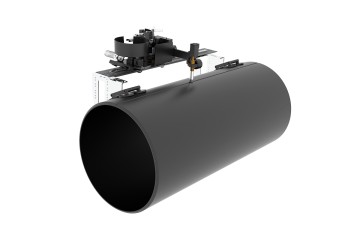 DW-BW-I Sleeve Type Pipeline Automatic Welding Machine
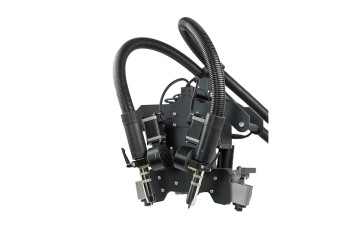 DW-EW-II Dual Torch Pipeline Automatic External Welding Machine
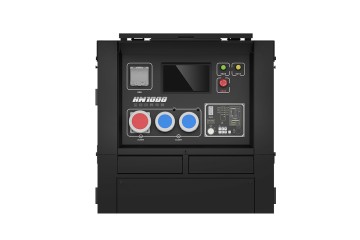 HW1000 Constant Speed Engine Driven Welding Machine
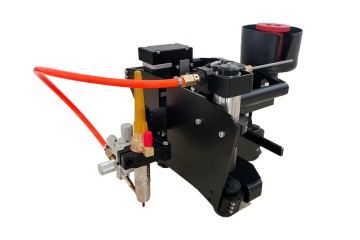 DW-TW-I Argon Arc Pipeline Automatic Welding Machine
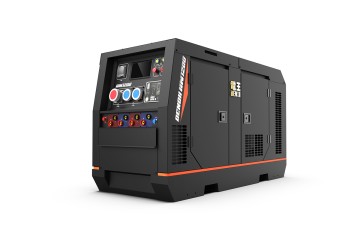 HW1200 Four-Arc Engine Driven Welding Machine
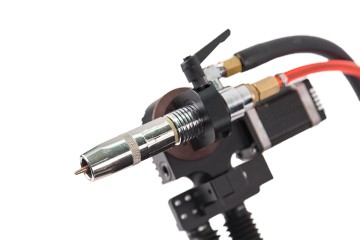 (DW-EW-I) Single Torch Pipeline Automatic External Welding Machine
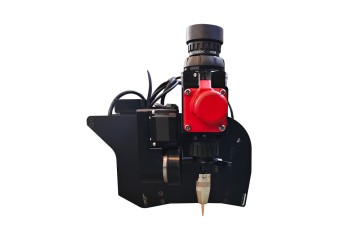 DW-XW-I Pipeline Single Torch Automatic Welding Robot
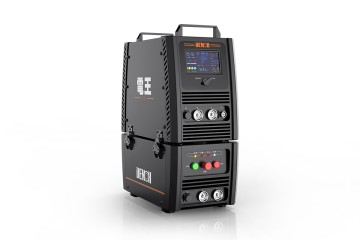 HW500E Multi-Function Engine Driven Welding Machine
In the financial modeling of oil and gas pipelines, the "cost per weld" is a primary KPI. When using an Automatic Spot Welder, the initial capital expenditure is offset by the drastic reduction in operational costs. Manual welding requires a large "welding village" to follow the pipeline's progress, including housing, food, and transport for hundreds of workers. Automation streamlines this, requiring only a fraction of the personnel to monitor the machines.
Speed is essential, but quality is paramount. The DW-EW-II Dual Torch system, for example, allows for simultaneous welding on both sides of the pipe. This not only doubles the speed but also ensures uniform thermal expansion, which is critical for maintaining the pipe's circularity and structural integrity. For cross-country pipelines that must last 50+ years, this precision is the difference between a successful asset and a liability.
Modern automatic welders are designed with sustainability in mind. By optimizing the arc and reducing spatter, these machines minimize material waste (welding wire and shielding gas). Furthermore, engine-driven units like the HW1000 are engineered for fuel efficiency, reducing the carbon footprint of the construction phase—a growing requirement for ESG-compliant energy companies.
As we look toward the future of oil and gas transport, the role of the Automatic Spot Welder will only grow. From the integration of 5G for remote monitoring to the use of AI for predictive maintenance of the machines themselves, the technology is evolving rapidly. DENOH remains committed to leading this charge, providing the global industry with the tools needed to build the world's energy future safely, efficiently, and reliably.