Leave Your Message
As the global energy sector transitions toward carbon neutrality, the infrastructure supporting oil, gas, water, and hydrogen transportation must also adapt. Traditional pipeline construction has historically relied on heavy, diesel-powered generator sets to supply the massive electrical currents needed for high-quality welding. However, in remote environments, confined tunnels, and ecologically sensitive zones, the emissions, noise, and fuel logistics of diesel units present severe operational challenges. Today, the industry is witnessing a revolutionary shift: the integration of 4 People Welding crews with green battery-powered, zero-emission internal pipe welding systems.
This technological convergence represents more than just an environmental upgrade; it is a fundamental redesign of pipeline construction logistics. By utilizing advanced battery energy storage systems (BESS) combined with multi-arc internal welding machines, operators can achieve perfect root passes from inside the pipe without generating carbon monoxide, nitrogen oxides, or disruptive acoustic signatures. This transformation is crucial for meeting modern Environmental, Social, and Governance (ESG) mandates while simultaneously improving project throughput and welder safety.
"The future of pipeline infrastructure lies in clean energy execution. By pairing high-capacity battery systems with optimized four-person welding configurations, we eliminate field emissions while maximizing weld integrity."
The "4 People Welding" model is a highly optimized operational structure designed to maximize the duty cycle and efficiency of internal and external pipe jointing. When executing internal pipe welding—particularly on large-diameter transmission lines—the workflow demands synchronized teamwork. The four-person crew is typically structured as follows:
This division of labor ensures that the welding process is continuous. While the internal automatic machine executes the root pass using multiple torches simultaneously (often 4 or 8 arcs working in parallel), the external team prepares the subsequent passes. This synchronized approach reduces the cycle time per joint by up to 50% compared to traditional manual methods.
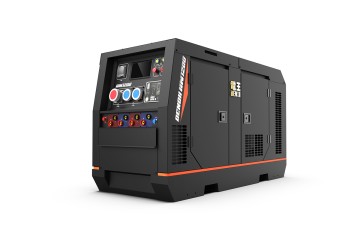
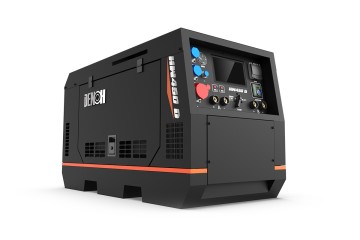
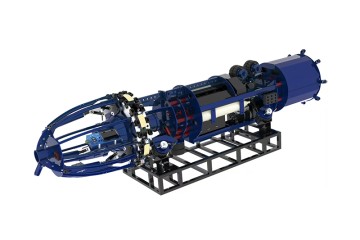
The core technological enabler of this green shift is the transition from high-maintenance diesel engines to lithium-iron-phosphate (LFP) or solid-state battery systems integrated directly into the internal welding crawler. DENOH's research and development have targeted several critical engineering challenges to make this possible:
Internal pipe welding requires consistent, ripple-free current to maintain arc stability across multiple torches. Traditional batteries struggle with the high-amp discharge rates required for multi-arc processes (such as four-arc GMAW/FCAW systems). Modern battery-powered crawlers utilize advanced supercapacitor buffers alongside smart Battery Management Systems (BMS) to deliver up to 1200A of peak current without voltage drops, ensuring perfect weld bead profile and penetration.
Inside a steel pipeline, heat dissipation is extremely restricted. Battery packs undergoing rapid discharge generate significant heat. DENOH's zero-emission internal welding machines feature closed-loop liquid cooling systems and phase-change materials (PCM) to keep battery temperatures within safe operating limits, preventing thermal runaway and extending cell lifespan even during continuous 24/7 construction schedules.
In micro-tunneling, pipe jacking, and deep trenching applications, accumulating exhaust gases from diesel generators pose a lethal risk to the welding crew. By utilizing a battery-powered internal welder, the need for extensive ventilation systems is drastically reduced. The 4-person crew can operate in a quiet, clean-air environment, reducing fatigue and health hazards while complying with strict occupational health and safety regulations.
Globally, the pipeline construction industry is facing unprecedented pressure to reduce carbon footprints. Major energy developers are now assigning significant weight to environmental metrics during the bidding process. Contractors utilizing zero-emission, battery-powered internal welding fleets gain a distinct competitive advantage. Financially, while the initial capital expenditure for battery-integrated systems can be higher than traditional diesel units, the operational savings are realized rapidly:
With more than 20 years of deep cultivation and continuous innovation in the pipeline welding industry, DENOH has forged a solid industry foundation and built an unshakable market position through decades of practical experience and technological breakthroughs.
Over the past 20-plus years, we have kept pace with the development of the global pipeline engineering industry, constantly optimizing technical solutions and upgrading product systems, witnessing and promoting the iterative upgrading of pipeline welding equipment technology.
The core strength of DENOH Seimitsu Electric Appliance (Beijing) Co., Ltd. lies in its professional and elite team composed of senior industry experts, professional R&D engineers, skilled technical workers and efficient service personnel. Our R&D team gathers backbones with decades of experience in pipeline welding equipment research and development, many of whom have participated in the research and development of key national engineering supporting welding equipment and possess profound theoretical knowledge and rich practical experience.
Relying on the team's professional strength, we have been committed to tackling key technical problems in the pipeline welding field, breaking through foreign technical monopolies in many core technologies, and realizing the independent innovation and localization of high-end pipeline welding equipment. Meanwhile, our production, sales and service teams have been carefully trained and selected, with rich industry experience and strong professional capabilities, forming a collaborative and efficient working system from R&D and production to market sales and after-sales service.
Understanding where these green systems excel allows pipeline operators to deploy them for maximum return on investment. Below are the primary application environments where the 4-person crew and battery-powered internal welding setups deliver transformative results:
When pipelines cross national parks, water reserves, or ecologically sensitive mountainous terrains, the construction footprint must be minimized. Spills of diesel fuel or engine oil from traditional generators can lead to catastrophic environmental damage and massive regulatory fines. Battery-powered internal welding systems eliminate the risk of liquid fuel contamination entirely, allowing projects to proceed through protected lands with minimal environmental impact reports.
Modernizing metropolitan utility pipelines requires working in close proximity to residential areas. Traditional diesel-driven welding generators produce high-decibel noise pollution that limits working hours to daytime shifts. Battery-operated internal welding rigs run almost silently, allowing contractors to execute night shifts without violating local municipal noise ordinances, thereby doubling the daily construction progress.
As the world transitions to hydrogen energy, existing and new pipelines must meet extremely strict metallurgical standards to prevent hydrogen embrittlement. The root pass of a hydrogen pipeline requires absolute precision, consistent heat input, and ultra-clean shielding gas environments. The automated multi-arc battery-powered internal welder provides computer-controlled consistency that manual operations cannot match, ensuring that the critical root pass is free of micro-porosity and defects.
Looking ahead, the development of green internal pipeline welding is moving toward full autonomy and next-generation energy storage. Future iterations of DENOH's equipment will incorporate solid-state battery technology, which offers double the energy density of current LFP packs, reducing the physical size of the internal crawler and allowing it to operate in smaller-diameter pipes. Furthermore, AI-driven weld inspection systems will be integrated directly into the internal welding crawler, providing real-time ultrasonic or laser-based weld quality analysis. This will enable the 4-person crew to transition into supervisory roles, monitoring multiple autonomous welding units from a single control station, further multiplying operational productivity.